

Maddy summaryThe Range Access Act (HR 1614) requires the Forest Service and Bureau of Land Management to identify existing target shooting ranges on federal lands and establish new ones where feasible. Within five years, agencies must construct or partner to build new ranges meeting specific safety standards (like berms, firing lines, and no user fees) that accommodate rifles, pistols, shotguns, and archery. The bill mandates public consultation with tribes, shooting clubs, and local governments before site selection, prioritizing proximity to recreational shooters while avoiding conflicts with existing private ranges. Annual reports to Congress will track progress toward ensuring public access to these ranges on federal lands.
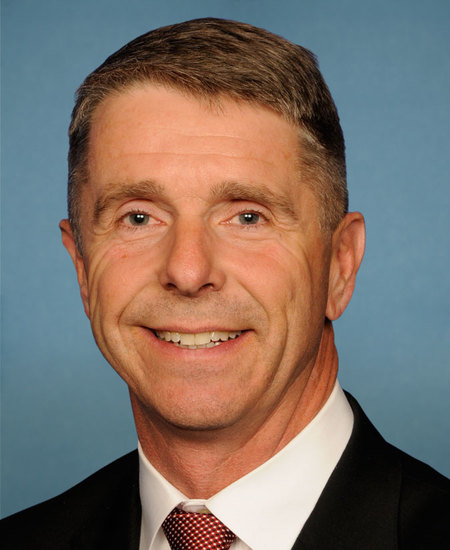
Rep. Robert J. Wittman
Sponsored bills
Maddy summaryHJRES 27 is a congressional resolution seeking to block a federal rule that redefined which waterways fall under the Clean Water Act's protections. It targets a rule submitted by the Army Corps of Engineers, Department of Defense, and Environmental Protection Agency (EPA) on January 18, 2023, which aimed to revise the "Waters of the United States" definition. The resolution would formally disapprove this rule under a specific federal procedure (Chapter 8 of Title 5), preventing it from taking effect. This would directly affect how federal agencies regulate pollution and development near water bodies, including wetlands and smaller streams.
Maddy summaryHR 2696 permanently extends a 7-year depreciation period for motorsports entertainment complexes under tax law. It amends the Internal Revenue Code by removing a temporary provision (subparagraph D), making the 7-year recovery period permanent for these facilities. This change directly affects businesses that own or operate motorsports venues when calculating tax deductions for facility investments. The bill is a technical tax code adjustment with no new regulations or direct impact on individuals.
Maddy summaryThe PLUS for Veterans Act of 2023 clarifies and updates rules for veterans' benefit claims under the Department of Veterans Affairs. It sets a $12,500 annual fee cap (adjusted for inflation) for agents or attorneys representing veterans, prohibits charging fees for medical exams, and prohibits unauthorized fees with penalties including fines or up to one year in prison. The bill directly affects veterans seeking benefits, their legal representatives, and the VA by standardizing fee agreements, requiring VA reports on agent/attorney suspensions, and ensuring veterans can access free services from VA-recognized organizations. Key provisions include banning fees for medical reports and requiring clear fee disclosures to veterans.
Maddy summaryHR 2584, the SAVE Act, creates a new federal criminal offense for assaulting or intimidating hospital employees while they're performing their duties, punishable by up to 10 years in prison, with enhanced penalties for using weapons, causing injury, or during public emergencies. The bill authorizes $25 million annually in federal grants to hospitals for violence prevention programs, including staff training, security technologies like panic buttons and video surveillance, and coordination with law enforcement. It defines "hospital" broadly to include various medical facilities such as long-term care hospitals, rehabilitation facilities, and critical access hospitals. The legislation directly affects hospital workers and medical facilities by establishing federal criminal penalties for violence against employees and providing funding to improve workplace safety. The law aims to address the rising problem of workplace violence against healthcare workers, which the bill states has increased since 2011.
Maddy summaryHR 2630, the Safe Step Act, requires group health plans and health insurance issuers to establish a clear, transparent process for patients or their doctors to request exceptions to medication step therapy protocols. These protocols typically force patients to try cheaper drugs first before covering more expensive alternatives. The bill mandates that plans must approve exceptions when prior treatments failed, delay would cause serious harm, a treatment is unsafe, or a patient is stable on a previously approved drug, with strict 72-hour (or 24-hour in emergencies) decision timelines. It also requires plans to publish the exception process online and limit documentation requests to only necessary medical information. This law directly affects health insurers, employers offering health plans, and patients using step therapy for prescription drugs.
Maddy summaryHR 2620, the Federal Firearms Licensee Protection Act of 2023, increases penalties for crimes targeting firearms licensees. It amends Section 924 of Title 18 to impose mandatory minimum sentences of 3 years for burglaries or 5 years for robberies committed at the business premises of licensed firearms dealers, manufacturers, or importers. The bill specifically targets violations of Section 922(u), which prohibits unauthorized access to these premises, and adds "attempts to do so" to the penalties. This directly affects licensed firearms businesses by strengthening legal protections against theft or violence at their locations. The law creates clearer, harsher consequences for crimes committed during burglaries or robberies at these specific business sites.
This resolution supports the designation of National Small Business Workplace Solutions Week in recognition of the essential services provided by the workplace solutions industry and its efforts to promote safety and support for our communities.
Maddy summaryHR 1812 requires the Federal Communications Commission (FCC) to study whether the Universal Service Fund (USF), which funds broadband access in rural and low-income areas, should expand who pays into the fund to ensure fairness. Within 120 days of enactment, the FCC must complete this study and report findings to Congress. By one year after enactment, the FCC must also develop new rules to reform the USF contribution system, specifically expanding who contributes. This directly affects telecommunications companies that pay into the USF, as the changes could shift funding responsibilities, potentially impacting broadband costs for consumers and businesses. The bill aims to make the funding system more equitable without specifying final changes.
Maddy summaryThis bill amends the law governing Basic Allowance for Housing (BAH) for uniformed service members stationed in the U.S. It changes the calculation method so that BAH amounts must equal the actual monthly cost of adequate housing in each location, as determined by the Secretary of Defense. This directly affects active-duty service members and their families who receive BAH for housing. The key provision replaces the previous formula with a requirement that BAH payments match local housing costs for members in the same pay grade and dependency status. The change ensures BAH reflects current housing expenses rather than an older calculation method.