

Maddy summaryHCONRES 46, the "Fiscal State of the Nation Resolution," requires the House and Senate Budget Committees to hold an annual joint hearing within 45 days of the Treasury's submission of the federal government's audited financial statement. At this hearing, the Comptroller General will present an objective, nonpartisan analysis of the government's financial condition, including deficits, surpluses, and long-term fiscal projections, as required by the Government Accountability Office's standards. The hearing must be open to the public and allow all members of Congress to participate, regardless of committee membership. This resolution ensures Congress receives regular, factual reviews of federal finances without political bias.
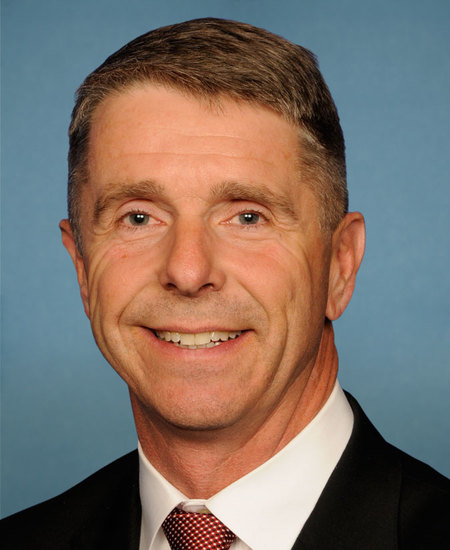
Rep. Robert J. Wittman
Sponsored bills
Maddy summaryHR 3541, the Accounting STEM Pursuit Act of 2023, amends the Elementary and Secondary Education Act to include accounting education in school curricula. It requires schools to offer accounting career awareness and programs, particularly to students from groups underrepresented in accounting careers. The bill positions accounting as a STEM field and aims to expand student exposure to accounting through grade 12 courses. This change directly affects K-12 students and schools by integrating accounting into educational opportunities to diversify the future accounting workforce.
Maddy summaryThe Housing PLUS Act of 2023 modifies federal homeless assistance funding under the McKinney-Vento Act to ensure grantees providing supportive services (like job training or addiction treatment) or requiring conditions for housing (such as sobriety) cannot be restricted from receiving funds. It mandates that at least 30% of Continuum of Care funds each year must support entities offering these wraparound services. The bill directly affects homeless assistance grantees, project sponsors, and faith-based organizations receiving federal housing funds. It also requires the Secretary to report annually to Congress confirming compliance with these funding rules.
National Law Enforcement Officers Remembrance, Support and Community Outreach Act This bill directs the Department of Justice (DOJ) to establish a National Law Enforcement Officers Remembrance, Support, and Community Outreach Program. The bill further directs DOJ to award a grant under the program to the National Law Enforcement Officers Memorial Fund for the expenses associated with community outreach, public education, and officer safety and wellness programs operated by the of the National Law Enforcement Officers Memorial Fund and National Law Enforcement Museum.
Maddy summaryThe PAST Act of 2023 amends the Horse Protection Act to ban specific devices used to cause pain (soring) in horses at shows, particularly affecting Tennessee Walking Horses, Racking Horses, and Spotted Saddle Horses. It defines prohibited "action devices" (like boots or chains causing friction) and requires licensed, conflict-free inspectors at events to enforce rules. The bill increases penalties for violations to up to $5,000 fines or 3 years in jail, and mandates longer disqualifications for repeat offenses (180 days → 1 year → 3 years). Horse show organizers, exhibitors, and participants must comply with these new inspection and penalty requirements.
Maddy summaryHR 3240 grants a federal charter to the Veterans Association of Real Estate Professionals (VAREP), a California-based nonprofit already recognized as a veterans service organization under IRS tax law. The bill establishes specific rules for VAREP, requiring it to maintain its tax-exempt status, submit annual reports to Congress, and follow restrictions like not issuing stock, making political contributions, or claiming government authority. VAREP must continue its existing mission of supporting veterans through financial literacy programs, housing assistance (including foreclosure prevention), workforce development, and suicide awareness initiatives. This charter does not create new government benefits but formally recognizes and regulates this specific organization's federal status.
Maddy summaryThe COMFORT Act (HR 3267) allows licensed mental health professionals and Department of Defense personnel to provide non-medical counseling services to military families anywhere in the U.S. (including states, D.C., and territories) without location restrictions. It directly affects military families seeking counseling support and eligible providers (such as DoD-recognized licensed counselors or DoD employees/contractors). The key provision removes geographic barriers, enabling services to be delivered remotely or on-base regardless of where the provider or family member is located. This changes existing location-based rules for such counseling under federal programs.
Maddy summaryHR 3238, the Affordable Housing Credit Improvement Act of 2023, updates the Low-Income Housing Tax Credit (LIHTC) program to increase the availability of affordable housing across the United States. The bill makes several key changes including increasing state funding formulas, modifying tenant eligibility rules to better serve vulnerable populations (such as domestic violence victims and students), and expanding credit eligibility for projects in rural and Native American communities. Specific provisions raise the credit for properties serving extremely low-income households, clarify rules around tenant income increases, and require housing providers to protect victims of domestic violence. The bill also updates terminology from "low-income" to "affordable" throughout the tax code and enhances program transparency through data sharing requirements. These changes aim to make the LIHTC program more effective at creating and preserving affordable housing units for low-income households nationwide.
Maddy summaryHR 3147 establishes a 5-year pilot program to strengthen the U.S. defense industrial base by creating public-private partnerships. It directs the Under Secretary of Defense to partner with eligible private equity firms (requiring no foreign ownership or influence) to invest equity in domestic small defense businesses or "nontraditional" defense companies. The program provides government loan guarantees (up to 80% of investments) to accelerate production of advanced defense capabilities, with strict criteria for partner eligibility and mandatory progress reports to Congress after 27 months and 5 years. This directly affects small defense manufacturers and private investors meeting the program's security and ownership requirements.
Maddy summaryHR 3168 establishes a Joint Autonomy Office within the Department of Defense to coordinate and accelerate the development and deployment of autonomous systems across all military domains (land, air, maritime, and space). The Office will centralize data access, coordinate with existing programs like Robotic Combat Vehicles, and create a classification system for different autonomy levels to guide resource allocation and planning. It also requires a detailed plan to address gaps in funding, acquisition processes, and testing for autonomous systems, with regular updates to Congress. The Office will operate for seven years, with potential extensions, and is authorized $55 million for fiscal year 2024.