

Maddy summaryThis bill expands Post-9/11 GI Bill benefits to National Guard members who perform specific full-time duty. It amends eligibility rules to include service on "full-time National Guard duty" (as defined in Title 32) and "active duty" (as defined in Title 32), which previously did not count toward full benefits. The change applies retroactively to service since September 11, 2001, and takes effect one year after enactment. This directly affects National Guard members serving in these specific full-time roles, granting them parity with other veterans for educational benefits.
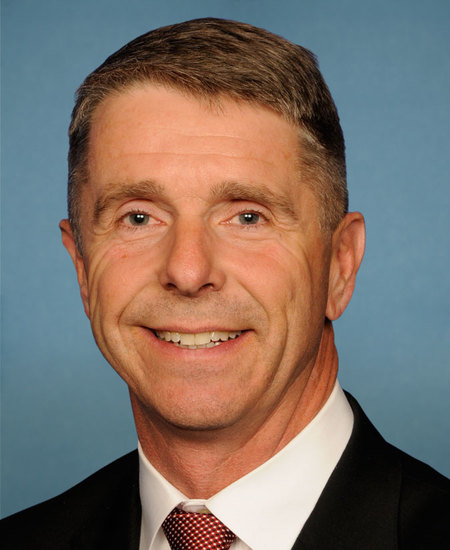
Rep. Robert J. Wittman
Sponsored bills
Maddy summaryHR 6841 creates a new Coastal and Estuarine Resilience and Restoration Program under the Coastal Zone Management Act, authorizing the Secretary of Commerce to protect and restore coastal and estuarine areas. The program prioritizes lands with ecological, recreational, or community value that face development threats or climate impacts, with special focus on low-income communities and climate mitigation. It requires non-governmental organizations applying for grants to demonstrate public access or ecological protection, and includes $47 million annually (2024-2028) for these efforts. This directly affects coastal states, local communities, and conservation groups managing vulnerable coastal lands.
Maddy summaryHR 226, the Veterans Collaboration Act, establishes a two-year pilot program to connect the Department of Veterans Affairs (VA) with nonprofit organizations and universities that assist veterans. The bill directs the VA to partner with veterans service organizations (which help veterans file disability claims) and law schools (providing free legal help for veterans), focusing on states with the largest veteran populations. Key mechanisms include setting performance metrics to identify effective partners, using social media to promote the program, and requiring quarterly reports to Congress on participation and outreach. The program aims to improve veterans' access to administrative assistance through these collaborations, with no permanent funding or policy changes beyond the pilot period.
Maddy summaryHR 8834, the Safeguarding Our Supply Chains Act, creates a Supply Chain Crime Coordination Center within Homeland Security to collect and analyze data on supply chain fraud and theft hotspots, including high-risk transportation routes and retail areas. It also establishes a multi-agency Task Force (including FBI, ICE, state/local law enforcement, and private sector partners) to coordinate efforts targeting organized crime groups stealing cargo, disrupting supply chains, and committing fraud. The Task Force will share intelligence, track theft trends, and work directly with affected businesses to address threats. The bill authorizes $100 million over five years for implementation and requires annual reports to Congress on the Task Force’s effectiveness in reducing these crimes. This law directly affects federal, state, and local law enforcement agencies, transportation and retail businesses, and supply chain operators.
Maddy summaryHR 537 authorizes a Congressional Gold Medal to honor 60 diplomats who saved Jewish lives during the Holocaust by issuing visas and passports against their governments' orders, risking expulsion and personal danger. The medal will be presented to the next of kin of these diplomats, alongside representatives from their home countries, and permanently displayed at the United States Holocaust Memorial Museum. The bill also permits the sale of bronze duplicates to cover production costs, with proceeds going to the U.S. Mint. This legislation recognizes the diplomats' humanitarian actions without creating new government programs or altering existing laws.
Maddy summaryThis bill expands federal flood insurance coverage to help homeowners demolish or relocate structures threatened by shoreline erosion. It requires the flood insurance program to pay up to 40% of a structure's value upfront for demolition or relocation, with an additional 60% upon completion (capped at $250,000 total per claim), excluding damage to contents. Coverage applies only to properties already insured under flood insurance for at least 12 months before the bill's enactment, and terminates future flood insurance for the same property after a qualifying claim. The bill specifically targets properties deemed unsafe due to erosion, subsidence, or being over water, bluff, or escarpment by state/local authorities.
Maddy summaryThis resolution (HRES 1272) calls on the Biden Administration to seek symbolic censure of Iran at the International Atomic Energy Agency (IAEA) for violating nuclear nonproliferation agreements and to refer Iran's case to the United Nations Security Council. It urges diplomatic action to prevent Iran from acquiring nuclear weapons, citing Iran's enrichment of uranium to 60% purity, obstruction of IAEA inspections, and development of advanced centrifuges. The resolution does not create new law but formally requests specific international diplomatic steps from the U.S. government.
Maddy summaryHR 5403, the CBDC Anti-Surveillance State Act, prohibits the Federal Reserve from issuing or facilitating central bank digital currency (CBDC) directly or indirectly to individuals through financial institutions. It specifically bans Federal Reserve banks from offering digital products to individuals, maintaining individual accounts, or using CBDC for monetary policy implementation. The bill also clarifies that its restrictions do not apply to existing physical cash or private, permissionless digital payment systems. This bill directly affects the Federal Reserve's ability to develop or deploy a government-run digital dollar. The law aims to prevent the Federal Reserve from creating a digital currency that could enable transaction tracking or government oversight of personal financial activity.
Maddy summaryHJRES 152 is a congressional resolution seeking to block an Environmental Protection Agency (EPA) rule on managing coal ash waste from power plants, specifically for older disposal ponds (legacy CCR surface impoundments). The rule, published on May 8, 2024, established requirements for electric utilities to handle coal ash, including safety standards for existing disposal sites. If passed, this resolution would prevent the EPA rule from taking effect, removing the compliance requirements for utilities. This directly affects electric utilities that manage coal ash and the EPA's regulatory authority over waste disposal practices.
Maddy summaryThis bill requires the Secretary of Defense to submit a report to Congress within 180 days of enactment, focusing on military service in Explosive Ordnance Disposal (EOD) units. The report must analyze suicide data, PTSD, and traumatic brain injury (TBI) trends among EOD personnel over the past five years, including assessments of correlations with suicide. It also mandates recommendations for improved healthcare policies, details on current support efforts, and specific resource requests to address these health issues. The bill directly affects EOD service members by requiring a formal review of their unique health challenges and potential solutions.