

Maddy summaryThis bill directs the Joint Committee on the Library to procure a statue of Benjamin Franklin and place it in the U.S. Capitol. The committee must secure the statue within two years of the bill's enactment and install it in a public-accessible location by January 1, 2026, for viewing during Capitol Visitor Center guided tours. It is a procedural measure with no policy changes or direct impact on constituents or legislation.
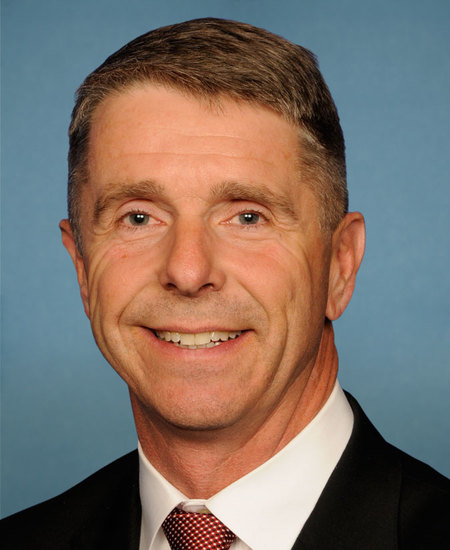
Rep. Robert J. Wittman
Sponsored bills
Maddy summaryThis bill modifies Medicaid and CHIP rules to let eligible out-of-state healthcare providers enroll without extra state screening. It applies to providers already in Medicare or their home state program, with low fraud risk, serving children under 21 with complex medical conditions. Providers would receive 5 years of enrollment under this streamlined process, eliminating state-level barriers. The change directly affects children seeking specialized care across state lines and the providers who serve them.
Maddy summaryHR 705, the Veterans 2nd Amendment Protection Act, prohibits the Department of Veterans Affairs (VA) from automatically sending veterans' personal information to the national background check system solely because a fiduciary (like a guardian) manages their benefits. It specifically blocks the VA from sharing this data with the Justice Department without a court order finding the veteran a danger to themselves or others. This directly affects veterans who have a fiduciary appointed due to incapacity but are not deemed dangerous, preventing automatic barriers to firearm purchases based only on their fiduciary status. The bill amends 38 U.S.C. § 5501B to require judicial authorization before such data can be transmitted.
Maddy summaryThis bill prohibits U.S. Department of Transportation agencies from procuring or using LiDAR technology produced by companies from China, Iran, North Korea, or Russia in federal contracts or projects. It applies to all Department of Transportation contracts and funded projects starting June 30, 2026, affecting contractors and grantees receiving transportation funding. Contractors must certify they will not use prohibited LiDAR, with limited waivers permitted only for national security needs. The law directly restricts the use of specific foreign technology in U.S. infrastructure development.
Maddy summaryThe NO FAKES Act of 2024 establishes legal rights for individuals (living or deceased) to control how their voice and visual likeness are used in digital replicas (highly realistic computer-generated representations that are readily identifiable as the individual). It requires authorization from the individual or their designated right holder for any digital replica, with specific rules for licenses (including 10-year limits for living individuals, 5-year limits for minors, and post-mortem rights for 10 years with possible 5-year renewals). The bill creates civil liability for unauthorized production or distribution of digital replicas, with exceptions for news, documentaries, commentary, and other protected uses. Online services are provided safe harbors if they follow notice-and-takedown procedures for unauthorized digital replicas after receiving proper notifications. The law preempts some state laws but leaves others in place, and applies to conduct occurring after the bill's enactment date.
Maddy summaryHR 5245 requires the Secretary of State to provide detailed notifications to Congress before entering, renewing, or extending any science and technology agreement with China. The notification must include the full agreement text, national security justification, risk assessments (including technology transfer concerns), human rights considerations, and monitoring plans, and must be submitted 30 days before any agreement takes effect. Existing agreements with China must be revoked unless the Secretary submits the required notification within 60 days of the bill's enactment. This bill directly affects the Department of State's ability to negotiate such agreements and gives Congress enhanced oversight authority. It applies to all future agreements and existing ones in effect when the law takes effect.
This resolution supports the designation of National FFA Week. It also (1) recognizes the important role of the National FFA Organization (Future Farmers of America) in developing the next generation of globally conscious leaders who will change the world; and (2) celebrates the 10th anniversary of the Give the Gift of Blue program, which has donated more than 17,000 FFA blue jackets to FFA members in need.
Maddy summaryThe IVF for Families Act creates a new federal tax credit for individuals who pay for covered fertility treatments, up to $15,000 annually. It directly affects people undergoing fertility procedures like in vitro fertilization (IVF), egg/sperm donation, genetic screening, or intrauterine insemination, but requires married couples to file joint tax returns to claim the credit. The credit covers qualified expenses paid during the tax year, excluding amounts already reimbursed by insurance or claimed elsewhere on the tax return. This policy change would reduce the out-of-pocket cost of fertility care for eligible individuals by allowing a direct tax reduction.
Maddy summaryHRES 1412 is a formal congressional resolution condemning the People’s Republic of China Coast Guard for specific actions against multiple nations. It cites recent incidents, including harassment of Malaysian oil projects, an attack on Philippine soldiers, standoffs near Japan’s Senkaku Islands, and the interception of a Taiwanese fishing vessel. The resolution demands China respect international maritime law, calls for global condemnation of its actions, and urges the U.S. to strengthen alliances with partners like Japan and the Philippines while holding Chinese officials accountable. As a symbolic resolution (not a binding law), it expresses U.S. policy stance but does not impose new legal requirements.
Maddy summaryHR 9299, the IRAN Act, requires the U.S. Secretary of State to lead federal efforts promoting internet freedom and access to information in Iran. It amends a 2012 law to mandate specific strategy updates, including evaluating how activists use virtual private networks (VPNs) and satellite tech, developing guidance to prevent sanctions from blocking internet tools for Iranians, and planning to bypass government internet blackouts. The bill directs the State Department to coordinate with Treasury, Commerce, USAID, and intelligence agencies to implement these updates. This affects U.S. government agencies' coordination and aims to improve internet access for Iranian civil society activists.