

Maddy summaryHR 7438 directs the U.S. Treasury to mint commemorative coins for the 2026 FIFA World Cup, including 100,000 $5 gold coins, 500,000 $1 silver coins, and 750,000 half-dollar coins. The coins will be sold to the public at face value plus surcharges ($35, $10, and $5 per coin, respectively), with all surcharge revenue paid to FWC2026 US, Inc. for U.S. soccer programs. These funds must support soccer initiatives, particularly in underserved communities and youth development, as specified in the bill. The coins are legal tender but will only be issued during 2026, with no net cost to the U.S. government.
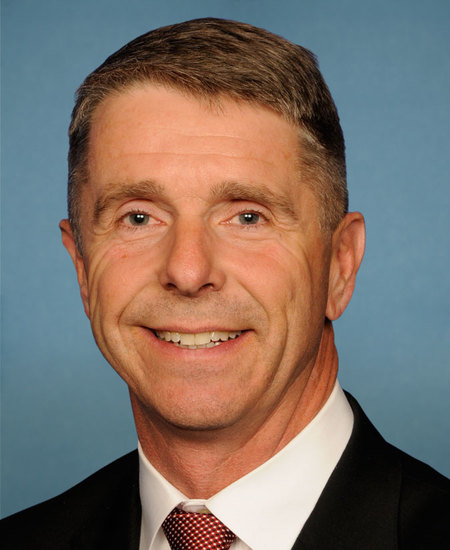
Rep. Robert J. Wittman
Sponsored bills
Maddy summaryThis bill extends funding for the existing Public Health Service Act program focused on raising public awareness about Alzheimer's disease and related dementias. It authorizes $33 million annually for fiscal years 2025 through 2029 to support public health education and outreach initiatives. The program directly affects public health organizations and community groups that develop and distribute educational materials about Alzheimer's prevention, diagnosis, and care. The key provision is the multi-year funding extension, ensuring continued support for nationwide awareness efforts without altering the program's core structure.
Maddy summaryHR 8704 establishes a $10 million grant program administered by the National Fish and Wildlife Foundation to reduce harmful interactions between ocean users (like fishermen, tourism operators, and shipping companies) and North Atlantic right whales and other large cetaceans. The program funds research on avoidance technologies, awareness campaigns about existing whale protections, and infrastructure to share management information. Eligible recipients include states, nonprofits, businesses in maritime sectors, and tribal governments, with priority given to projects that reduce whale harm, involve collaboration among ocean users, and support U.S. small businesses. The bill also freezes existing vessel strike reduction rules until 2030 and requires biennial reports on grant effectiveness.
Maddy summaryThis bill amends the Foreign Agents Registration Act to require individuals who previously acted as agents for foreign governments or organizations to retroactively register with the U.S. government for any period they served in that role, even if they no longer work as agents. It directly affects past foreign agents who failed to register during their service under the 1938 law. The key provision allows the Attorney General to seek court orders mandating retroactive registration compliance for past periods, even if the person is no longer acting as an agent at the time the order is issued.
Maddy summaryHR 760, the Chinese Military and Surveillance Company Sanctions Act of 2023, expands U.S. sanctions to block all transactions (including debt and equity financing) with Chinese military-affiliated and surveillance technology companies, moving beyond previous restrictions that only targeted public stock transactions. It requires the President to impose full asset-blocking sanctions via the Treasury’s Specially Designated Nationals (SDN) list on companies designated under updated Treasury lists or determined to support China’s military/surveillance sectors. This directly affects U.S. individuals and businesses, prohibiting them from engaging in any financial, commercial, or technological dealings with these designated entities. Exceptions include U.S. intelligence activities and the importation of physical goods, with the sanctions set to expire 7 years after enactment.
Maddy summaryHRES 1606 is a ceremonial resolution honoring the 5th anniversary of the U.S. Space Force (established December 20, 2019). It recognizes the Space Force's role in national security, commends its personnel ("Guardians"), and lists 12 specific installations supporting its mission. The resolution has no legal effect or policy changes - it is purely symbolic, expressing congressional support and acknowledging the Space Force's contributions. It directly affects no individuals or entities beyond the symbolic recognition of the service and its facilities.
Maddy summaryThe Working Dog Commemorative Coin Act (HR 807) directs the U.S. Treasury to mint three types of commemorative coins honoring working dogs' service: $5 gold coins, $1 silver coins, and half-dollar coins with specific weight and composition requirements. Each coin will carry a surcharge ($35 for $5 coins, $10 for $1 coins, $5 for half-dollars) that will be paid directly to America's VetDogs to support their programs providing service dogs for veterans, the disabled, and others. The coins will be issued in 2027 with designs reflecting working dogs' roles in military, detection, therapy, and assistance work. The legislation specifies that all surcharge revenue must fund America's VetDogs' operations without creating new government programs. This is a commemorative measure focused on honoring working dogs' contributions through coin sales, with all surcharge funds going to a specific nonprofit organization.
Maddy summaryHCONRES 133 designates November 25, 2024, as "Public Health Thank You Day" to recognize public health professionals. The resolution expresses Congress's support for their work in disease prevention, maternal care, mental health, and addressing health disparities. It has no legal effect or funding provisions - it solely serves to formally commend these professionals for their contributions. The bill directly affects public health workers nationwide, acknowledging their role in protecting community health.
Maddy summaryThis bill enhances the existing American Battlefield Protection Program by expanding eligibility for grants to include Tribes, nonprofit organizations, and educational institutions, alongside States and local governments. It clarifies that eligible sites must be identified in the 1993 Civil War battlefield report or 2007 Revolutionary War/War of 1812 report, excluding sites already within National Park boundaries. The bill also requires the Secretary to submit updated battlefield condition reports to Congress every 10 years, starting two years after enactment, tracking preservation efforts and battlefield changes. These changes streamline program administration and ensure ongoing assessment of historic battlefield sites.
Maddy summaryHR 3012 reauthorizes U.S. programs under the North Korean Human Rights Act of 2004 through 2028, extending funding and reporting requirements for existing initiatives. It directs the U.S. Agency for Global Media to continue broadcasting independent news into North Korea, supports transparent humanitarian aid delivery, and urges China to halt forcible repatriation of North Korean refugees. The bill directly affects North Korean citizens by promoting information access and refugee protection, and North Korean refugees in China by advocating for UNHCR access and refugee rights. Key provisions include extending program deadlines, reinforcing U.S. diplomatic efforts on human rights, and calling for swift confirmation of the Special Envoy on North Korean Human Rights Issues.