

Maddy summaryThe Stay on Schedule (S.O.S.) Resolution (HRES 12) would amend House rules to require all regular annual spending bills for the next fiscal year (starting October 1) to be approved by July 31. If not passed by that date, the House cannot schedule a recess during August. This procedural change directly affects the House calendar by linking the August recess to the completion of the budget process. It ensures budget-related legislation is finalized before the summer break, without altering substantive spending levels.
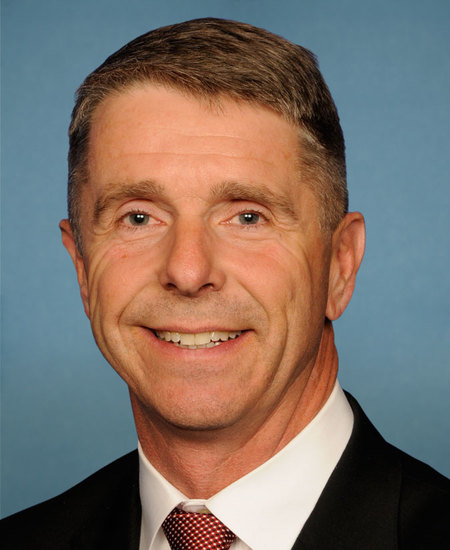
Rep. Robert J. Wittman
Sponsored bills
Maddy summaryHR 208, the "No Budget, No Pay Act," requires Congress to pass a budget resolution by April 15 each year or risk having members' salaries withheld. If no budget resolution is agreed upon by that date, the payroll administrator must place all congressional salaries into escrow starting April 16. Salaries remain in escrow until either a budget resolution is passed or the end of the current Congress, whichever comes first. This bill directly affects all members of Congress, including delegates and resident commissioners, by tying their pay to the timely passage of a budget resolution. The law applies starting with fiscal year 2026.
Maddy summaryHR 45 (FIND Act) requires federal government contractors to certify they do not discriminate against firearm businesses (including manufacturers, dealers, and trade associations) in their policies or practices. The bill mandates that contractors and subcontractors (for contracts over 10% of the prime contract value) certify they have no discriminatory policies and will not adopt them during the contract term. Violations could lead to contract termination and potential debarment. This applies to all federal procurement contracts awarded after the bill's enactment, excluding sole-source contracts. The law aims to ensure firearm businesses are treated equally in government contracting without restricting legitimate business criteria like creditworthiness or legal compliance.
Maddy summaryThis bill requires Congress to approve major federal regulations before they take effect. It would mandate that agencies submit detailed reports including cost-benefit analyses, economic impact assessments, and other information to Congress before implementing significant regulations. Major rules - defined as those with at least $100 million annual economic impact or significant effects on costs, competition, or employment - would need a joint resolution of approval from Congress within 70 session days. Nonmajor rules would follow a less stringent disapproval process. The bill aims to increase legislative oversight of the regulatory process, requiring Congress to formally review and approve rules that significantly impact the economy or public regulations.
Maddy summaryHR 138, the Lowering Costs for Caregivers Act of 2025, expands tax-advantaged health savings by allowing taxpayers to use funds in Health Savings Accounts (HSAs), Flexible Spending Accounts (FSAs), and Health Reimbursement Arrangements (HRAs) to cover medical expenses for their parents, not just their spouse. The bill amends the Internal Revenue Code to explicitly include parents as eligible dependents under these accounts, removing prior restrictions. This change directly affects caregivers - primarily adult children supporting aging parents - who will now have greater flexibility to use pre-tax funds for their parents' medical care. The provisions apply to expenses incurred after December 31, 2024, and aim to reduce out-of-pocket costs for family caregivers.
Maddy summaryHR 209, the "Inaction Has Consequences Act," requires that if either the House or Senate fails to pass all annual budget bills by the start of a fiscal year (beginning in 2026), the salaries of Members of Congress serving in that chamber will be held in an escrow account. This mechanism directly affects all Representatives and Senators (including delegates and resident commissioners) who serve in the chamber that misses the budget deadline. The escrow holds payments until either the budget bills are passed or the end of the current Congress, whichever comes first. The bill ensures salaries are released automatically on the last day of the Congress if the deadline isn't met. It applies separately to each chamber and defines "regular appropriation bills" as those handled by single subcommittees in each house.
Maddy summaryThis bill designates a specific United States Postal Service building at 220 North Hatcher Avenue in Purcellville, Virginia, as the "Secretary of State Madeleine Albright Post Office Building." It changes the official name of this facility and updates all federal references to it to reflect the new name, honoring Madeleine Albright, former U.S. Secretary of State. The bill has no policy or funding provisions - it is a ceremonial naming resolution.
Maddy summaryThe Treat and Reduce Obesity Act of 2023 expands Medicare coverage for obesity treatment by allowing a wider range of healthcare providers - including nurse practitioners, dietitians, psychologists, and community-based counseling programs - to deliver intensive behavioral therapy for obesity, provided they coordinate with primary care providers. It also adds Medicare Part D coverage for medications used to treat obesity or for weight loss management in overweight individuals with related health conditions like diabetes or high blood pressure. These changes directly affect Medicare beneficiaries, particularly older adults (65+), who face higher obesity rates and associated costs, including $50 billion annually in Medicare spending for obesity-related care. The bill requires annual reports to Congress on implementation to improve coordination of obesity care across federal health programs.
Maddy summaryThe Education and Workforce Freedom Act would expand the use of 529 college savings accounts to cover more education and training costs. It allows these accounts to pay for K-12 tuition at public, private, or religious schools, homeschooling, and related expenses like curriculum materials, tutoring, and educational therapies. The bill also adds coverage for recognized job training programs and professional certifications, including test fees and course costs for credentials listed by states or the Department of Veterans Affairs. These changes would directly affect families using 529 accounts for K-12 education and individuals pursuing career-focused training through approved programs.
Maddy summaryThis bill approves new agreements that amend the Compact of Free Association between the United States and the Federated States of Micronesia, the Republic of the Marshall Islands, and the Republic of Palau. It incorporates related agreements including fiscal procedures and trust fund agreements that govern how U.S. funding is managed and distributed to these nations. The bill provides funding for 2024-2043 to support programs like healthcare, education, veterans' services, and economic development in the Freely Associated States. It establishes reporting requirements and oversight mechanisms for federal agencies implementing these agreements. The bill directly affects U.S. federal agencies, the Freely Associated States, and U.S. funding mechanisms for these Pacific Island nations.