

Maddy summaryHR 1007, the Antisemitism Awareness Act of 2025, clarifies how the Department of Education enforces Title VI of the Civil Rights Act of 1964 to address discrimination against Jewish individuals. It requires the Department to consider the International Holocaust Remembrance Alliance (IHRA) definition of antisemitism when investigating complaints involving discrimination based on actual or perceived Jewish ancestry or ethnic characteristics. This affects Jewish students and communities in K-12 schools and colleges receiving federal funding, as it ensures antisemitism is assessed under existing civil rights protections. The bill does not create new laws but specifies that the IHRA definition - already used by the Department since 2018 - must be applied in Title VI enforcement cases.
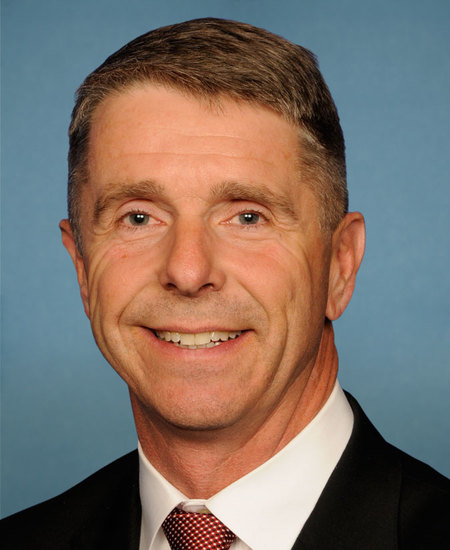
Rep. Robert J. Wittman
Sponsored bills
Maddy summaryThis bill reauthorizes the Dr. Lorna Breen Health Care Provider Protection Act, extending mental health support programs for healthcare professionals through 2030 (previously ending in 2024). It requires funded programs to specifically address reducing administrative burdens on healthcare workers while continuing to promote access to mental health and substance use disorder services. The legislation directly affects healthcare providers across the U.S. who may access these federally supported resources. Key provisions include extending funding periods and mandating that grant recipients focus on easing workplace administrative tasks, alongside maintaining existing awareness initiatives. The bill does not create new programs but continues and refines existing mental health support for the healthcare workforce.
Medicare Patient Access and Practice Stabilization Act of 2025 This bill increases certain payment adjustments under the Medicare physician fee schedule for services furnished between April 1, 2025, and January 1, 2026.
Maddy summaryHR 21, the Born-Alive Abortion Survivors Protection Act, requires medical staff at abortion facilities to provide the same immediate care and hospital admission to any infant born alive during an abortion as they would for any newborn. It mandates reporting failures to provide this care to law enforcement and imposes penalties of up to 5 years in prison for violations, with harsher penalties for intentional killing. The bill also allows women who undergo abortions to sue for civil damages, including triple the abortion cost, and provides for attorney fees. It defines "abortion" to exclude procedures performed after viability to preserve a live birth. This law directly affects healthcare providers at abortion facilities and creates new federal legal obligations for them.
Maddy summaryHR 715, the BNA Fairness Act, amends the tax code to exclude the basic needs allowance provided to members of the Armed Forces from taxable income. This allowance, paid for daily living expenses like food and housing, directly affects active-duty service members who receive it. The bill adds a specific provision clarifying that this allowance qualifies as a non-taxable "qualified military benefit" under existing tax law. The change takes effect for tax years after the bill becomes law, ensuring service members no longer pay income tax on this specific benefit.
Maddy summaryHR 703, the Main Street Tax Certainty Act, makes a key tax deduction permanent for small business owners. It removes the temporary sunset provision (subsection (i)) from Section 199A of the tax code, ensuring the qualified business income deduction remains available for eligible small businesses. This change directly affects pass-through business owners (like S-corps, partnerships, and sole proprietorships) who currently qualify for this deduction. The permanent change takes effect for tax years starting after December 31, 2025.
Supporting the Health of Aquatic systems through Research Knowledge and Enhanced Dialogue Act of 2025 or the SHARKED Act of 2025 This bill requires the Department of Commerce to establish a task force to address and report to Congress about critical needs with respect to shark depredation. (Shark depredation is the partial or complete removal of a hooked fish by a shark directly from a fishing line before the line is retrieved.) The duties of the task force are, among other responsibilities, to (1) develop ways to improve coordination and communication across the fisheries management and shark research communities; (2) identify research priorities and funding opportunities; (3) develop recommended management strategies to address shark depredation; and (4) coordinate the development and distribution of educational materials. The bill specifies that the task force must include representatives of each Regional Fishery Management Council, each Marine Fisheries Commission, the fish and wildlife agencies of coastal states, and the National Marine Fisheries Service. The task force must also include researchers and others with relevant expertise. The task force must report its findings to Congress within two years after the bill's enactment and every two years thereafter until the task force is terminated. The task force sunsets within seven years after the date of its establishment.
Maddy summaryThe HSA Modernization Act (HR 548) expands eligibility for Health Savings Accounts (HSAs) by removing barriers for specific groups. It allows veterans without service-connected disabilities, Medicare Part A beneficiaries (age 65+), and individuals receiving Indian Health Service care to contribute to HSAs. The bill also permits bronze and catastrophic health plans (under the Affordable Care Act) to qualify as HSA-compatible plans, increases contribution limits to match deductible amounts, and enables both spouses to contribute to a single HSA with adjusted limits. All changes apply to taxable years beginning after December 31, 2025.
Chiropractic Medicare Coverage Modernization Act of 2025 This bill expands Medicare coverage of chiropractic services to include all services provided by chiropractors, rather than only subluxation corrections through manual manipulation of the spine.
This bill increases the annual limit on the tax credit for qualified railroad track maintenance expenses (also referred to as the short line railroad tax credit) and expands eligibility for claiming the credit. Under current law, the tax credit is limited each tax year to $3,500 multiplied by the sum of the number of miles of railroad track owned or leased by the taxpayer (miles owned or leased) and the number of railroad track miles assigned to the taxpayer by a Class II or III railroad (miles assigned). This bill increases the annual limit to $6,100 multiplied by the sum of miles owned or leased and miles assigned. The $6,100 amount used in the calculation of the tax credit limit is adjusted for inflation for tax years beginning after 2025. The bill also expands eligibility for the tax credit to include gross expenses for maintaining railroad tracks owned or leased as of January 1, 2024. Under current law, the tax credit is limited to gross expenses for maintaining railroad tracks owned or leased as of January 1, 2015.