

Maddy summaryHRES 166 is a non-binding House resolution expressing U.S. support for the Iranian people's desire for a democratic, secular, and nonnuclear republic. It condemns the Iranian regime's terrorism, regional proxy wars, internal suppression of ethnic and religious minorities, and human rights abuses - including executions and repression of women-led protests. The resolution calls for holding the regime accountable through sanctions, supports the Ten-Point Plan for Iran’s democratic transition, and urges protection for Iranian political refugees in Albania. It does not create new laws but affirms U.S. policy alignment with Iranian protesters' demands.
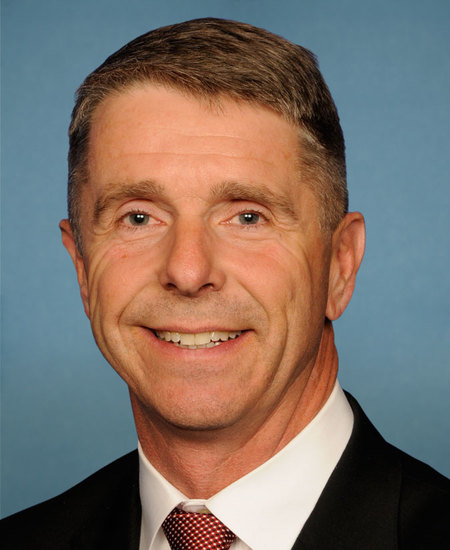
Rep. Robert J. Wittman
Sponsored bills
Maddy summaryThis bill awards a Congressional Gold Medal to the 761st Tank Battalion (known as the "Black Panthers"), the first predominantly Black armored unit in World War II's European Theater. It recognizes their combat service from 1944-1946, including key roles in the Battle of the Bulge and breaking the Siegfried Line, despite facing racial prejudice during and after the war. The medal will be displayed at the National Museum of African American History and Culture, with bronze duplicates available for sale to cover costs. The bill commemorates the battalion's 130,000 enemy casualties inflicted, 50% casualty rate, and their 1978 Presidential Unit Citation. It does not create new laws or affect current policies.
Maddy summaryHR 1487, the Agricultural and Forestry Hauling Efficiency Act, allows Virginia to issue special permits for agricultural and forestry vehicles weighing up to 90,000 pounds on interstate highways. This directly affects farmers and timber haulers in Virginia transporting unprocessed goods like raw crops (for food, feed, or fiber) or unfinished forest products (such as logs, wood chips, or biomass). The bill amends federal law to create this exception to standard weight limits, enabling larger loads for specific agricultural and forestry operations. It does not change weight rules for other states or other types of cargo.
Maddy summaryHR 1581 establishes Fort Monroe National Historical Park in Virginia to preserve and interpret the site's significant history, including its role in the Civil War (like the 1861 Contraband Decision), its use as a coastal defense site, and its connection to the first entry of Africans into English North America. The bill replaces the existing Fort Monroe National Monument by incorporating its lands into the new park, updating all references from "National Monument" to "Historical Park" in federal documents. It defines the park's boundary using a specific map and allows the National Park Service to acquire land within that boundary through donations or purchases. The park will be managed under standard National Park System laws while ensuring Virginia's authority over non-federal land and allowing historic buildings to be reused, provided they meet preservation standards.
Maddy summaryHR 1494, the Sporting Goods Excise Tax Modernization Act, requires online marketplaces (like Amazon or eBay) to collect the federal excise tax on sporting goods sold through their platforms, rather than leaving this responsibility to individual sellers. It specifically targets platforms that host third-party seller listings and facilitate transactions for goods imported from outside the U.S. The bill treats these marketplaces as the "importer" for tax purposes, making them liable for the tax on qualifying sporting goods sales. This change applies to sales after a 60-day grace period following the bill's enactment, with no impact on taxes already owed by other parties.
Maddy summaryHR 1502 authorizes the creation of a Congressional Gold Medal to honor the volunteers and communities (primarily from Nebraska, Colorado, and Kansas) who supported the North Platte Canteen during World War II. The bill directs the Treasury Secretary to design and strike the medal, which will be presented to the individuals who contributed to the canteen’s operations and then permanently displayed at the Lincoln County Historical Museum in North Platte, Nebraska. It also permits the sale of bronze duplicates to cover production costs, with proceeds going to the U.S. Mint. This is a commemorative measure recognizing historical service, not a policy change affecting current laws or programs.
Maddy summaryThis bill would require states to create a simplified process for out-of-state healthcare providers to join Medicaid and CHIP programs. Qualified providers (those already enrolled in Medicare or another state's program with low fraud risk) could enroll without excessive screening and would be approved for five years. It directly affects children under 21 enrolled in Medicaid or CHIP by expanding access to providers outside their state, particularly in underserved areas. The change applies to all states' Medicaid programs but takes effect three years after enactment.
Maddy summaryHR 552, the Veterans Collaboration Act, establishes a two-year pilot program where the Department of Veterans Affairs (VA) partners veterans service organizations with law schools to provide free legal assistance to veterans. The bill directly affects veterans seeking help with disability claims and appeals by connecting them with law school students and credentialed personnel through VA-facilitated partnerships. Key provisions require the VA to target states with the highest veteran populations, use social media to promote partnerships, and submit quarterly reports to Congress detailing program participation and veteran assistance numbers. This is a procedural pilot program focused on creating structured legal aid access, not a permanent policy change.
Maddy summaryThe Veteran’s Choice Accountability Act requires the Department of Veterans Affairs (VA) to evaluate its hospital, medical, and nursing home care programs to identify the most heavily used specialized services and ensure these are maintained as centers of excellence. It also mandates a two-year assessment of how well the VA Budget and Choice Improvement Act (Public Law 114-41) has been implemented, with results reported to Congress. These provisions directly affect VA operations and aim to improve accountability in veterans' healthcare delivery. The bill focuses on procedural oversight rather than altering benefit eligibility or funding.
Maddy summaryHR 553 (BRAVE Act) creates a new Department of Veterans Affairs (VA) system to proactively connect veterans with mental health resources. It directly affects veterans enrolled in the VA's annual patient enrollment system who have experienced traumatic or highly stressful events, allowing them to opt-in to receive information about available mental health care services. The bill requires the VA to establish this outreach system within two years of enactment and coordinate it with the Department of Defense's Transition Assistance Program. This is a concrete policy change focused on improving access to mental health support for veterans in need.