

Homes for Every Local Protector, Educator, and Responder Act of 2025 or the HELPER Act of 2025 This bill establishes a program administered by the Department of Housing and Urban Development to provide mortgage assistance to law enforcement officers, elementary and secondary school teachers, firefighters, or other first responders. Specifically, these individuals may be eligible for a first-time mortgage on a primary family residence with no down payment. Instead, the mortgage is subject to a one-time, up-front mortgage insurance premium.
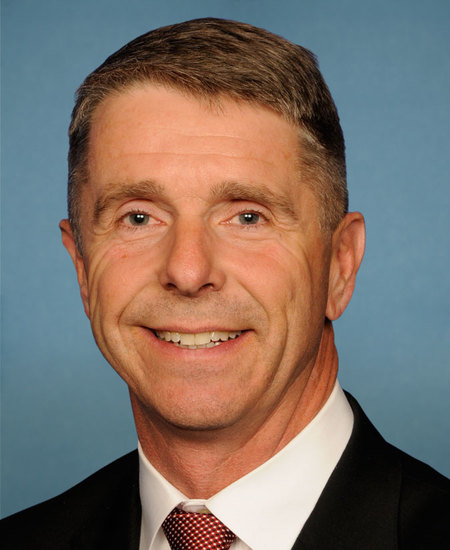
Rep. Robert J. Wittman
Sponsored bills
Maddy summaryThis bill establishes the Chesapeake Bay States Partnership Initiative to help agricultural producers in the Chesapeake Bay watershed (covering parts of Delaware, Maryland, New York, Pennsylvania, Virginia, West Virginia, and D.C.) implement conservation practices that improve water quality, restore soil resources, and increase climate resilience. It provides targeted funding for erosion control, nutrient reduction, and habitat restoration on agricultural land, with special consideration for practices that reduce nitrogen and sediment. The bill creates a "turnkey pilot program" allowing technical service providers to establish and manage conservation practices on farmland without requiring landowners to pay costs or submit additional paperwork. Additionally, it updates conservation programs, enhances agricultural education funding, and adjusts regulatory oversight for certain catfish species in the Chesapeake Bay ecosystem.
Metastatic Breast Cancer Access to Care Act This bill expedites payment of Social Security Disability Insurance (SSDI) benefits and eligibility for Medicare coverage for those with metastatic breast cancer (i.e., breast cancer that has spread to other sites in the body). Specifically, the bill eliminates the 5-month waiting period for SSDI benefits and the subsequent 24-month waiting period for Medicare coverage for individuals with metastatic breast cancer. Under current law, individuals generally must wait 5 months after the onset of disability to begin receiving SSDI benefits and an additional 24 months to become eligible for Medicare.
Maddy summaryHR 2081, the Donut Dollies Congressional Gold Medal Act, authorizes a Congressional Gold Medal to honor the 627 women who served as Red Cross volunteers in the Supplemental Recreation Activities Overseas (SRAO) program during the Vietnam War. The bill directs the Treasury Secretary to design and strike the medal, which will be presented by Congress and then given to the Smithsonian Institution for display. It also allows the sale of bronze duplicates to cover costs, with proceeds going to the U.S. Mint fund. This commemorative act recognizes the volunteers' service supporting over 280,000 troops through recreation programs across Vietnam from 1965 to 1973.
Maddy summaryThis bill changes how individual investors in mutual funds (regulated investment companies) are taxed on certain dividends. It allows investors to defer paying tax on capital gain dividends that are automatically reinvested in additional fund shares through a dividend reinvestment plan. The deferred tax is recognized later when the investor sells shares or upon their death. It also establishes that shares acquired through this reinvestment are treated as held for over one year from the start, potentially qualifying for long-term capital gains rates. The rule applies only to individual investors (not estates, trusts, or dependents claimed by others).
Maddy summaryHR 2033, the Military Spouse Hiring Act, expands the Work Opportunity Tax Credit to include spouses of active-duty military personnel. It adds "qualified military spouse" as an eligible category for the tax credit, meaning employers who hire such spouses can claim the credit. A "qualified military spouse" is defined as someone certified by a local agency as married to an active-duty service member at the time of hire. The credit applies to hires occurring after the bill's enactment date. This directly affects military spouses seeking employment and employers hiring them, providing a tax incentive to encourage their hiring.
Maddy summaryThis bill amends Medicare eligibility rules to clarify that beneficiaries needing occupational therapy *or* speech therapy qualify for home health services. It updates two sections of the Social Security Act (Parts A and B) to replace "need occupational therapy or speech therapy" with "need occupational, or speech therapy," ensuring both therapies are explicitly covered. The change directly affects Medicare beneficiaries requiring either therapy for home-based care, removing potential confusion about eligibility. The updated rules will take effect for services provided on or after January 1, 2026.
Maddy summaryThis bill amends the calculation method for the Basic Allowance for Housing (BAH) for uniformed service members living off-base in the United States. It requires the Secretary of Defense to set BAH amounts based directly on the actual monthly cost of adequate housing in each area, matching the member's pay grade and dependency status. This change ensures BAH rates more accurately reflect local housing expenses rather than using a previous formula. The bill directly affects all service members receiving BAH for off-base housing across the U.S., particularly those in high-cost areas where current rates may not cover actual rent.
Maddy summaryHR 1909 reauthorizes federal funding and updates programs to reduce maternal deaths. It requires maternal mortality review committees to include obstetricians/gynecologists and improves death certificate reporting by coordinating with death certifiers. The bill mandates the CDC to share annual best practices for preventing maternal mortality with hospitals, state health groups, and perinatal programs. It also increases annual funding from $58 million to $100 million for these initiatives, covering fiscal years 2025 through 2029. The law directly affects hospitals, state health agencies, and maternal health programs receiving these federal funds.
Maddy summaryThis bill ensures military personnel, civilian Defense workers, and supporting contractors continue receiving pay during government funding gaps in fiscal year 2025. It provides temporary funding from existing Treasury reserves to cover salaries for active-duty troops, reservists, Defense civilians, and contractors supporting military operations until Congress passes a full budget or by January 1, 2026. The measure directly affects all active-duty service members, reserve components, and their civilian/contractor support staff across the military. It does not create new policies but guarantees uninterrupted pay during budget implementation delays.