

Maddy summary# Summary of the SHIPS for America Act This comprehensive legislation focuses on strengthening the U.S. maritime industry, shipbuilding capacity, and maritime workforce to enhance national security and economic competitiveness. ## Key Areas of Focus 1. **Shipbuilding & Maritime Infrastructure** - Establishes a United States Center for Maritime Innovation to accelerate adoption of commercial technologies - Creates a National Shipbuilding Research Program - Requires an annual survey of anticipated commercial vessel construction - Includes provisions for streamlined environmental reviews of maritime infrastructure 2. **Workforce Development** - Establishes the United States Merchant Marine Career Retention Program to maintain mariner qualifications - Creates Centers of Excellence for Domestic Maritime Workforce Training and Education - Implements military-to-maritime transition programs - Establishes a Maritime Career and Technical Education Advisory Committee 3. **Education & Training** - Expands educational assistance for merchant mariners - Creates eligibility for Naval Postgraduate School for merchant mariners - Establishes maritime education programs from K-12 through higher education - Provides for international exchanges for mariners and naval architects 4. **National Security & Strategic Readiness** - Requires reports on National Defense Reserve Fleet utilization - Includes measures to de-risk the maritime sector from Chinese influence - Enhances shipbuilding capacity for national security needs - Establishes programs to ensure sufficient mariner workforce for national defense 5. **Funding Mechanisms** - Authorizes appropriations from the Maritime Security Trust Fund - Includes funding for workforce programs, education, and shipbuilding initiatives - Establishes specific funding levels for various programs over multiple fiscal years The legislation aims to create a sustainable domestic maritime industrial base that supports both commercial shipping and national defense requirements, with a particular emphasis on developing and retaining a skilled U.S. maritime workforce.
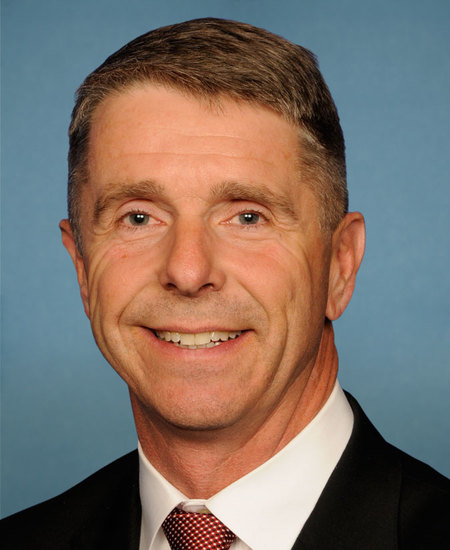
Rep. Robert J. Wittman
Sponsored bills
Preventing Environmental Hazards Act of 2025 This bill expands National Flood Insurance Program (NFIP) coverage to include the demolition or relocation of certain coastal structures that are facing imminent collapse or subsidence. Specifically, NFIP must pay for demolition or relocation for NFIP-insured structures that are condemned or deemed unsafe by state or local authorities due to the threat of imminent collapse or subsidence from shoreline erosion or that meet other location criteria. The bill sets forth provisions for the valuation of the structure, the maximum claim to be paid, and the terms of coverage termination. This bill applies to structures covered by NFIP (1) for a period of 12 months on or before the date of the bill’s enactment, or (2) for a continuous period of 4 years prior to certification for coverage established by this bill.
Fentanyl Awareness for Children and Teens in Schools Act or the FACTS Act This bill establishes grant programs and requires strategies and studies to address the misuse of synthetic opioids (i.e., laboratory-derived substances such as fentanyl and its derivatives) among youth. The bill requires the Department of Health and Human Services (HHS) to award grants to partnerships between educational and health organizations for prevention, treatment, and recovery efforts related to the use of synthetic opioids by middle and high school-aged children. It also allows school-based health centers to use existing HHS grants to purchase naloxone to reverse the effects of opioid overdoses and to establish programs to address misuse of synthetic opioids. Also, the bill authorizes state educational agencies to use certain Department of Education (ED) grant funds to provide training to school personnel on addressing students’ misuse of synthetic opioids. State and local educational agencies must also address such misuse in their educational plans in order to qualify for certain ED grants. Finally, the bill (1) establishes an interagency taskforce to coordinate federal efforts to address synthetic opioid misuse among youth, (2) requires an evaluation of the State Unintentional Drug Overdose Reporting System’s effectiveness in identifying the specific synthetic opioids causing youth overdoses, (3) expands the data reported by the National Center for Education Statistics to include information about the use of synthetic opioids in schools, and (4) requires two recurring HHS surveys to include questions on youth exposure to synthetic opioids.
Maddy summaryThis bill creates a new federal program to expand high-speed broadband access in rural areas by providing grants, loans, and combinations of both. It sets minimum standards requiring 100 Mbps downstream and upstream speeds, prioritizes projects in communities where at least 90% of households lack such service, and directs funding toward areas with high poverty, small populations, or strategic community plans. Eligible applicants include tribal organizations, cooperatives, local governments, and rural utilities, with requirements to meet buildout deadlines, participate in federal affordability programs, and provide cost-sharing (up to 25%). The program authorizes $650 million annually from 2026 to 2030 to fund infrastructure construction, improvement, or acquisition in underserved rural communities.
Maddy summaryThe SERVE Act (HR 3107) aims to improve military recruitment by increasing access for recruiters in high schools and expanding Junior Reserve Officers' Training Corps (JROTC) opportunities. It requires military recruiters to visit schools at least four times per academic year during peak hours in common areas (like lunch or athletic events), and creates "Cross-town" JROTC units allowing students at schools without their own program to join nearby units. The bill also establishes a two-year pilot program to recognize "HERO schools" (high schools with military enlistment rates above the state average) and gives priority consideration to graduates of these schools when applying to military service academies. These changes directly affect high school students in grades 9-12 and school districts without JROTC programs, focusing on practical access and recognition to support military recruitment efforts.
Maddy summaryThis bill designates the POW/MIA Memorial and Museum under construction in Jacksonville, Florida, as the official "National POW/MIA Memorial and Museum." It requires the museum to submit a detailed report to Congress within 90 days, including a five-year budget, organizational structure, bylaws, and accreditation details. The designation may be withdrawn if the museum is not operational within five years of the bill's enactment or if the required report is late. The museum honors prisoners of war and those missing in action since World War II through educational exhibits and reflective spaces for the public.
Maddy summaryHR 906 requires the Federal Communications Commission (FCC) to publish and maintain a public list of communications entities (like radio or cable companies) holding FCC licenses that have ownership ties to "covered countries" (nations designated under U.S. law). This affects FCC license holders with foreign ownership from those countries, as the FCC must identify them using ownership rules or national security agency determinations. The bill mandates the FCC to update this list annually, with an initial list due 120 days after enactment and full implementation within 18 months. The law aims to increase transparency around foreign influence in U.S. communications infrastructure without changing licensing standards.
Maddy summaryThe Advancing Water Reuse Act creates a 30% tax credit for businesses investing in qualifying water recycling systems. It directly affects industrial, manufacturing, data center, and food processing facilities that replace freshwater use with recycled water from municipal sources, as well as projects building municipal water recycling infrastructure to serve these sectors. The credit covers 30% of the cost for eligible equipment, such as new onsite recycling systems or municipal infrastructure upgrades. This policy is available for projects completed by December 31, 2032, with specific rules allowing businesses to claim the credit even if equipment is later transferred to water utilities.
Maddy summaryHR 2939, the Drone Espionage Act, updates existing espionage law to explicitly prohibit taking or transmitting video footage of defense information. It amends Title 18, U.S. Code, Section 793 by inserting "video" after "photographic negative" in the definition of prohibited materials. This change directly affects individuals who capture or share video of classified military or defense-related information, whether using drones or other devices. The bill makes no new criminal penalties but ensures video evidence is covered under current espionage statutes.
Maddy summaryThis bill increases the federal tax credit for rehabilitating historic buildings. It raises the standard credit rate from 20% to 30% for qualifying small projects (with a $3.75 million expenditure cap) and further increases the cap to $5 million for projects in rural areas. The bill also allows taxpayers to transfer all or part of this credit to another taxpayer, creating a new market for the credit. These changes apply to properties placed in service after the bill's enactment date. The bill directly affects developers and owners of historic properties seeking tax incentives for rehabilitation projects.