Maddy summaryHR 8563, the Sunset Act of 2022, requires most federal agency rules to automatically expire 10 years after issuance unless Congress passes a specific extension. Agencies must submit reports to Congress 180 days before expiration and identify rules for annual review, with 10% of rules reviewed each year for 9 years. Congress can extend rules only through a joint resolution introduced within 3 days of receiving the agency report, requiring bipartisan leadership sponsorship. This law directly affects federal agencies (who create rules) and Congress (who must vote on extensions), changing how long regulations remain in effect without renewal.
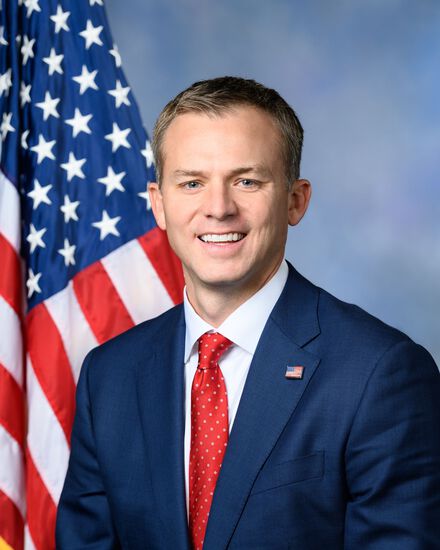
Rep. Blake D. Moore
Sponsored bills
Never Yielding Europe's Territory (NYET) Act of 2022 This bill addresses Russia's actions against Ukraine and other countries in the region. The bill authorizes and expedites the provision of security assistance, including by (1) prioritizing delivering excess defense articles to Ukraine, (2) authorizing the Department of State to waive certain costs for defense articles leased to Ukraine, and (3) authorizing additional Foreign Military Financing for programs in Europe. The bill also provides funding for (1) Foreign Military Financing assistance to Ukraine, (2) the Global Engagement Center to counter foreign-sponsored propaganda and disinformation, (3) the Countering Russian Influence Fund to support Ukraine and other countries in response to Russia's aggression, and (4) International Military Education and Training assistance for Ukraine. Furthermore, the bill imposes sanctions, including on (1) senior Russian military officials responsible for planning or executing military operations that violated Ukraine's sovereignty or territorial integrity, and (2) foreign individuals or entities that acted on behalf of Russia's government to destabilize Ukraine or disrupt Ukraine's critical infrastructure. The bill also addresses additional matters, including (1) prohibiting the National Aeronautics and Space Administration from sponsoring visas for Russian nationals affiliated with ROSCOSMOS, the entity that implements Russia's space program; (2) authorizing Radio Free Europe/Radio Liberty to explore opening new bureaus to reach audiences on Russia's periphery; and (3) providing for expedited approval of natural gas exports to qualifying nations, including NATO members, whereas currently expedited approval is only available for exports to countries that are in a free trade agreement relating to natural gas with the United States.
Human Trafficking Awareness Training Act This bill authorizes the Federal Law Enforcement Training Centers to establish a human trafficking awareness training program for state, local, tribal, territorial, and educational institution law enforcement personnel.
Putin Accountability Act This bill imposes sanctions pertaining to Russia and addresses related issues. The President must impose sanctions, with some exceptions, on individuals and entities that knowingly and directly provide specialized financial messaging services to Russia's central bank (or enables access to such services); entities responsible for constructing, financing, or operating Nord Stream 2 (a pipeline constructed to increase Russian natural gas exports) and the corporate officers and controlling shareholders of such entities; individuals and entities in Russia involved in kleptocracy, Russian government activities to subvert U.S. democratic institutions and interests, or Russian government disinformation campaigns against the United States; and entities that are Russian state development corporations, as well as any officials of such an entity. The President must impose property-blocking sanctions on such individuals and entities and also visa-blocking sanctions on the individuals. The President must also (1) issue regulations to prohibit U.S. individuals and entities from dealing in Russian sovereign debt; and (2) issue a determination as to whether certain specified Russian individuals meet the criteria to be subject to sanctions under various authorities, including this bill. The Department of State must (1) designate Russia a state sponsor of terrorism, and (2) report to Congress a determination of whether Russia-affiliated armed entities in the Donbas region of Ukraine meet the criteria to be designated as foreign terrorist organizations. The bill prohibits expending funds to engage with Russia's government on cyber issues or arms control negotiations until certain conditions have been met.
Removing Waste and Protecting Medicare Act This bill makes several budgetary changes, including (1) prohibiting sequestration orders in 2022, (2) rescinding certain COVID-19 state and local relief funds, and (3) extending certain adjustments under Medicare with respect to sequestration and payments under the physician fee schedule. It also modifies requirements relating to federal programs and benefits, such as permanently requiring taxpayers to include Social Security numbers on their tax returns in order to qualify for the child tax credit.
Illegal Immigrant Payoff Prohibition Act This bill prohibits the payment of a settlement to an alien for a civil action brought against the United States in connection with the alien's inadmissibility to, or unlawful presence in, the United States.
Frederick Douglass Trafficking Victims Prevention and Protection Reauthorization Act of 2021 This bill reauthorizes through FY2026 and revises programs and activities to support survivors of human trafficking and prevent such trafficking domestically and abroad. The bill expands and authorizes programs for survivors, including a program to prevent re-exploitation. It also extends through FY2026 a special assessment on certain persons convicted of a human trafficking offense, which funds programs for human-trafficking survivors. Additionally, the bill provides privacy and other protections for survivors, including specified financial protections and protections against retaliation for survivors who pursue civil claims against a perpetrator. The bill also allows courts to reduce sentences for certain individuals who commit human trafficking crimes as minors. To prevent trafficking domestically, federal departments must incorporate anti-trafficking efforts into contracting activities and personnel policies, and the bill supports private sector efforts to address human trafficking in its policies and services. Furthermore, the bill supports the identification, investigation, and prosecution of human trafficking crimes, with an expanded focus on forced labor. To prevent trafficking globally, the bill prohibits access to a trade program for developing countries and otherwise restricts development assistance for countries that fail to meet minimum standards for eliminating trafficking. It also changes the criteria for determining whether a country has met applicable standards. In addition, the bill authorizes sanctions on persons convicted of severe forms of trafficking and requires integration of counter-trafficking activities into foreign assistance programs. The bill also requires reporting by the Government Accountability Office, federal agencies, and states concerning human trafficking.

Care for Her Act This bill allows an eligible taxpayer to claim the Child Tax Credit for the tax year preceding the year the child is born. It also sets out other activities to support parents and pregnant women. Specifically, the bill establishes the Pregnancy Support Collaborative, which consists of representatives from the Department of Health and Human Services (HHS) and states that elect to participate. The collaborative must maintain a clearinghouse of information on providers of pregnancy and parenting supports and services. States must identify providers in their jurisdictions who meet applicable criteria for inclusion. In addition, the collaborative must share information about education and training opportunities for parents and pregnant women and identify successful programs (including workplace policies) to support them. Furthermore, the collaborative must award grants to states for local programs to improve maternal and infant health outcomes. If a community demonstrates that its program reduces Medicaid costs, it retains a portion of those savings. If approved by the collaborative, HHS must award grants to providers in the clearinghouse for mentoring and training pregnant women and new mothers and addressing gaps in the availability of maternity housing. Additionally, HHS may award grants for pregnancy and parenting supports and services. The Centers for Disease Control and Prevention and the Centers for Medicare & Medicaid Services must jointly maintain a database of de-identified epidemiological and Medicaid claims data to evaluate the effect of maternity homes on maternal and infant health outcomes.
Teleabortion Prevention Act of 2021 This bill restricts the use of telehealth for chemical abortions (also known as medication abortions). Specifically, it requires a provider who dispenses or prescribes medication for a chemical abortion to physically examine the patient, be physically present at the location of the chemical abortion, and schedule a follow-up visit. The bill provides an exception for a chemical abortion that is necessary to save the life of a mother whose life is endangered by a physical disorder, illness, injury, or condition. The bill establishes criminal penalties—a fine, a prison term of up to two years, or both—for a provider who does not comply with the requirements. A patient who undergoes a chemical abortion may not be prosecuted.
Afghanistan Accountability Act This bill requires the President to impose sanctions on certain foreign persons, such as Taliban officials, and requires reports related to Afghanistan. The President must impose asset- and visa-blocking sanctions on any foreign person who (1) is an official, agent, or instrumentality of the Taliban; (2) has acted to undermine democratic institutions or threaten the stability of Afghanistan; (3) has acted to limit or penalize freedom of expression in Afghanistan, particularly the freedom of expression of women; (4) has committed serious human rights abuses in Afghanistan; or (5) operates in the mining sector in Afghanistan. The sanctions also apply to certain immediate relatives of such persons and those who provide material support to such persons. The bill also requires reports to Congress on (1) the intelligence provided to the President and policymakers prior to and concerning the withdrawal of U.S. troops from Afghanistan, (2) whether the Taliban meets the criteria for designation as a foreign terrorist organization, and (3) human rights violations by the Taliban against individuals who supported U.S. efforts in Afghanistan.