

Maddy summaryThe Food Deserts Act (HR 484) creates a federal grant program to help establish grocery stores in underserved communities by providing capitalization grants to states. States would use these grants to build revolving funds that make low-interest loans to grocery stores meeting specific criteria, such as offering unprocessed foods, affordable pricing, and local hiring. The program prioritizes stores that source from local farms, provide nutrition education, and commit to keeping healthy foods in stock, while requiring applicants to contribute 20% of loan costs from non-federal funds. It authorizes $150 million for fiscal year 2026 to support these loans, which must be repaid over up to 30 years to replenish the revolving fund for future use.
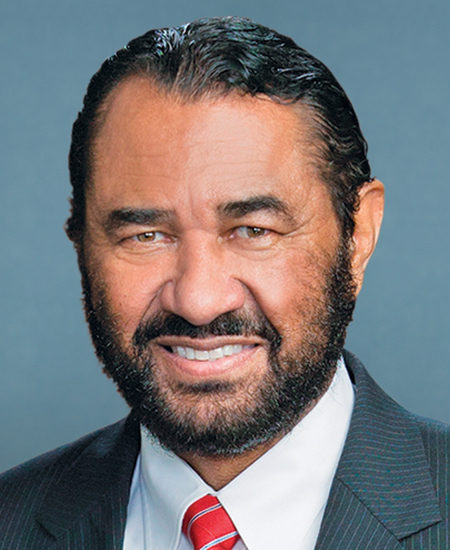
Sponsored bills
Maddy summaryThe Black History Matters Act directs the National Museum of African American History and Culture to study how public elementary and secondary schools teach Black history across the U.S. The study will identify which schools require this education, assess teaching quality through classroom discussions and materials, and examine how schools measure student learning. It requires the Director to complete the study within three years of the bill’s passage and submit a report to Congress within 180 days of completion. The bill does not change school curricula but aims to gather data on existing practices to inform future education policies. This study directly affects all public schools covered under the Elementary and Secondary Education Act.
Justice for All Act of 2025 This bill prohibits discrimination based on sex, sexual orientation, gender identity, or race-related characteristics in schools, businesses, federally funded programs, and other settings. It also provides statutory authority for and expands the types of civil actions that may be brought for violations. For example, the bill expands provisions under the Civil Rights Act of 1964 so as to (1) prohibit federally funded programs from discriminating based on sex or religion; and (2) prohibit public accommodations, including stores and transit services, from discriminating based on sex. The bill defines sex to include sex stereotypes, pregnancy, childbirth, sexual orientation, gender identity, and sex characteristics. It also expands the definition of race to include traits that have been historically associated with race (e.g., natural hair textures). The expanded definitions apply to the Civil Rights Act of 1964, the Fair Housing Act (discrimination in public and private housing), and Title IX of the Education Amendments of 1972 (discrimination based on sex in federally funded educational programs). Further, the bill provides statutory authority for disparate impact or intentional discrimination claims under the aforementioned acts, as well as the Age Discrimination Act of 1975 (discrimination based on age by federally funded programs) and the Rehabilitation Act of 1973 (discrimination based on disability by federally funded programs). The bill also includes other provisions that address (1) profiling by law enforcement officers, (2) employer liability with respect to civil rights violations, (3) predispute arbitration agreements in civil rights cases, and (4) governmental immunity in suits involving constitutional violations.
More Homes on the Market Act This bill increases the amount of gain from the sale of a principal residence that an individual may exclude from gross income (for federal tax purposes). Under the bill, an individual may exclude from gross income gain from the sale of a principal residence of up to $500,000 (currently $250,000), and taxpayers who are married and file a joint federal income tax return may exclude up to $1 million (currently $500.000). The bill also requires these amounts to be adjusted annually for inflation.
Maddy summaryThe Office of Gun Violence Prevention Act of 2025 would create a new office within the Department of Justice to coordinate federal efforts on reducing gun violence. The office, led by a Director appointed by the Attorney General, would integrate existing DOJ programs, evaluate data gaps, and develop evidence-based recommendations for Congress and the President. It would also establish an advisory council including survivors of gun violence, public health officials, and community representatives to guide its work. The office would produce annual reports detailing gun violence trends and policy proposals, while collaborating with agencies like Health and Human Services and the FBI.
Maddy summaryHR 1277, the First Rhode Island Regiment Congressional Gold Medal Act, authorizes a single gold medal to honor the First Rhode Island Regiment for its service during the Revolutionary War. The bill commemorates the regiment as one of the first integrated military units in U.S. history, formed in 1778 when Rhode Island allowed enslaved and Indigenous men to enlist and gain freedom upon service. The medal, designed by the Treasury Secretary, will be displayed at the Rhode Island State Library, with Congress encouraging its availability for research and display at relevant historical sites. This is a commemorative measure with no direct policy impact or financial provisions for individuals, focusing solely on historical recognition.
Maddy summaryHR 1348, the Venezuelan Adjustment Act, allows certain Venezuelans already in the U.S. to apply for permanent residency. It directly affects Venezuelans who entered the U.S. before December 31, 2021, and have lived there continuously for at least one year, plus their spouses and children. Key provisions include waiving specific inadmissibility grounds (like some criminal convictions), granting work authorization after 180 days of pending applications, and halting removal proceedings during processing. The bill also ensures no reduction in available immigrant visas and establishes a record of permanent residence upon approval.
Maddy summaryThis bill proposes a constitutional amendment stating that only "natural persons" (living humans) have rights protected by the U.S. Constitution, explicitly denying constitutional rights to corporations, LLCs, and other artificial entities. It would require governments to regulate campaign contributions and spending to prevent money from influencing elections, banning the view that spending to influence elections constitutes protected speech under the First Amendment. The amendment would not affect the constitutional right to a free press. This change would directly impact how corporations and other non-human entities can legally challenge laws or regulations in court.
Maddy summaryThe Fair Play for Women Act would require schools and athletic associations receiving federal funding to collect and publicly disclose detailed data on gender equity in sports, including participation rates, funding, facilities, and coaching. It mandates annual training for staff and athletes about Title IX rights and establishes civil penalties for schools that fail to comply with gender equity requirements. The bill directly affects all public elementary, secondary, and higher education institutions, as well as state athletic associations. Key provisions include requiring detailed reporting on gender disparities in sports participation and funding, and creating enforcement mechanisms to hold schools accountable for noncompliance.
Maddy summaryThis bill restricts access to Treasury payment systems (including the Bureau of the Fiscal Service) to only Treasury employees with a "fully successful" performance rating and at least one year of civil service, or contractors/outsiders with security clearances, required privacy/cybersecurity training, ethics agreements, and no conflicts of interest. It treats non-government users accessing these systems as government employees for ethics rules and defines specific actions (like stopping payments) as "personal and substantial participation" in government matters. The Treasury Inspector General must investigate any unauthorized access within 30 days and report to Congress, detailing the breach, security risks, and any halted payments. The bill directly affects Treasury staff, contractors, and any external entities accessing federal payment systems.