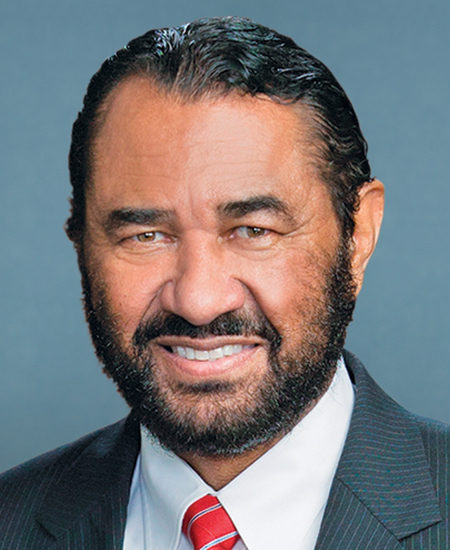
This resolution recognizes the cultural and historical significance of the Lunar New Year. The resolution expresses, in observance of this Lunar New Year, the Year of the Tiger, the deepest respect of the House of Representatives for Asian Americans and all individuals throughout the world who celebrate this significant occasion. The resolution wishes Asian Americans and all individuals who observe this holiday a happy and prosperous new year.
Sponsored bills
This resolution expresses support for the goals and ideals of Endometriosis Awareness Month. Endometriosis is a painful condition in which the tissue that normally lines the inside of the uterus grows outside the uterus.
This resolution expresses support for the goals and ideals of Korean American Day and honors the 119th anniversary of the arrival of the first Korean immigrants to the United States.
Maddy summaryThis bill (H.J.Res. 68) is a symbolic, procedural measure that would require the President to issue an annual proclamation designating a day as "Democracy Day." It directs the President to call on state/local governments and citizens to observe the day through programs and activities, with January 6 referenced as a potential date. The bill does not create new government programs or change existing laws - it only establishes a recurring presidential proclamation. It directly affects federal, state, and local governments by encouraging them to participate in annual observances. The bill has no budgetary impact and remains focused on promoting civic engagement through a designated day.
Accelerating Access to Critical Therapies for ALS Act This bill establishes grant programs to address neurodegenerative diseases, such as amyotrophic lateral sclerosis (also known as ALS or Lou Gehrig's disease), and contains other related provisions. The Department of Health and Human Services (HHS) shall award grants to eligible entities for scientific research utilizing data from expanded access to investigational ALS treatments for individuals who are not otherwise eligible for clinical trials. The Food and Drug Administration (FDA) shall award grants to public and private entities to cover the costs of research and development of drugs that diagnose or treat ALS and other rare neurodegenerative diseases. HHS shall also establish the Public-Private Partnership for Neurodegenerative Diseases between the National Institutes of Health, the FDA, and at least one eligible entity (generally, an institution of higher education or a nonprofit organization). The partnership shall support the development and regulatory review of drugs that address ALS and other rare neurodegenerative diseases. The FDA shall publish on its website a five-year action plan for fostering the development of drugs that improve or extend the lives of people living with rare neurodegenerative diseases. The Government Accountability Office must report to Congress about the grants provided under this bill, including an analysis of the impact of such grants on research and development of treatments for ALS.
This bill posthumously provides for the award of a Congressional Gold Medal in commemoration of the 13 service members who died on August 26, 2021, while stationed at Hamid Karzai International Airport in Afghanistan.
Combating International Islamophobia Act This bill establishes within the Department of State the Office to Monitor and Combat Islamophobia and addresses related issues. The office shall monitor and combat acts of Islamophobia and Islamophobic incitement in foreign countries. The bill establishes the position of Special Envoy for Monitoring and Combating Islamophobia, who shall head the office. The bill also requires certain existing annual reports to Congress about human rights and religious freedom in foreign countries to include information about Islamophobia, such as information about (1) acts of physical violence or harassment of Muslim people, (2) instances of propaganda in government and nongovernment media that attempt to justify or promote hatred or incite violence against Muslim people, and (3) actions taken by a country's government to respond to such acts. The office shall coordinate and assist in preparing these portions of the reports. No funds made available pursuant to the bill may be used to promote or endorse a boycott, divestment, and sanctions movement ideology (i.e., economic measures against Israel or Israel-related individuals or organizations) or used to promote or endorse a Muslim ban.
African American History Act This bill authorizes the National Museum of African American History and Culture to carry out educational programs and related activities. Such activities include developing and making available accurate, relevant, and accessible resources to promote the understanding of African American history; and expanding the collection acquisition and collection access processes, including conservation and digitization. The museum may also develop and maintain on its website content designated for educators, students, and families to improve their awareness and understanding of African American history.
Protecting Our Democracy Act This bill addresses issues involving (1) abuses of presidential power; (2) checks and balances, accountability, and transparency; and (3) election integrity and security. Specifically, regarding abuses of presidential power, the bill requires the Department of Justice (DOJ) and the President to submit to Congress specified materials relating to certain pardons, prohibits presidential self-pardons, suspends the statute of limitations for federal offenses committed by a sitting President or Vice President, prohibits the acceptance of foreign or domestic emoluments, and sets forth provisions regarding Office of Government Ethics and Office of Special Counsel jurisdiction and enforcement authority. To address checks and balances, accountability, and transparency, the bill authorizes specified actions to enforce congressional subpoenas, imposes limits on presidential declarations of emergencies, requires DOJ to maintain a log of specified communications between it and the White House, requires cause for removal of inspectors general, increases whistleblower protections, and requires a candidate for President or Vice President to provide copies of tax returns for the 10 most recent taxable years to the Federal Election Commission. To address election integrity and security, the bill requires federal campaign reporting of foreign contacts, makes various changes to requirements concerning foreign donations to political campaigns and candidates and foreign contributions to online electioneering communications, prohibits distribution of materially deceptive audio or visual media prior to an election (i.e., deepfakes), and establishes a program to support states and localities transition to ranked choice voting systems.

Telehealth Extension Act of 2021 This bill expands and otherwise modifies coverage of telehealth services under Medicare. Specifically, the bill permanently (1) removes geographic restrictions on originating sites (i.e., the location of the beneficiary), (2) allows the home of the beneficiary to serve as the originating site for all services, and (3) allows federally qualified health centers and rural health clinics to serve as the distant site (i.e., the location of the health care practitioner). The bill also extends any Medicare telehealth flexibilities that were granted during the COVID-19 public health emergency until two years after the emergency ends and generally allows such flexibilities to be granted during any public health emergency. In addition, the bill (1) allows for Medicare payment of outpatient critical access hospital services consisting of telehealth behavioral therapy until two years after the COVID-19 public health emergency ends; and (2) after the emergency ends, conditions payment for certain high-cost laboratory tests and durable medical equipment that are ordered via telehealth on at least one in-person visit during the preceding six-month period.