

Pain-Capable Unborn Child Protection Act This bill establishes a new criminal offense for performing or attempting to perform an abortion if the probable post-fertilization age of the fetus is 20 weeks or more. A violator is subject to criminal penalties—a fine, a prison term of up to five years, or both. The bill provides exceptions for an abortion (1) that is necessary to save the life of the pregnant woman, or (2) when the pregnancy is the result of rape or incest. A physician who performs or attempts to perform an abortion under an exception must comply with specified requirements. A woman who undergoes a prohibited abortion may not be prosecuted for violating or conspiring to violate the provisions of this bill.
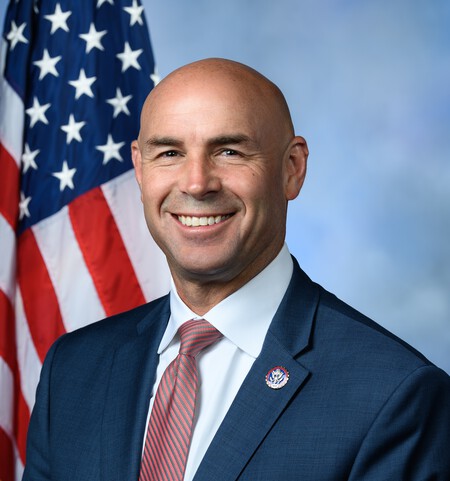
Rep. Jake Ellzey
Sponsored bills
Abortion Providers Loan Elimination Act This bill makes abortion providers ineligible to receive a loan under the Paycheck Protection Program, which was established to support small businesses in response to COVID-19. This prohibition shall not apply to hospitals or entities that exclusively provide abortions (1) where the pregnancy is the result of rape or incest, or (2) where the pregnancy endangers the life of the mother. The Inspector General of the Small Business Administration must report on the number of paycheck protection loans made to the Planned Parenthood Federation of America and to other abortion providers.
Life at Conception Act This bill declares that the right to life guaranteed by the Constitution is vested in each human being at all stages of life, including the moment of fertilization, cloning, or other moment at which an individual comes into being. Nothing in this bill shall be construed to authorize the prosecution of any woman for the death of her unborn child.
No Taxpayer Funding for Abortion and Abortion Insurance Full Disclosure Act of 2021 This bill modifies provisions relating to federal funding for, and health insurance coverage of, abortions. Specifically, the bill prohibits the use of federal funds for abortions or for health coverage that includes abortions. Such restrictions extend to the use of funds in the budget of the District of Columbia. Additionally, abortions may not be provided in a federal health care facility or by a federal employee. Historically, language has been included in annual appropriations bills for the Department of Health and Human Services (HHS) that prohibits the use of federal funds for abortions—such language is commonly referred to as the Hyde Amendment. Similar language is also frequently included in appropriations bills for other federal agencies and the District of Columbia. The bill makes these restrictions permanent and extends the restrictions to all federal funds (rather than specific agencies). The bill's restrictions regarding the use of federal funds do not apply in cases of rape, incest, or where a physical disorder, injury, or illness endangers a woman's life unless an abortion is performed. The Hyde Amendment provides the same exceptions. The bill also prohibits qualified health plans from including coverage for abortions. Currently, qualified health plans may cover abortion, but the portion of the premium attributable to abortion coverage is not eligible for subsidies.
Security First Act This bill provides statutory authorization for the Operation Stonegarden program from FY2022 through FY2025 and contains other provisions related to border security. (Operation Stonegarden provides grants to enhance the border security capabilities of state, local, and tribal governments.) From FY2022 through FY2025, the money from unreported monetary instruments seized from individuals crossing the U.S.-Mexico border and transferred into the Department of the Treasury general fund shall be made available without further appropriation to the Department of Homeland Security (DHS) to fund Operation Stonegarden. DHS shall report to Congress on (1) DHS hiring practices from 2017 to 2020, and (2) whether certain Mexican drug cartels meet the criteria to be designated as foreign terrorist organizations. DHS shall also periodically report to Congress about the technology needed to secure the U.S.-Mexico land border.
Protecting Life and Taxpayers Act of 2021 This bill requires federally funded entities to certify that they will not, subject to certain exceptions, perform abortions or provide funding to other entities that perform abortions. The bill provides exceptions for abortions (1) in cases of rape or incest; or (2) when the life of the woman is in danger due to a physical disorder, injury, or illness.
Advancing Uniform Transportation Opportunities for Veterans Act or the AUTO for Veterans Act This bill authorizes the Department of Veterans Affairs (VA) to provide (or assist in providing) an eligible veteran or service member with an additional automobile or other conveyance under the VA automobile allowance and adaptive equipment program. Currently, a veteran or service member with a specified service-connected disability or impairment may not receive more than one automobile or other conveyance under the program. The bill authorizes the additional benefit for such veterans and service members if 10 years have passed since the person last received such benefit.
This resolution condemns Iranian state-sponsored terrorist attacks against U.S. citizens and officials and Iranian dissidents and expresses support for the people of Iran who are engaged in legitimate and peaceful protests against the Iranian regime.
Heartbeat Protection Act of 2021 This bill makes it a crime for a physician to knowingly perform an abortion (1) without determining whether the fetus has a detectable heartbeat, (2) without informing the mother of the results, or (3) after determining that a fetus has a detectable heartbeat. It provides an exception for an abortion that is necessary to save the life of a mother whose life is endangered by a physical (but not psychological or emotional) disorder, illness, or condition. A physician who performs a prohibited abortion is subject to criminal penalties—a fine, up to five years in prison, or both. A woman who undergoes a prohibited abortion may not be prosecuted for violating or conspiring to violate the provisions of this bill.
Born-Alive Abortion Survivors Protection Act This bill establishes requirements for the degree of care a health care practitioner must provide in the case of a child born alive following an abortion or attempted abortion. Specifically, a health care practitioner who is present must (1) exercise the same degree of care as would reasonably be provided to any other child born alive at the same gestational age, and (2) ensure the child is immediately admitted to a hospital. Additionally, a health care practitioner or other employee who has knowledge of a failure to comply with the degree-of-care requirements must immediately report such failure to law enforcement. A health care practitioner who fails to provide the required degree of care, or a health care practitioner or other employee who fails to report such failure, is subject to criminal penalties—a fine, up to five years in prison, or both. An individual who intentionally kills or attempts to kill a child born alive is subject to prosecution for murder. The bill bars the criminal prosecution of a mother of a child born alive under this bill and allows her to bring a civil action against a health care practitioner or other employee for violations.