Child Tax Credit for Pregnant Moms Act of 2022 This bill allows a child tax credit for an unborn child who is born alive. It also allows the credit upon certification that a mother's pregnancy resulted in a miscarriage (the involuntary death of an unborn child who was carried in the womb for less than 20 weeks) or that the child was stillborn (the involuntary death of an unborn child who was carried in the womb for 20 weeks or more).
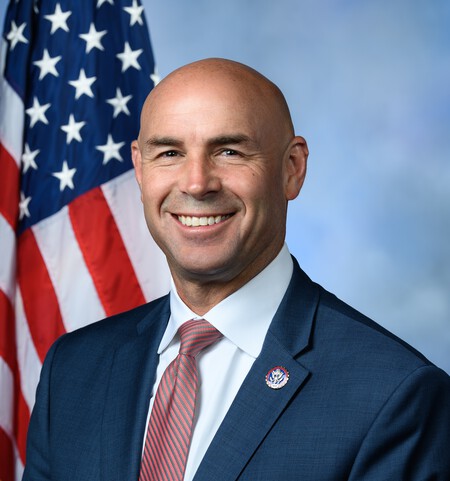
Rep. Jake Ellzey
Sponsored bills
This bill prohibits the Surface Transportation Board from approving a high-speed passenger railroad or magnetic levitation system project unless the project has a distance of at least 10 miles and the land needed for the project is acquired.
Providing Our Law Enforcement with Adequate Resources for a Response Act or the POLAR Response Act This bill includes a polar vortex as a major disaster for which a declaration of a state of emergency can be made and provides a definition for a disaster-related emergency for purposes of the Department of Defense (DOD) excess personal property program (therefore authorizing DOD to transfer certain personal property for a polar vortex emergency).
Protecting Our Democracy by Preventing Foreign Citizens from Voting Act This bill prohibits federal funds from being made available to state or local governments that allow noncitizens to vote in federal, state, or local elections.
This bill posthumously provides for the award of a Congressional Gold Medal in commemoration of the 13 service members who died on August 26, 2021, while stationed at Hamid Karzai International Airport in Afghanistan.
Radiation Exposure Compensation Act Amendments of 2021 This bill expands two programs that compensate individuals who were exposed to radiation during certain nuclear testing or uranium mining and subsequently developed medical conditions, including cancers. First, the bill expands and extends a program that compensates individuals who were exposed to radiation from atmospheric nuclear testing or other sources and subsequently developed specified cancers. Under current law, this program compensates individuals who were present in a designated geographic area during a period of nuclear testing and certain individuals employed in uranium mining. The bill expands the designated areas to include Colorado, Idaho, Montana, New Mexico, and Guam and additional areas in Arizona, Nevada, and Utah; makes more individuals who worked in uranium mining eligible for the program; increases the amount of compensation awarded to and provides medical benefits for eligible claimants; and extends for 19 years following the bill's enactment the fund that supports this program and the statute of limitations for filing claims (currently, the program terminates on July 10, 2022). Second, the bill makes certain individuals employed in uranium mines or mills eligible for a program that compensates workers, including Department of Energy employees and contractors, for illnesses caused by occupational exposure to radiation and hazardous substances during development and testing of the nation's nuclear weapons stockpile. The bill also establishes a grant program in the National Institute of Environmental Health Sciences for institutions of higher education to study the epidemiological impacts of uranium mining and milling among individuals without occupational exposure.

Department of Veterans Affairs Telehealth Strategy Ac t This bill requires the Department of Veterans Affairs (VA) to submit a strategy to Congress for the telehealth services furnished by the Veterans Health Administration. Additionally, the VA must report on the utilization of end-user devices provided to veterans by the VA to facilitate telehealth during FY2020 and FY2021.
Securing American Families from Exploitation at the Border Act or the SAFE Border Act This bill directs the Federal Emergency Management Agency (FEMA) to establish a temporary grant program to reimburse landowners for loss or damage to property caused by an individual illegally crossing the southern border or to improve the security of such property. Specifically, FEMA may provide grants to landowners who have experienced (or are at risk of experiencing) property theft or damage in areas within 10 miles of the U.S.-Mexico border.
Circumspectly Reducing Unintended Consequences Impairing Alliances and Leadership Act of 2021 or the CRUCIAL Act of 2021 This bill establishes requirements relating to the President's ability to impose sanctions on individuals or entities that engage in a significant transaction with the defense or intelligence sectors of Russia's government if the transaction involves a member of the Quadrilateral Security Dialogue. (The dialogue is a coalition comprised of the governments of the United States, Japan, India, and Australia.) Specifically, before imposing such sanctions for a transaction involving a member of the dialogue, the President must certify to Congress that the government in question is not participating in the dialogue on security matters that are critical to U.S. strategic interests.
Science-Based Emissions Standards Act of 2021 This bill prohibits the Environmental Protection Agency (EPA) from finalizing any rule to amend the new source performance standards for stationary sources under the Clean Air Act to reduce methane emissions from new and modified oil and natural gas facilities until the Department of Energy takes specified actions. Specifically, the Department of Energy must first (1) complete and publish the results of the study titled Quantification of Methane Emissions from Marginal (Small Producing) Oil and Gas Wells, and (2) provide a period of at least 90 days for public comment on the application of the study's results. The EPA must take the results of the study into consideration when finalizing the rule.