Protecting Life and Taxpayers Act of 2023 This bill requires federally funded entities to certify that they will not, subject to certain exceptions, perform abortions or provide funding to other entities that perform abortions. The bill provides exceptions for abortions (1) in cases of rape or incest; or (2) when the life of the woman is in danger due to a physical disorder, injury, or illness.
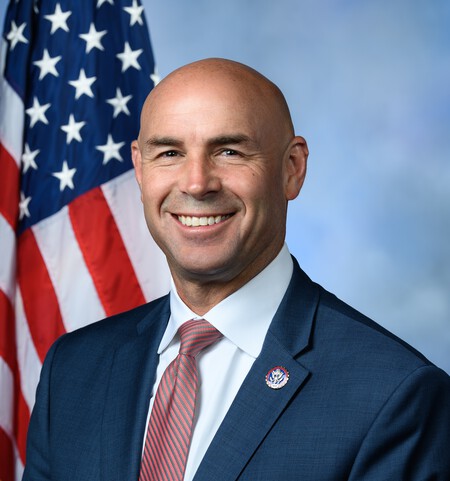
Rep. Jake Ellzey
Sponsored bills
Maddy summaryThis bill prohibits federal funding to Planned Parenthood Federation of America and its affiliates for one year unless they certify they won't perform or fund abortions (with exceptions for rape/incest or life-threatening conditions). It redirects $235 million in existing funding to community health centers for women's health services like contraception, cancer screenings, and prenatal care. The bill explicitly states that redirected funds will continue to support all women's health services previously provided by Planned Parenthood. It also requires repayment of funds if Planned Parenthood violates the certification, and clarifies that overall federal funding for women's health services remains unchanged.
Protecting Life from Chemical Abortions Act This bill nullifies certain changes made by the Food and Drug Administration (FDA) to dispensing requirements for mifepristone. (Mifepristone is a drug that is approved to end pregnancies through 10 weeks gestation when used in conjunction with the drug misoprostol. The procedure is often referred to as medication abortion or the abortion pill.) The FDA regulates the use of mifepristone through the Mifepristone Risk Evaluation and Mitigation Strategy (REMS) program. The program requires health care providers to comply with certain requirements in order to prescribe or dispense mifepristone to end a pregnancy; the program previously included an in-person dispensing requirement that required mifepristone to be directly dispensed to patients in clinics, medical offices, or hospitals. During the COVID-19 public health emergency, the FDA temporarily stopped enforcing the in-person dispensing requirement, which allowed mail-order pharmacies to fill and dispense mifepristone prescriptions. In January 2023, the FDA modified program requirements so as to (1) remove the in-person dispensing requirement, and (2) require pharmacies to be certified in the program in order to dispense mifepristone. The modifications allow retail pharmacies, after receiving certification, to dispense mifepristone pursuant to prescriptions that are written by program-certified prescribers. The bill nullifies the January 2023 changes and prohibits the FDA from (1) exercising any enforcement discretion with respect to program requirements, or (2) reducing program protections until every state submits certain data regarding abortions to the Centers for Disease Control and Prevention. The bill also generally prohibits the declaration of a public health emergency with respect to abortions.
Maddy summaryHCONRES 7 is a symbolic resolution passed by the U.S. House of Representatives that commends Iranian protesters - particularly women - who have risked safety to demonstrate against the Iranian regime's human rights abuses, including the mandatory hijab law and violent crackdowns following Mahsa Amini's death. It condemns the regime's use of violence (reportedly killing over 450 protesters) and detention of activists, while urging the Biden Administration to impose additional human rights sanctions on officials involved in repression and support internet freedom tools to bypass Iranian censorship. The resolution makes no binding policy changes but formally expresses congressional support for protesters' demands for freedom, justice, and an end to discriminatory laws targeting women. It does not directly affect any U.S. laws or policies but serves as a statement of U.S. position.
Maddy summaryHR 564 redirects unspent funds from the American Rescue Plan Act of 2021 (ARP) to reduce the federal deficit. It requires all unobligated ARP funds - money allocated but not yet spent - to be sent to the Treasury's general fund upon the bill's enactment. This action directly affects federal budget accounting by canceling unused appropriations rather than creating new programs or aiding specific groups. The bill does not alter existing laws or services but focuses solely on reallocating existing, unspent federal funds. It is a procedural budget measure with no direct impact on taxpayers or beneficiaries of the ARP.
This concurrent resolution calls on the President to abandon the One China policy in favor of one that recognizes Taiwan as an independent country that is not a part of China. The resolution also urges the President to bolster diplomatic and economic relations between the United States and Taiwan through specified means.
Maddy summaryThis bill expands foreign investment review to cover U.S. agriculture by requiring transactions involving foreign control of agricultural businesses to undergo scrutiny by the Committee on Foreign Investment (CFIUS). It classifies agricultural supply chains as both critical infrastructure and critical technologies, directly affecting foreign entities seeking to acquire or influence U.S. farms, food production, and supply chains. The bill mandates annual reports from the Secretary of Agriculture and the Government Accountability Office on foreign investments in agriculture, including risks to food security and intellectual property. These provisions aim to mitigate potential threats to U.S. food supply chains from foreign adversaries through enhanced oversight.
Securing American Families and Enterprises from People's Republic of China Investments Act or the SAFE from PRC Investments Act This bill requires certain issuers of securities and funds traded on an exchange to report on connections to China or the Communist Party of China. In particular, an issuer with specified connections to China must annually disclose a variety of details, including whether executive-level employees, senior directors, or board members are members of the Communist Party of China; interactions with the party; expenditures in China; expenditures in the United States regarding operations and lobbying activities; and the ability of the Public Company Accounting Oversight Board to audit the issuer. Additionally, an exchange-traded fund that invests in a Chinese company must annually disclose about that company ownership information, party involvement, whether the company participates in specified Chinese policies or activities, any ties to U.S.-sanctioned individuals, and the types of products or services produced by the company.

Maddy summaryThis bill requires healthcare providers to give the same medical care to infants born alive during abortions as they would to any newborn, and to immediately admit such infants to a hospital. It mandates reporting of non-compliance to law enforcement and imposes penalties including up to 5 years in prison for violations. Women who undergo abortions can file civil lawsuits seeking money damages for injuries, three times the abortion cost, and punitive damages if care standards are not met. The bill also clarifies that abortion includes intentionally killing an unborn child or terminating pregnancy without specific exceptions (e.g., after viability to preserve life or removing a dead fetus).
Maddy summaryHR 23, the Family and Small Business Taxpayer Protection Act, rescinds unobligated funds previously allocated to the Internal Revenue Service (IRS) under the Inflation Reduction Act of 2022. Specifically, it cancels unused balances from certain IRS funding provisions (sections 10301(1)(A)(ii), (iii), (B), (2), (3), (4), and (5)) of the Inflation Reduction Act. This bill does not change tax laws or directly affect taxpayers; it only redirects unspent IRS budget authority. The provision applies solely to funds that were not obligated by the IRS as of the bill’s enactment date.