

Maddy summaryThis bill bans airlines from transporting non-citizens using three specific documents: the CBP One mobile app, DHS Form I-385 (Notice to Report), and DHS Form I-862 (Notice to Appear). It also prohibits the Department of Homeland Security from accepting these documents as valid ID for domestic air travel. The law directly affects airlines that might facilitate travel for individuals relying on these documents and travelers using them for flight boarding. Key provisions explicitly list the banned documents in federal law, removing them as acceptable identification for air travel under U.S. Code.
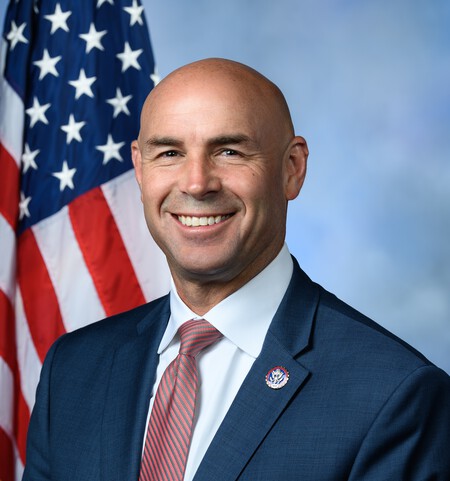
Rep. Jake Ellzey
Sponsored bills
Maddy summaryHRES 1127 is a symbolic House resolution commemorating the 45th anniversary of the Taiwan Relations Act (TRA) and reaffirming U.S. policy toward Taiwan. It does not create new law but formally reiterates the U.S. commitment to Taiwan under the TRA framework, including regular defense transfers to support Taiwan's self-defense and advocacy for Taiwan's meaningful participation in international organizations. The resolution highlights longstanding U.S.-Taiwan cooperation on trade, security, education, and global challenges like public health and cybersecurity. It specifically calls on the Secretary of State to advance Taiwan's international engagement and supports existing programs like the Taiwan Fellowship Program and the American Institute in Taiwan. As a procedural resolution, it expresses congressional support for current policy without altering legal obligations.
Maddy summaryThis resolution condemns Mexican President López Obrador's March 24, 2024, comments on "60 Minutes" where he linked U.S. immigration policy to demands for $20 billion in aid, lifted sanctions, and amnesty. It calls on Mexico to secure its southern border, restart the Migrant Protection Protocols (MPP), and establish a Safe Third Country Agreement with the U.S. The resolution does not create new laws but expresses the House's position on Mexico's role in addressing migration. It directly addresses the Mexican government as the entity urged to take specific actions.
Maddy summaryThis bill amends the Foreign Intelligence Surveillance Act (FISA) to explicitly include counternarcotics activities in the definition of "foreign intelligence." Specifically, it adds international drug trafficking - covering synthetic drugs, opioids, cocaine, and related precursors - to the scope of intelligence gathering authorized under FISA. This change directly affects U.S. intelligence agencies (like the NSA and FBI), allowing them to use existing FISA authorities to collect foreign intelligence on drug trafficking networks. The policy shift expands the legal basis for surveillance targeting foreign drug operations without creating new programs or funding.
Maddy summaryHR 6727 establishes the United States Foundation for International Conservation, a nonprofit organization that will provide grants to support long-term management of protected and conserved areas in eligible countries. The Foundation requires a 2:1 cost match from other sources, demands host country and community consent through binding agreements, and prioritizes areas with high biodiversity or species of significant importance. It will be governed by a Board of Directors including government officials and private sector experts, operate for 10 years with $1 million authorized for 2024 and $100 million annually from 2025-2035, and must follow international conservation standards while prohibiting funding for countries supporting terrorism or violating human rights.
Maddy summaryThis resolution (HRES 1086) is a symbolic gesture expressing the House's support for designating March 19, 2024, as "National Agriculture Day." It does not create new laws or policies, but instead formally recognizes agriculture as a vital industry in the U.S. economy. The resolution celebrates agriculture's broad economic impact without imposing any requirements or changes on farmers, consumers, or government programs. It is a commemorative statement, not a substantive legislative action.
Maddy summaryHR 7663, the GSA Disposal Process Tribal Parity Act of 2024, updates federal property disposal rules to give Indian Tribes equal access to surplus federal real property previously available only to states. It amends multiple statutes (including GSA property disposal, port facilities, and homeless assistance programs) to replace "State" with "Indian Tribe, State" or similar language, ensuring tribes can apply for property on the same terms as states. The bill also requires the GSA Administrator to submit annual reports listing property conveyed to tribes and establish a process for managing competing applications from tribes, states, and other entities. This directly affects federally recognized tribes by removing barriers to accessing federal surplus property for community development, infrastructure, or housing needs.
Maddy summaryHR 7656, the Balanced Budget and Accounting Act, would require the President's annual federal budget to balance spending and revenue each fiscal year. It amends Section 1105(a) of Title 31, U.S. Code, to mandate that total government spending (outlays) cannot exceed total revenue (receipts) in any given year. This would directly affect how the executive branch prepares and submits federal budgets, imposing a binding constraint on annual budget planning. The bill creates a concrete rule for budget preparation, requiring the President to submit a balanced budget proposal without exception.
Maddy summaryThe BRIDGE Production Act of 2023 requires the U.S. Department of the Interior to hold at least four offshore oil and gas lease sales in the Gulf of Mexico between 2024 and 2025, with each sale offering a minimum of 80 million acres. It mandates these sales follow specific timelines (March/August 2024 and 2025) and use the same terms as a 2021 lease sale, applying an existing environmental review to streamline approvals. The bill also limits legal challenges by stating courts cannot block issued leases or delay drilling permits for projects on those leases, though they may require the Department to correct compliance issues. This directly affects oil and gas companies bidding on Gulf of Mexico leases and the Bureau of Ocean Energy Management, which administers the sales.
Maddy summaryHRES 1041 is a non-binding resolution introduced in the U.S. House of Representatives on February 29, 2024, that condemns the International Court of Justice's (ICJ) January 26, 2024, order requiring Israel to report on measures taken to comply with provisional measures related to South Africa's genocide case against Israel. The resolution specifically condemns the ICJ's order and South Africa's case, asserts Israel's right to self-defense against Hamas, and calls on the U.S. President to direct the Secretary of State to intervene in support of Israel. It does not impose legal requirements or alter policy, as resolutions like this express congressional opinion only.