

Maddy summaryHR 350, the "Prosecutors Need to Prosecute Act," requires district attorneys in jurisdictions with 380,000 or more residents that receive federal Byrne grant funds to submit annual reports to the Attorney General. The reports must detail how many cases involving serious crimes - like murder, robbery, aggravated assault, and gun offenses - they referred for prosecution, declined, or resolved via plea deals, including data on repeat offenders and bail decisions. The Attorney General will establish uniform reporting standards and share the collected data with Congress and the public via a website. This bill directly affects large prosecutor offices receiving federal crime-fighting funds, aiming to increase transparency in prosecution practices for specific violent and property crimes.
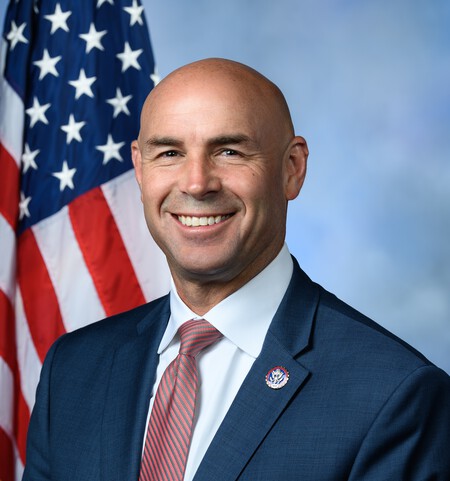
Rep. Jake Ellzey
Sponsored bills
Maddy summaryHR 272, the Protecting Life and Taxpayers Act of 2025, prohibits federal funding (directly or indirectly) to any organization that performs or funds abortions, requiring certification from all recipients. This applies to entities receiving federal funds, including contractors and subsidiaries, with limited exceptions for pregnancies resulting from rape or incest, or when a physician certifies a life-threatening condition. The bill directly affects healthcare providers, clinics, and organizations that rely on federal grants or contracts. It changes existing funding rules by banning federal money from supporting abortion services, except in the specified medical or criminal exceptions.
Maddy summaryThis bill grants the Secretary of Homeland Security authority to temporarily suspend entry of certain individuals at U.S. borders to achieve "operational control" (defined as effective border management). It specifically applies to people seeking entry without proper documentation who would be denied entry under current law (e.g., lacking visas or asylum eligibility). The Secretary must block entry if they cannot detain or process these individuals as required by existing immigration law. States may also sue the government if they believe border security rules are violated.
Maddy summaryThis bill directs the Department of Homeland Security to implement the Migrant Protection Protocols (MPP) as outlined in a 2019 policy memo. It requires migrants seeking asylum at the U.S. border to remain in Mexico while their cases are processed, rather than being allowed to stay in the U.S. pending a hearing. The bill does not create new rules but mandates the reinstatement of a policy that was previously in effect from 2019 to 2021. This would directly affect asylum seekers arriving at the U.S.-Mexico border. The policy change would apply to all migrants covered by the existing MPP framework.
Maddy summaryThis bill renames a U.S. Postal Service facility in Fritch, Texas, to the "Chief Zeb Smith Post Office." It designates the specific location at 107 North Hoyne Avenue as the official name for all federal references, including documents, maps, and records. The bill makes no policy changes - it solely updates the facility's name for administrative purposes.
Maddy summaryThis bill blocks federal funding for Planned Parenthood Federation of America and its clinics for one year unless they certify they won't perform abortions. Exceptions apply for pregnancies resulting from rape or incest, or when a woman's life is in danger due to a medical condition. The bill redirects the redirected funds to community health centers and other providers serving women's health needs, authorizing $235 million for this purpose. It explicitly states this will not reduce overall federal funding for women's health services. The policy change directly affects Planned Parenthood clinics receiving federal funds, requiring them to certify abortion restrictions or lose funding.
Maddy summaryHR 296, the "Justice for 9/11 Act," modifies legal procedures for three specific defendants accused of the September 11, 2001, attacks: Khalid Shaikh Mohammad, Walid Muhammad Salih Mubarak Bin ‘Attash, and Mustafa Ahmed Adam al Hawsawi. The bill ensures their plea agreements for the 9/11 attacks cannot block military commission trials under Title 10, makes the death penalty available in those trials, and mandates they remain in solitary confinement at Guantanamo Bay under strict conditions - no contact with foreigners, limited psychological care, and no transfer to the U.S. or other countries. It directly affects only these three individuals and their legal proceedings, not the general public. The bill changes existing legal pathways for their trial and confinement, not broader policy.
Maddy summaryThis bill requires federal employees who telework at least one day weekly (or 20% of their time under alternative schedules) to be paid at the "Rest of U.S." locality pay rate without future adjustments. It excludes employees who telework daily, those with disabilities receiving accommodations, Foreign Service members, law enforcement officers, and military personnel on active duty. Covered employees will no longer receive annual pay adjustments under standard federal pay schedules. The policy takes effect at the start of the first full fiscal year after the bill becomes law. It directly affects federal workers meeting the telework threshold, altering their pay structure based on location.
Maddy summaryThis proposed constitutional amendment would limit Members of Congress to serving a maximum of three terms in the House of Representatives or two terms in the Senate. It directly affects current and future members by preventing those who have already served the maximum terms from seeking re-election. Key provisions include counting vacancies filled for more than a year (House) or three years (Senate) as a full term toward the limit, while excluding terms served before ratification from the count. As a constitutional amendment proposal, it requires approval by three-fourths of state legislatures to become law.
Maddy summaryHR 82, the Social Security Fairness Act of 2023, repeals two provisions that reduce Social Security benefits for certain government workers. It eliminates the Government Pension Offset (GPO), which cuts spousal or survivor benefits for people with pensions from jobs not covered by Social Security (like federal or state government roles), and the Windfall Elimination Provision (WEP), which lowers retirement benefits for those with similar pensions. The law takes effect for benefits paid after December 2023, requiring the Social Security Administration to adjust benefit calculations to remove these reductions. This change directly affects public-sector employees who previously had their Social Security benefits reduced due to their government pensions.