

Maddy summaryHR 1131 exempts certain family farms and small businesses from being counted as assets when calculating financial need for federal student aid under the Higher Education Act. Specifically, it amends the law to exclude the net value of a family farm where the family resides and small businesses (with ≤100 employees) owned by the family from need analysis calculations. This change directly affects students from qualifying family farm or small business households when applying for federal financial aid. The exemption applies to need analysis conducted for award years beginning after the bill's enactment date. The bill modifies Section 480(f)(2) of the Higher Education Act of 1965 to implement this policy change.
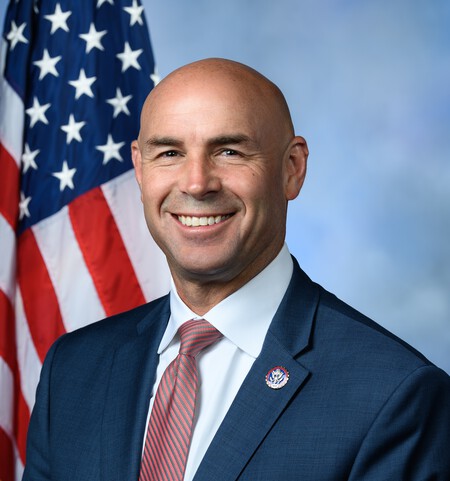
Rep. Jake Ellzey
Sponsored bills
Maddy summaryHCONRES 8 is a non-binding congressional resolution urging the U.S. President to end the current "One China Policy" and recognize Taiwan as an independent country. It specifically calls for resuming normal diplomatic relations (including appointing ambassadors), negotiating a bilateral free trade agreement with Taiwan, and advocating for Taiwan's full membership in international organizations like the UN and WHO. The resolution argues that Taiwan has maintained democratic governance and independence for over 70 years, separate from the People's Republic of China. This resolution does not change U.S. law but expresses Congress's position on foreign policy toward Taiwan.
Protect Our Letter Carriers Act of 2025 This bill requires or authorizes certain actions related to the U.S. Postal Service (USPS). The bill requires the Department of Justice to appoint an assistant U.S. attorney in each judicial district to coordinate and supervise the investigation and prosecution of various crimes related to postal services (for example, assault on a postal service employee, breaking into a post office, or obstruction of mails). The bill also requires the U.S. Sentencing Commission to amend sentencing guidelines to provide that the assault or robbery of a postal employee shall be treated the same as the assault of a law enforcement officer. Additionally, the bill authorizes appropriations for the USPS to install high security collection boxes and replace older versions of the universal mailbox key with electronic versions.
Maddy summaryHR 1046, the Marc Fischer Memorial Act, requires the Bureau of Prisons to implement digital mail scanning technology at all federal prisons to detect fentanyl and other synthetic drugs in inmate mail. It mandates a strategy within 90 days of an evaluation, including 100% scanning of all mail, digital copies of mail to inmates within 24 hours, and physical mail delivery within 30 days for non-contaminated items. The bill directly affects federal prison staff, inmates, and the Bureau of Prisons by aiming to reduce drug-related overdoses and alleviate staff workload tied to mail processing. Implementation must be completed within three years, with annual reports tracking detected drugs and strategy efficiency. The legislation focuses on concrete technological and procedural changes to enhance safety, referencing a successful pilot program at two facilities.
Maddy summaryThis bill requires annual health assessments for all active-duty military members beginning in 2026. It mandates specific tests including a sports physical, an annual heart test (electrocardiogram), and detailed blood work covering metabolic and blood count panels, plus optional thyroid and heart-related tests if needed. The bill also ensures these assessments include any existing health evaluations required by prior laws, such as those from the 2020 National Defense Authorization Act. The policy directly affects all active-duty service members in the U.S. military.
Maddy summaryHR 943, the "No User Fees for Gun Owners Act," bans states and local governments from requiring insurance, taxes, or user fees as conditions for owning, buying, or selling firearms. It specifically prohibits these fees for firearm manufacture, importation, acquisition, transfer, or continued ownership, except for general sales taxes applied equally to all goods. The bill amends federal law to prevent states from imposing such conditions on gun ownership or commerce, while allowing standard sales taxes to apply uniformly. This directly affects gun owners, dealers, and manufacturers by removing mandatory fees tied to firearm transactions. The law does not restrict general sales taxes but eliminates state-specific fees as a prerequisite for firearm-related activities.
Maddy summaryHR 925, the "Dismantle DEI Act of 2025," would eliminate diversity, equity, and inclusion (DEI) programs across federal government operations. The bill requires federal agencies to close DEI offices, rescind related executive orders, and prohibit the use of federal funds for DEI training, offices, or initiatives. It defines "prohibited diversity, equity, or inclusion practice" as any activity that discriminates based on race, ethnicity, religion, biological sex, or national origin, or requires employees to complete training asserting that certain groups are inherently superior or inferior. The legislation also prohibits requiring employees to sign statements about race, ethnicity, or gender, and establishes private lawsuits for violations with potential damages of $1,000 per violation per day. This bill would directly affect federal agencies, contractors, grantees, and advisory committees receiving federal funding.
Maddy summaryHCONRES 4 is a symbolic resolution expressing Congress's support for tax-exempt fraternal benefit societies (like mutual aid organizations). It recognizes these groups, which have over 7 million members nationwide, as historically and currently providing critical community benefits - including life/health insurance, charitable work, and volunteer services - valued at over $3.8 billion annually. The resolution affirms that their tax-exempt status under Section 501(c)(8) of the Internal Revenue Code remains beneficial and should continue to be promoted. This is a non-binding expression of congressional sentiment, not a policy change.
Maddy summaryHRES 71 is a symbolic House resolution condemning Mexico for not meeting annual water delivery obligations to the U.S. under the 1944 U.S.-Mexico treaty governing the Colorado, Tijuana, and Rio Grande rivers. The resolution specifically states that the House "condemns the Government of Mexico for failing to fulfill its water deliveries" as required by the treaty. It does not impose new requirements or penalties but serves as a formal expression of disapproval. This resolution directly addresses the U.S. government's position regarding Mexico's compliance with the existing treaty terms. As a procedural resolution, it has no binding legal effect on water delivery operations.
Maddy summaryThis bill prohibits federal funds from being used to cover gender transition procedures for individuals under 18, including puberty blockers, hormone therapies (at higher-than-normal doses), and surgeries like hysterectomies or mastectomies. It defines "sex" biologically as male or female and exempts certain medical treatments, such as puberty suppression for precocious puberty or care for genetic disorders of sex development. The policy directly affects minors receiving federally funded healthcare (e.g., Medicaid), restricting coverage for most gender-affirming care. Key mechanisms include funding restrictions and specific medical exceptions, though it does not ban private insurance or out-of-pocket payments.