

American Safety And Fairness through Expedited Removal Act of 2023 or the American SAFER Act of 202 3 This bill expands the classes of non-U.S. nationals ( aliens under federal law) who are subject to expedited removal (i.e., removal from the United States without further hearing or review). Specifically, the bill nullifies a 2004 Department of Homeland Security (DHS) rule that generally limits expedited removal to certain situations, such as for non-U.S. nationals encountered within 14 days of entry into the United States without inspection and within 100 miles of a U.S. international land border. The bill also (1) prohibits DHS from implementing a rule that limits expedited removal based on how far a non-U.S. national was from the border when encountered or apprehended, and (2) modifies the relevant statute to state that expedited removal authority applies regardless of where the non-U.S. national was encountered or apprehended.
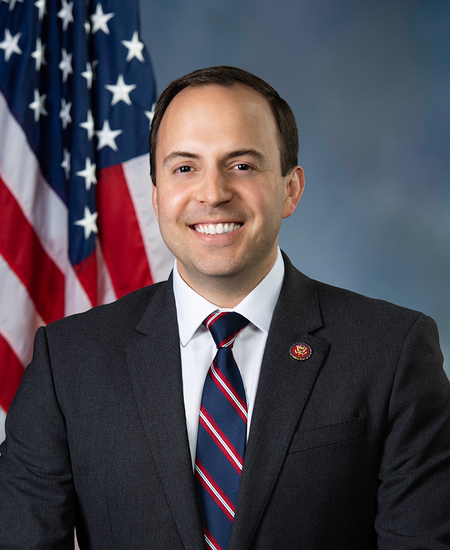
Rep. Lance Gooden
Sponsored bills
Maddy summaryHR 1388 authorizes the minting of commemorative coins to honor the 1865 Sultana steamboat disaster, the deadliest maritime tragedy in U.S. history. It specifies three coin types ($5 gold, $1 silver, and half-dollar) with defined weights and compositions, to be sold at face value plus surcharges ($35, $10, and $5 per coin, respectively). All surcharges collected will fund the Sultana Historical Preservation Society for museum development, including exhibits, artifact preservation, and facility construction. The coins are legal tender but intended for collectors, with sales limited to a one-year period starting January 2023.
This resolution supports the designation of National FFA Week. It also (1) recognizes the important role of the National FFA Organization (Future Farmers of America) in developing the next generation of leaders who will change the world, and (2) celebrates the 90th anniversary of the iconic FFA jacket.
Maddy summaryHR 1286, the Lone Star Reimbursement Act, directs the Department of Defense and Department of Homeland Security to reimburse the State of Texas $2.2 billion for costs incurred during Operation Lone Star in fiscal years 2022 and 2023. The bill specifically allocates funds from existing appropriations to cover Texas' expenses related to border security operations, including apprehensions and fentanyl seizures documented in the bill's findings. This reimbursement applies to costs already incurred by Texas, with no new policy changes or requirements for the state.
Feral Swine Act This bill extends through FY2028 the feral swine eradication and control pilot program to respond to the threat feral swine pose to agriculture, native ecosystems, and human and animal health.
No Retaining Every Gun In a System That Restricts Your Rights Act This bill modifies the retention requirements for firearm transaction records of federal firearms licensees (FFLs) that go out of business. Current law generally requires FFLs that go out of business to deliver their firearm transaction records to the Bureau of Alcohol, Tobacco, Firearms and Explosives (ATF). This bill removes the requirement for FFLs that go out of business to deliver their firearm transaction records to the ATF. Further, the bill requires the ATF to destroy all out-of-business records it has collected from FFLs.
Maddy summaryThis bill prohibits the Department of Defense from using funds to pay for or reimburse abortion services, except when the pregnancy endangers the mother's life, results from rape, or results from incest. It directly affects military personnel, civilian DOD employees, and contractors receiving medical care at military facilities by restricting funding for abortion-related expenses. Key provisions include amending federal law to ban reimbursement for travel or licensing costs related to abortion services and repealing a 2022 DOD memo that expanded access to such care. The bill explicitly blocks all funding for abortion services beyond the existing exceptions, with no new exceptions added. It does not change abortion access for civilians outside the military healthcare system.
Maddy summaryHR 1229, the "Stop CRT Act," codifies Executive Order 13950 into law and restricts federal funding for entities teaching specific concepts about race. It prohibits federal grants to organizations that teach any of six specified ideas, including that race determines moral worth, the U.S. is fundamentally racist, or individuals bear responsibility for historical actions based on race. The bill directly affects schools, nonprofits, and other recipients of federal funds by banning support for educational content matching these prohibitions. Key provisions require federal agencies to deny funding to any entity advancing these concepts, making the executive order legally binding. This policy change alters how federal funds are distributed based on mandated educational content.
Maddy summaryHR 1228 prohibits the U.S. military and Department of Defense-operated academic institutions from promoting specific anti-American or racist theories in training. It bans military programs that teach ideas such as "the U.S. is fundamentally racist," "the Constitution is fundamentally racist," or that "an individual’s worth is determined by race." The bill explicitly states it does not restrict protected speech, research access, or educational contexts that clearly disavow military endorsement of such theories. This directly affects military training curricula, workshops, and educational materials within the armed forces.
Maddy summaryHRES 165 is a non-binding resolution commemorating the 200th anniversary of the Texas Ranger Division, established in 1823 and recognized as North America's oldest state law enforcement agency. It honors all past and present Texas Rangers, including the 149 who died in service, and acknowledges their historical roles from frontier protection to modern law enforcement. The resolution highlights the Rangers' cultural impact, noting their presence in over 225 movies and 7 TV series, and their partnerships with federal agencies like the FBI. As a ceremonial resolution, it does not create new laws or policies but formally recognizes the Rangers' legacy.