

Tribal Gaming Regulatory Compliance Act This bill allows the Ysleta del Sur Pueblo and Alabama-Coushatta tribes to conduct gaming activities on their land in Texas if certain conditions are met. Currently, the Ysleta del Sur Pueblo and Alabama-Coushatta Indian Tribes of Texas Restoration Act prohibits the tribes from conducting gaming activities on their land if those activities are prohibited by Texas law. The bill repeals those provisions and instead applies the Indian Gaming Regulatory Act (IGRA) to gaming activities on Indian lands of the tribes.
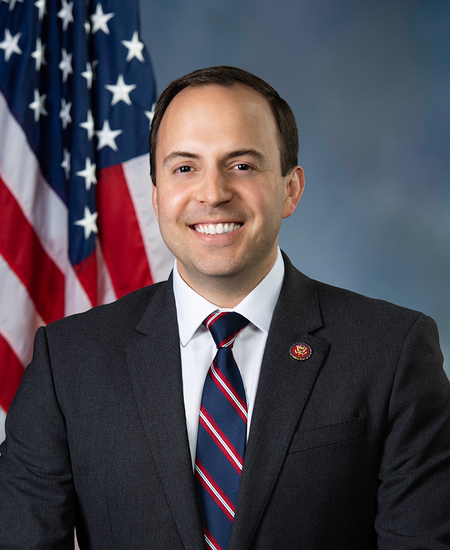
Rep. Lance Gooden
Sponsored bills
Maddy summaryHR 3337, the Fuels Parity Act, removes a prohibition that previously excluded corn starch ethanol from being counted as "advanced biofuel" under the Clean Air Act. This change directly affects corn-based ethanol producers by allowing corn starch ethanol to qualify under renewable fuel standards. The bill also requires the EPA to update its methodology for calculating greenhouse gas emissions from corn-based ethanol and biomass-based diesel every five years, starting 90 days after enactment, with the first update mandating the use of the Argonne National Laboratory's GREET model. These provisions aim to standardize how emissions are assessed for these fuels under federal renewable fuel programs.
Maddy summaryHR 3497, the Uranium Miners and Workers Act of 2023, expands eligibility for compensation under the Radiation Exposure Compensation Act (RECA) to include uranium miners, millers, ore transporters, and core drillers who worked in specified states between 1942 and 1978 and later developed certain cancers or kidney diseases. The bill redirects $475 million from unobligated coronavirus relief funds (from acts like the CARES Act and American Rescue Plan) to the RECA trust fund to pay claims. It also extends the RECA program's funding period by 4 years and adjusts the deadline for submitting claims to 4 years after the bill's enactment. This law directly affects former uranium industry workers who developed radiation-related illnesses.
National Law Enforcement Officers Remembrance, Support and Community Outreach Act This bill directs the Department of Justice (DOJ) to establish a National Law Enforcement Officers Remembrance, Support, and Community Outreach Program. The bill further directs DOJ to award a grant under the program to the National Law Enforcement Officers Memorial Fund for the expenses associated with community outreach, public education, and officer safety and wellness programs operated by the of the National Law Enforcement Officers Memorial Fund and National Law Enforcement Museum.
Maddy summaryThe FIGHT Act (HR 2742) amends the Animal Welfare Act to specifically target animal fighting events, such as cockfighting, by defining "rooster" as any male chicken over six months old and banning the live broadcasting (simulcasting) of such events. It prohibits using the postal service or interstate transport to move roosters for animal fighting purposes and adds civil enforcement tools allowing citizens to sue violators after a 60-day notice period. Fines up to $5,000 per violation may be imposed, and property used in animal fighting ventures can be seized. These changes strengthen enforcement against animal fighting by expanding legal remedies for the public and authorities.
Maddy summaryThe PAST Act of 2023 amends the Horse Protection Act to ban specific devices used to cause pain (soring) in horses at shows, particularly affecting Tennessee Walking Horses, Racking Horses, and Spotted Saddle Horses. It defines prohibited "action devices" (like boots or chains causing friction) and requires licensed, conflict-free inspectors at events to enforce rules. The bill increases penalties for violations to up to $5,000 fines or 3 years in jail, and mandates longer disqualifications for repeat offenses (180 days → 1 year → 3 years). Horse show organizers, exhibitors, and participants must comply with these new inspection and penalty requirements.
Maddy summaryHRES 396 is a non-binding House resolution recognizing motherhood on Mother's Day. It expresses support for the term "mother" and criticizes language alternatives like "pregnant people" or "birthing person," while stating mothers are defined as women. The resolution contains no policy changes or concrete effects - it is purely symbolic, affirming traditional definitions of motherhood without altering laws or impacting any programs. It was introduced by multiple House members and referred to the Education and Workforce Committee.
Maddy summaryHR 3238, the Affordable Housing Credit Improvement Act of 2023, updates the Low-Income Housing Tax Credit (LIHTC) program to increase the availability of affordable housing across the United States. The bill makes several key changes including increasing state funding formulas, modifying tenant eligibility rules to better serve vulnerable populations (such as domestic violence victims and students), and expanding credit eligibility for projects in rural and Native American communities. Specific provisions raise the credit for properties serving extremely low-income households, clarify rules around tenant income increases, and require housing providers to protect victims of domestic violence. The bill also updates terminology from "low-income" to "affordable" throughout the tax code and enhances program transparency through data sharing requirements. These changes aim to make the LIHTC program more effective at creating and preserving affordable housing units for low-income households nationwide.
Direct Capital Access Act of 2023 or the DCA Act of 2023 This bill increases the number of daily round-trip flights allowed at Ronald Reagan Washington National Airport (DCA). Specifically, this bill adds 56 new slots at DCA to allow for 28 additional daily round-trip flights. (Airlines flying to and from DCA are subject to slot and perimeter rules set by federal law and regulation. The slot rules determine the total number of flight slots that can be handled in a given time period. In addition, a statutory perimeter rule limits nonstop flights to a 1,250-mile radius unless they are granted an exemption in law.) Current law limits DCA to a maximum of 67 hourly slots for flights both within- and beyond-perimeter; a round-trip flight serving DCA requires two slots (or a slot pair). Of those slots, 40 daily slots are exempt from the perimeter rule. Under the bill's slot increase, operations at DCA may not increase by more than eight flights per hour.
Maddy summaryThis bill protects living organ donors from insurance discrimination by prohibiting life, disability, and long-term care insurers from denying coverage, raising premiums, or altering policy terms solely because someone donated an organ while alive. It also updates the Family and Medical Leave Act to include recovery from organ donation surgery as a qualifying health condition, allowing donors to take protected leave for this purpose. Additionally, the bill requires the Health and Human Services Secretary to update public educational materials about living donation benefits, risks, and insurance protections within six months of enactment. These changes directly affect living organ donors, insurers, employers, and healthcare systems by ensuring fair access to insurance and workplace leave.