

Maddy summaryHRES 768 is a symbolic House Resolution expressing congressional support for Israel following Hamas' October 7, 2023 attacks. It condemns Hamas' actions, reaffirms Israel's right to self-defense, and calls for the immediate release of hostages. The resolution references the U.S. commitment to Israel's security through existing military aid programs, including the 2016 U.S.-Israel Memorandum of Understanding, and emphasizes enforcement of laws like the Taylor Force Act to prevent U.S. aid from reaching terrorist groups. As a symbolic resolution, it does not create new policy but serves as a statement of congressional support for Israel.
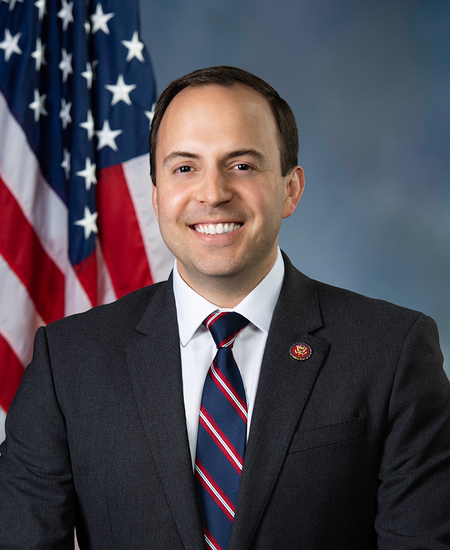
Rep. Lance Gooden
Sponsored bills
Maddy summaryHR 5979, the VA Home Loan Awareness Act of 2023, requires lenders using the standard home loan application form to add a specific disclaimer below the military service question. The disclaimer states: "If yes, you may qualify for a VA Home Loan. Consult your lender regarding eligibility." This change must be implemented within six months of the bill's enactment. The bill also mandates a Government Accountability Office (GAO) study within 18 months to check if less than 80% of lenders are including this disclaimer. The policy directly affects veterans and military service members who may qualify for VA home loans but are not currently being informed of this option during the loan application process.
Maddy summaryHR 5959, the GAZA Act, would bar individuals holding passports issued by the Palestinian Authority from entering the United States. Specifically, it makes such individuals inadmissible, ineligible for visas or parole, and unable to receive immigration benefits under U.S. law. The bill directly affects Palestinian Authority passport holders seeking U.S. entry or immigration status. It creates a specific visa restriction based solely on the passport authority issuing the document.
Maddy summaryThis bill prohibits the release of Iranian assets blocked by the U.S. Treasury until the President certifies two conditions: (1) hostilities between Israel and Hamas/Iran-backed groups have ended, and (2) Israel has received full compensation for harms or Iran is participating in a verified international compensation mechanism. It requires the President to notify Congress 30 days before releasing any such asset and allows Congress to block the release via a joint resolution within 30 days. The bill also authorizes the President to confiscate Iranian assets held in the U.S., deposit the funds into a special account, and use those funds to procure defense articles/services for Israel. These provisions aim to leverage frozen Iranian assets to support Israel's defense needs while establishing specific procedural safeguards for asset management.
'Operation Swords of Iron' Iron Dome Supplemental Appropriations Act This bill provides $2 billion in appropriations for the Department of Defense to provide to the government of Israel for the procurement of the Iron Dome defense system to counter short-range rocket threats. The funds must be provided to address emergent requirements in support of Operation Swords of Iron.
Maddy summaryHR 5110, the Protecting Hunting Heritage and Education Act, amends the Elementary and Secondary Education Act of 1965 to clarify that federal education funds cannot be used for certain weapons - but this restriction does not apply to archery, hunting, or other shooting sports training programs. The bill directly affects schools and educational programs seeking to use federal funds for these specific activities, such as archery clubs or hunting safety education. It adds an explicit exception to the existing prohibition, allowing funds to support "educational instruction or enrichment activities" in these sports under authorized programs. This change removes ambiguity about funding eligibility for such educational initiatives in K-12 schools.
Drone Research and Innovation for Law Enforcement Act of 2023 This bill directs the Federal Aviation Administration (FAA) to study, and create an approval process for, nonlethal de-escalation unmanned aircraft (i.e., drones). Under the bill, nonlethal de-escalation unmanned aircraft means an unmanned aircraft that is equipped with one or more nonlethal weapons or devices and is used by law enforcement personnel in scenarios (1) that present significant risk to human life, and (2) in which the suspected criminal is in a position to potentially escalate the situation and expose human life to a high level of risk. Specifically, the FAA must initiate a pilot research program to study the potential use of nonlethal de-escalation unmanned aircraft by law enforcement agencies. As part of the study, the FAA must enter into interagency agreements with various federal, state, and local agencies. The FAA must submit a report on the results of the research program to Congress. The report must include a plan outlining a proposed FAA application process for law enforcement to seek permission to operate nonlethal de-escalation unmanned aircraft. Within 90 days of submitting the report, the FAA must initiate rulemaking to create a process through which the FAA may provide approval to operate these unmanned aircraft.
Maddy summaryThis bill ensures Coast Guard personnel continue receiving pay during budget gaps specific to the Coast Guard. It mandates automatic funding for military members (including reserves), qualified civilian employees, and contract workers providing essential support during a "Coast Guard-specific funding lapse" - defined as when no Coast Guard funding bill passes before the fiscal year begins. The bill covers pay and benefits for these groups until a formal funding bill is enacted or a budget resolution without Coast Guard funding passes. It does not apply to general government shutdowns but targets only Coast Guard operations. The measure aims to prevent disruptions to critical Coast Guard missions during funding delays.
Maddy summaryThis bill would criminalize the prescription, dispensing, distribution, or sale of chemical abortion drugs (mifepristone and misoprostol) for abortion purposes under federal law, with penalties up to 25 years in prison. It directly affects healthcare providers, pharmacists, and patients who use these drugs for abortion. Key exceptions include contraceptive use before pregnancy confirmation, treatment of miscarriage, and life-threatening pregnancy conditions certified by a physician. The bill defines "abortion" as intentionally ending a pregnancy with intent other than live birth or treating specific medical conditions, and explicitly prohibits prosecuting women who receive chemical abortions.
Maddy summaryHR 5791, the "Define the Mission Act," requires the President to submit a comprehensive strategy report to Congress within 30 days of the bill's enactment, detailing U.S. involvement in the Ukraine conflict. The report must define U.S. national interests in the conflict, set specific objectives with timelines, benchmarks, and resource estimates (including personnel and funding), list expected European NATO security contributions, and assess Russia’s natural gas market impact on resolving the conflict. It mandates the strategy must aim for a Russia-Ukraine cease-fire agreement and explicitly cannot depend on U.S. funding for Ukrainian reconstruction. The report must be unclassified but may include a classified annex for full transparency. This bill establishes a formal process for Congress to review and oversee U.S. policy toward Ukraine.