

Maddy summaryHR 6790 establishes National Institutes of Health centers to advance research, early detection, and public awareness of rare kidney diseases, with a focus on rural and underserved communities. It mandates a federal study on genetic testing barriers, treatment patterns, and public awareness for rare kidney diseases affecting disproportionately impacted populations, including barriers to insurance coverage and access to specialists. The bill also funds nephrology training programs to increase specialists serving these communities and requires experiments to delay or prevent the need for dialysis and transplants. Total funding of $7 million is authorized for fiscal years 2024-2028 to support these research, education, and early intervention efforts.
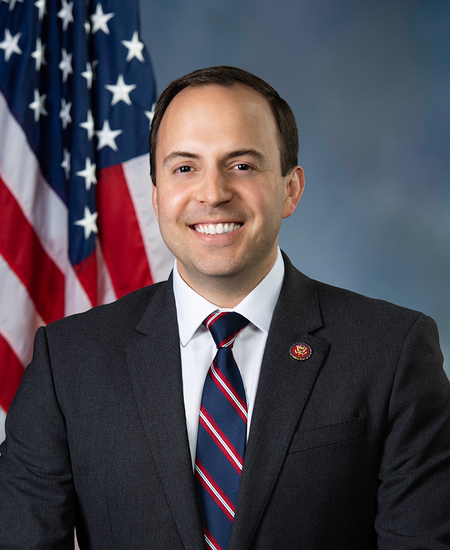
Rep. Lance Gooden
Sponsored bills
Maddy summaryThis bill protects religious child welfare providers from losing government contracts or funding if they refuse to provide services conflicting with their sincerely held religious beliefs (e.g., certain foster care or adoption placements). It prohibits states and federal agencies from denying contracts, licenses, or renewals for this reason, and allows providers to sue for violations with recovery of damages and legal fees. States violating the law risk losing 15% of federal child welfare funding. The law applies to all federally funded child welfare services, including foster care, adoption support, and family preservation programs.
Maddy summaryThis bill prohibits health insurance plans from charging healthcare providers fees for electronic payments (EFTs) and payment advice transactions. It directly affects doctors, hospitals, and clinics that receive electronic payments from health plans by banning any charges, including withholdings, for these transactions. The law, effective January 1, 2024, amends the Social Security Act to require health plans to cover these costs themselves, eliminating fees for providers.
Maddy summaryThe Maximum Pressure Act (HR 6114) is a legislative proposal that would maintain and expand U.S. sanctions against Iran. The bill would codify existing sanctions, require Iran to meet 12 specific conditions before sanctions could be lifted (including ending support for terrorism, releasing hostages, and ending nuclear enrichment), and expand sanctions on Iran's Revolutionary Guard Corps and missile programs. It also establishes new reporting requirements for the U.S. government to monitor Iran's activities and the impact of sanctions. The legislation would require congressional review before any sanctions could be lifted or modified, preventing the executive branch from unilaterally easing restrictions.
Maddy summaryThis bill, HR 5796, prohibits the Department of Health and Human Services from implementing a proposed rule requiring minimum staffing levels in nursing homes. It creates an advisory panel of 15 members - including rural nursing home staff and experts - to study workforce shortages and report on access barriers for seniors, especially in rural areas. The panel must submit an initial report within 60 days, analyzing staffing challenges and recommending solutions to strengthen the nursing home workforce. These provisions directly aim to prevent nursing home closures (like the 129 that occurred in 2022) that threaten rural seniors’ access to care.
Maddy summaryThis bill repeals the tax on Social Security benefits for seniors, making those benefits fully tax-free. It directly affects seniors who receive Social Security benefits and are currently subject to income tax on a portion of those payments. The key provision removes Section 86 of the tax code that previously included benefits in gross income, while a separate funding mechanism appropriates money to Social Security trust funds to replace the lost revenue. The bill ensures Social Security trust funds remain fully funded without requiring new tax increases.
Maddy summaryThis bill establishes a new workplace violence prevention standard for healthcare and social service workers. It requires employers in covered facilities - including hospitals, nursing homes, mental health clinics, and social service settings - to develop and implement comprehensive prevention plans with specific requirements. These plans must include risk assessments, hazard prevention measures, employee training on violence prevention, and procedures for reporting and investigating violent incidents. The bill also amends Medicare regulations to require compliance with these standards for hospitals and skilled nursing facilities receiving Medicare funds.
Maddy summaryHR 2474, the "Strengthening Medicare for Patients and Providers Act," changes how Medicare pays physicians for services. It replaces the previous two-part payment system (used through 2025) with a single annual payment rate update starting in 2024. This update will be based on the Medicare Economic Index (MEI), which tracks costs for medical providers. The change directly affects Medicare-certified doctors and clinics who receive payments under the physician fee schedule.
Maddy summaryThis bill would require Medicare to cover FDA-approved blood tests that screen for multiple cancers simultaneously (like breast, lung, or colorectal cancer) for beneficiaries. It directly affects Medicare recipients aged 65+ who could access these new screenings once per year, without prior authorization. The key provision adds "multi-cancer early detection screening tests" to Medicare's covered services under Part B, defining them as blood tests analyzing cell-free DNA, while maintaining existing coverage for standard screenings like mammograms. The bill does not change current coverage for individual cancer screenings but ensures Medicare keeps pace with new medical technology.
Maddy summaryThe Emergency Care Improvement Act would permanently allow freestanding emergency centers (FECs) to receive Medicare and Medicaid reimbursement for emergency services. FECs are independently licensed facilities operating 24/7 with on-site physicians, providing emergency care equivalent to hospital-based emergency rooms. The bill sets payment rates for FECs equal to hospital outpatient department rates for higher-level emergency services, based on existing Medicare payment structures. This change would apply to over 110 FECs, mostly in Texas, which previously operated under a temporary pandemic waiver and demonstrated 21.8% cost savings to Medicare for similar care.