

Fair Access to Banking Act This bill places restrictions on certain banks, credit unions, and payment card networks if they refuse to do business with a person who complies with the law. Restrictions include prohibiting the use of electronic funds transfer systems and lending programs, termination of an institution's depository insurance, and specified civil penalties. Banks and other specified financial institutions are allowed to deny financial services to a person only if the denial is justified by a documented failure of that person to meet quantitative, impartial, risk-based standards established in advance by the institution. This justification may not be based upon reputational risks to the institution. The bill establishes the right for a person to bring a civil action for a violation of this bill.
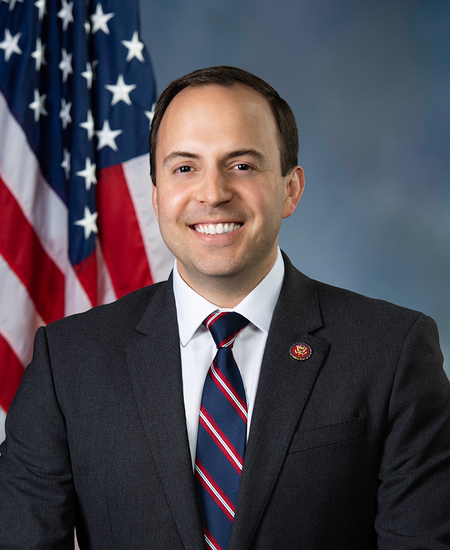
Rep. Lance Gooden
Sponsored bills
Maddy summaryHR 943, the "No User Fees for Gun Owners Act," bans states and local governments from requiring insurance, taxes, or user fees as conditions for owning, buying, or selling firearms. It specifically prohibits these fees for firearm manufacture, importation, acquisition, transfer, or continued ownership, except for general sales taxes applied equally to all goods. The bill amends federal law to prevent states from imposing such conditions on gun ownership or commerce, while allowing standard sales taxes to apply uniformly. This directly affects gun owners, dealers, and manufacturers by removing mandatory fees tied to firearm transactions. The law does not restrict general sales taxes but eliminates state-specific fees as a prerequisite for firearm-related activities.
Maddy summaryHR 925, the "Dismantle DEI Act of 2025," would eliminate diversity, equity, and inclusion (DEI) programs across federal government operations. The bill requires federal agencies to close DEI offices, rescind related executive orders, and prohibit the use of federal funds for DEI training, offices, or initiatives. It defines "prohibited diversity, equity, or inclusion practice" as any activity that discriminates based on race, ethnicity, religion, biological sex, or national origin, or requires employees to complete training asserting that certain groups are inherently superior or inferior. The legislation also prohibits requiring employees to sign statements about race, ethnicity, or gender, and establishes private lawsuits for violations with potential damages of $1,000 per violation per day. This bill would directly affect federal agencies, contractors, grantees, and advisory committees receiving federal funding.
Medicare Patient Access and Practice Stabilization Act of 2025 This bill increases certain payment adjustments under the Medicare physician fee schedule for services furnished between April 1, 2025, and January 1, 2026.
American Music Fairness Act of 2025 This bill establishes that the copyright holder of a sound recording shall have the exclusive right to perform the sound recording through an audio transmission. (Currently, the public performance right only covers performances through a digital audio transmission in certain instances, which means that nonsubscription terrestrial radio stations generally do not have to get a license to publicly perform a copyright-protected sound recording.) Under the bill, a nonsubscription broadcast transmission must have a license to publicly perform such sound recordings. The Copyright Royalty Board must periodically determine the royalty rates for such a license. When determining the rates, the board must base its decision on certain information presented by the parties, including the radio stations' effect on other streams of revenue related to the sound recordings. Terrestrial broadcast stations (and the owners of such stations) that fall below certain revenue thresholds may pay certain flat fees, instead of the board-established rate, for a license to publicly perform copyright-protected sound recordings.
Drug Cartel Terrorist Designation Act This bill directs the Department of State to designate four specified drug cartels as foreign terrorist organizations. (Among other things, such a designation allows the Department of the Treasury to require U.S. financial institutions to block transactions involving the organization.) The four specified cartels in the bill are the Gulf Cartel, the Cartel Del Noreste, the Cartel de Sinaloa, and the Cartel de Jalisco Nueva Generacion. The bill also requires the State Department to submit a detailed report on those four cartels and any other cartels it may identify. Based on this report, the State Department must designate as a foreign terrorist organization any such identified cartel (or faction thereof) that meets certain criteria for designation as a foreign terrorist organization. The bill specifies that it may not be construed to expand eligibility for asylum.
Maddy summaryThis resolution expresses the House of Representatives' position that Congress should take steps to prevent the privatization of the United States Postal Service (USPS), ensuring it remains a federal independent agency. It highlights USPS’s constitutional role, self-sustaining nature (relying on service revenue, not taxpayer funds), and critical functions - serving 168 million addresses daily, supporting rural communities, and underpinning e-commerce. The resolution opposes privatization, noting it would raise prices, reduce services, and harm the $1.9 trillion mailing industry. As a non-binding resolution, it reflects the House’s stance but does not create new law or policy.
Maddy summaryThis bill prohibits federal funds from being used to cover gender transition procedures for individuals under 18, including puberty blockers, hormone therapies (at higher-than-normal doses), and surgeries like hysterectomies or mastectomies. It defines "sex" biologically as male or female and exempts certain medical treatments, such as puberty suppression for precocious puberty or care for genetic disorders of sex development. The policy directly affects minors receiving federally funded healthcare (e.g., Medicaid), restricting coverage for most gender-affirming care. Key mechanisms include funding restrictions and specific medical exceptions, though it does not ban private insurance or out-of-pocket payments.
Illegitimate Court Counteraction Act This bill imposes sanctions against foreign persons (individuals and entities) who assist the International Criminal Court (ICC) in investigating, arresting, detaining, or prosecuting certain individuals. The bill categorizes as protected persons (1) any U.S. individual, U.S. entity, or person in the United States, unless the United States is a state party to the Rome Statute of the ICC and provides formal consent to ICC jurisdiction; and (2) any foreign person that is a citizen or lawful resident of a U.S. ally that is not a state party to the Rome Statute or has not consented to ICC jurisdiction. If the ICC attempts to investigate, arrest, detain or prosecute a protected person, the President must impose visa- and property-blocking sanctions against the foreign persons that engaged in or materially assisted in such actions, as well as against foreign persons owned by, controlled by, or acting on behalf of such foreign persons. The President must also apply visa-blocking sanctions to the immediate family members of those sanctioned. Upon enactment, the bill rescinds all funds appropriated for the ICC and prohibits the subsequent use of appropriated funds for the ICC.
Life at Conception Act This bill declares that the right to life guaranteed by the Constitution is vested in each human being at all stages of life, including the moment of fertilization, cloning, or other moment at which an individual comes into being. Nothing in this bill shall be construed to authorize the prosecution of any woman for the death of her unborn child.