

Renewing Immigration Provisions of the Immigration Act of 1929 This bill expands eligibility for a program that authorizes the Department of Homeland Security to, at its discretion, provide lawful permanent resident status to certain long-term residents of the United States, including individuals who are unlawfully present. Currently, this program, sometimes referred to as the Registry program, is only available to eligible non-U.S. nationals ( aliens under federal law) who entered the United States before January 1, 1972. The bill removes this entry cutoff date and opens up the program to eligible individuals who have resided in the United States for at least seven years. Existing requirements (e.g., the individual must not be inadmissible or deportable due to certain grounds related to crime or terrorism) continue to apply.
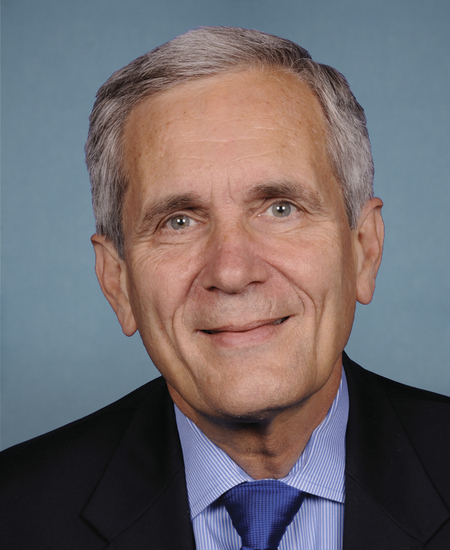
Rep. Lloyd Doggett
Sponsored bills
Latonya Reeves Freedom Act of 2022 This bill prohibits government entities and insurance providers from denying community-based services to individuals with disabilities that require long-term service or support that would enable such individuals to live in the community and lead an independent life. Specifically, these entities may not discriminate against such individuals in the provision of community-based services by such actions as imposing prohibited eligibility criteria, cost caps, or waiting lists or failing to provide a specific community-based service. Additionally, community-based services must be offered to individuals with such disabilities prior to institutionalization. Institutionalized individuals must be notified regularly of community-based alternatives. The bill requires the Department of Justice to issue regulations requiring government entities and insurance providers to offer community-based long-term services to individuals with such disabilities who would otherwise qualify for institutional placement. Government entities must ensure sufficient availability of affordable, accessible, and integrated housing that is not a disability-specific residential setting or a setting where services are tied to tenancy. Regulations shall also (1) require government entities and insurance providers to perform self-evaluation on current services, policies, and practices and concerning compliance with requirements of this bill; and (2) require government entities to submit a transition plan. The bill provides funds for FY2022 for the Department of Health and Human Services to provide technical assistance with respect to transition plans. The bill allows civil actions by individuals subjected to, or about to be subjected to, a violation of its requirements.
Election Worker and Polling Place Protection Act This bill addresses certain protections for election workers and polling places. In particular, the bill prohibits, with enhanced penalties for certain types of threats and harms (1) intimidation of poll watchers, election officials, and election agents, vendors, and contractors involving violence or threats of harm; and (2) physical damage to or threats to physically damage a polling place, tabulation center, or other election infrastructure.
Schedules That Work Act This bill provides employees with the right to request changes to their work schedules related to the number of hours they are required to work or be on call, the location of the work, the amount of notification about work schedule assignments, and fluctuations in work hours. Employers must negotiate in good faith with employees who make such requests and comply with certain work schedule notice and split shift pay requirements for retail, food service, cleaning, hospitality, or warehouse employees.
Fostering Overseas Rule of law and Environmentally Sound Trade Act of 2021 or the FOREST Act of 2021 This bill restricts certain commodities produced on illegally deforested land from accessing the U.S. market. Specifically, the bill prohibits the importation of any product made wholly or in part of a covered commodity produced from illegally deforested land. The bill outlines requirements for import declarations of covered commodities. The U.S. Trade Representative (USTR) must, within 30 days, publish (1) an initial list of covered commodities that consists of palm oil, soybeans, cocoa, cattle, rubber, and wood pulp; and (2) an initial list of covered products that are defined by the bill in accordance with the Harmonized Tariff Schedule. These lists must be updated at least on an annual basis. Further, the USTR must identify foreign countries without adequate and effective protection against illegal deforestation caused by the production of commodities that are likely to enter the United States. The USTR must develop an action plan that includes benchmarks for each identified country. Additionally, the bill creates an interagency working group to provide advice and recommendations to the USTR, U.S. Customs and Border Protection, and other relevant agencies. The bill provides funding to assist foreign governments in combating illegal deforestation. The bill also includes illegal deforestation as a specified unlawful activity under a federal financial crime statute. The bill establishes a federal procurement preference for commodities that are not produced from land subject to deforestation.
Lifting Immigrant Families Through Benefits Access Restoration Act of 2021 or the LIFT the BAR Act of 2021 This bill repeals certain limits on the eligibility of noncitizens who lawfully reside in the United States for federal means-tested programs, including Medicaid, the Children's Health Insurance Program (CHIP), programs funded through Temporary Assistance for Needy Families (TANF) grants, Supplemental Security Income (SSI), and certain nutrition and housing programs.
Frederick Douglass Trafficking Victims Prevention and Protection Reauthorization Act of 2021 This bill reauthorizes through FY2026 and revises programs and activities to support survivors of human trafficking and prevent such trafficking domestically and abroad. The bill expands and authorizes programs for survivors, including a program to prevent re-exploitation. It also extends through FY2026 a special assessment on certain persons convicted of a human trafficking offense, which funds programs for human-trafficking survivors. Additionally, the bill provides privacy and other protections for survivors, including specified financial protections and protections against retaliation for survivors who pursue civil claims against a perpetrator. The bill also allows courts to reduce sentences for certain individuals who commit human trafficking crimes as minors. To prevent trafficking domestically, federal departments must incorporate anti-trafficking efforts into contracting activities and personnel policies, and the bill supports private sector efforts to address human trafficking in its policies and services. Furthermore, the bill supports the identification, investigation, and prosecution of human trafficking crimes, with an expanded focus on forced labor. To prevent trafficking globally, the bill prohibits access to a trade program for developing countries and otherwise restricts development assistance for countries that fail to meet minimum standards for eliminating trafficking. It also changes the criteria for determining whether a country has met applicable standards. In addition, the bill authorizes sanctions on persons convicted of severe forms of trafficking and requires integration of counter-trafficking activities into foreign assistance programs. The bill also requires reporting by the Government Accountability Office, federal agencies, and states concerning human trafficking.
Frank Harrison, Elizabeth Peratrovich, and Miguel Trujillo Native American Voting Rights Act of 2021 This bill addresses the voting rights of Native American and Alaska Native voters and voting access on tribal lands. The bill includes provisions expanding the types of facilities that can be used as voter registration agencies; increasing polling site accessibility, including by expanding early in-person voting and providing ballot drop boxes; providing enforcement power to citizens and attorneys general; requiring approval for actions like moving a polling place; validating certain tribal identification for voting or registering to vote; permitting voters to designate another individual to return a ballot on their behalf; and expanding requirements for bilingual voting accessibility. In addition, the bill establishes a Native American voting task force grant program for the purpose of increasing voter outreach, education, registration, turnout, and accessibility for Native American communities. The bill also directs the Government Accountability Office to study and report on (1) the prevalence of nontraditional or nonexistent mailing addresses among Indians, members of tribes, and individuals residing on Indian lands; and (2) the alternatives for removing barriers to voter registration, receipt of voter information and materials, and receipt of ballots.
Supreme Court Ethics Act This bill establishes a new statutory requirement for the Judicial Conference of the United States to issue a judicial code of conduct for judges and justices of U.S. courts, including Justices of the Supreme Court. Currently, the Judicial Conference issues a code of conduct for judges of U.S. courts (but not for Justices of the Supreme Court).
Make Taxpayer-Funded Department of Defense Medical Interventions Affordable Act This bill requires the Department of Defense (DOD) to report on its efforts to comply with provisions of a report related to the licensing of federally owned medical interventions. DOD must also compile into a searchable database information relating to support provided by DOD for biomedical research and development.