Saving Hazardous And Declining Environments Act or the SHADE Act This bill requires the Department of Housing and Urban Development to award grants for government entities and nonprofit organizations to plant trees in low-income communities and in communities meeting designated minority or limited English-proficiency thresholds.
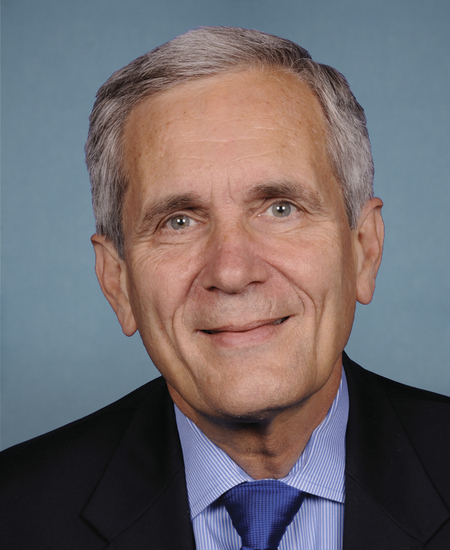
Rep. Lloyd Doggett
Sponsored bills
Resident Education Deferred Interest Act or the REDI Act This bill allows borrowers in medical or dental internships or residency programs to defer student loan payments until the completion of their programs.
Protecting Older Workers Against Discrimination Act of 2021 This bill revises the evidentiary standard for age discrimination by establishing an unlawful employment practice when the complaining party demonstrates that age or participation in an investigation, proceeding, or litigation related to an age discrimination claim was a motivating factor for an adverse practice, even though other factors also motivated the practice (thereby allowing what are commonly known as mixed motive claims). The bill (1) permits the complaining party to rely on any type or form of admissible evidence, which need only be sufficient for a reasonable trier of fact to find that an unlawful practice occurred; and (2) declares that the complaining party shall not be required to demonstrate that age or retaliation was the sole cause of the employment practice (thereby rejecting the Supreme Court's decision in Gross v. FBL Financial Services, Inc. , which requires the complainant to prove that age was the but-for cause for the employer's decision). The bill applies this evidentiary standard to other employment discrimination and retaliation claims, including claims under the Civil Rights Act of 1964, the Americans With Disabilities Act of 1990, and the Rehabilitation Act of 1973. In a claim in which age discrimination is shown, but where the employer demonstrates that it would have taken the same action absent the motivating factor of age, the bill authorizes courts to grant declaratory and injunctive relief, but prohibits the court from awarding damages or issuing an order requiring any admission, reinstatement, hiring, promotion, or payment. This limitation also applies to claims of discrimination based on disability. The bill also includes reporting requirements for the Equal Employment Opportunity Commission and the Department of Labor.
Vanessa Guillén Military Justice Improvement and Increasing Prevention Act This bill modifies the process and policy related to the disposition of charges and convening of courts-martial for certain sexual assault cases and other specified offenses under the Uniform Code of Military Justice (UCMJ). Among other elements, the bill provides that the determinations on the preferral, disposition, and referral of charges for specified offenses under the UCMJ must be made by a commissioned officer of the Armed Forces who is designated as a court-martial convening authority (in grade O-6 or higher) and who is available for detail as trial counsel, has significant trial experience, and is outside the chain of command of the member subject to the charges.
Puppy Protection Act of 2021 This bill requires the Department of Agriculture to expand standards that govern the humane handling, care, treatment, and transportation of animals to include new requirements for commercial dog dealers. Specifically, the standards must require dog dealers to provide to dogs adequate housing, exercise, and veterinary care; appropriate and nutritious food; continuous access to potable water; and meaningful socialization with humans and compatible dogs for at least 30 minutes each day. The standards must also include requirements for breeders to use safe breeding practices and make all reasonable efforts to find humane placement for retired breeding dogs.
Cover Outstanding Vulnerable Expansion-eligible Residents Now Act or the COVER Now Act This bill establishes a demonstration program to allow local governments to provide health benefits to the Medicaid expansion population in states that have not expanded Medicaid. Under the program, local governments may provide coverage for individuals who are newly eligible for Medicaid under the Patient Protection and Affordable Care Act (i.e., the Medicaid expansion population) for a maximum of 10 years, or until their respective states expand Medicaid. The bill provides a 100% federal matching rate for the first three years of program participation. The bill prohibits states from taking certain actions against participating localities, such as withholding funding, increasing taxes, or restricting provider participation. States that violate these requirements are subject to certain funding penalties.
This resolution expresses support for the efforts of health and wellness coaches.
Trade Adjustment Assistance Modernization Act of 2021 This bill reauthorizes through FY2028 and otherwise revises the Trade Adjustment Assistance Program, including by expanding program eligibility to additional workers, increasing relocation and job search allowances, establishing a child care allowance, and expanding eligibility for and increasing the maximum benefit of wage insurance. The bill also permanently extends the tax credit for health insurance costs and increases the percentage of such credit.
Generalized System of Preferences and Miscellaneous Tariff Bill Modernization Act of 2021 This bill reauthorizes and revises specified U.S. trade programs and provisions. Specifically, the bill extends through December 31, 2024, the Generalized System of Preferences (GSP), which provides duty-free treatment to products imported from designated beneficiary countries. The bill makes various changes to the GSP, including by (1) adding human rights, environmental, and other criteria for designation as a beneficiary developing country; (2) requiring a review of laws relating to worker and gender rights; and (3) requiring a study on rules of origin and GSP utilization rates. Additionally, the bill provides through December 31, 2023, and retroactively applies to 120 days before this bill's enactment, temporary duty suspensions or reductions to eligible imported products. This authorization is commonly known as the Miscellaneous Tariff Bill (MTB). The last version of the MTB was enacted in September 2018 and the temporary treatment for those products listed in the MTB expired on December 31, 2020. The bill also extends the American Manufacturing Competitiveness Act of 2016 for two future MTB cycles (one in 2022 and one in 2025). This extension allows the U.S. International Trade Commission to conduct the MTB petition, review, and recommendation process for those additional cycles.

Justice for Patients Act This bill prohibits private health insurance plans from (1) including any mandatory arbitration provision for disputes related to the plan, or (2) limiting the ability of a plan enrollee to participate in a class action lawsuit related to the plan. Further, the applicability of this bill to an arbitration agreement may not be determined by an arbitrator.