Maddy summaryHCONRES 78 is a symbolic congressional resolution designating March 10, 2022, as "Abortion Provider Appreciation Day." It honors abortion providers and clinic staff for their work in delivering compassionate care amid rising threats, harassment, and clinic closures. The resolution recognizes their role in reproductive justice and calls for protecting their safety and patients' access to care. As a non-binding resolution, it does not create new laws but expresses congressional support for providers facing restrictive policies and violence.
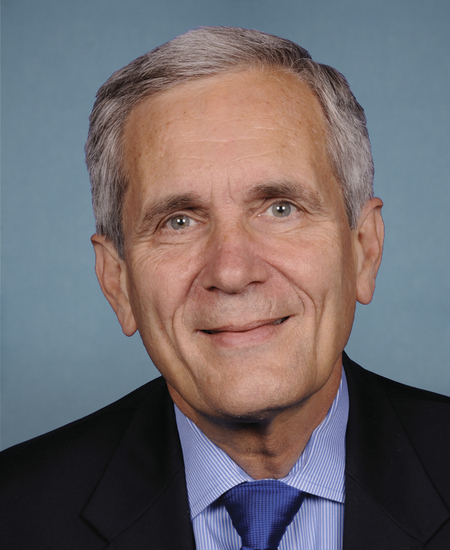
Rep. Lloyd Doggett
Sponsored bills
This resolution condemns the terrorist attack on Congregation Beth Israel in Colleyville, Texas, on January 15, 2022. It also expresses support for the affected community, commends the actions of law enforcement and emergency responders, and reaffirms a commitment to combat hate, bigotry, anti-Semitism, and violence against Jewish Americans.
Ukraine Humanitarian Support Act of 2022 This bill authorizes the Department of State and the U.S. Agency for International Development to provide humanitarian assistance to address the urgent needs of Ukrainians fleeing Ukraine and those internally displaced within Ukraine. The State Department must also report to Congress a strategy for working with foreign governments and multilateral organizations to address the humanitarian situation in the region as a result of further invasion of Ukraine by Russia.
This bill generally prohibits the use of federal funds, including funds from the federal Judgment Fund, for interim storage of spent nuclear fuel by a privately owned facility. The prohibition does not apply to (1) manufacturers of nuclear reactors or fabricators of nuclear fuel that accept the return of spent nuclear fuel, (2) nuclear power plants that accept spent nuclear fuel for interim storage, or (3) privately owned interim storage facilities that are currently in operation. Funds may also be used for costs associated with transferring or storing spent nuclear fuel at sites owned by the Department of Energy.
Choice in Affordable Housing Act of 2022 This bill establishes programs and grants to incentivize landlord participation in the Housing Choice Voucher program (i.e., Section 8 tenant-based housing assistance). The bill authorizes the Department of Housing and Urban Development (HUD) to provide one-time incentive payments to landlords, security deposit payments, bonuses to public housing agencies that employ landlord liaisons, and amounts for other recruitment purposes. Additionally, the bill allows dwelling units to meet Housing Choice Voucher program inspection requirements by satisfactory inspection through participation in other housing programs. Landlords not yet participating in a low-income housing assistance program may request inspection by a public housing agency to determine whether the dwelling meets requirements prior to selection by a tenant. Finally, HUD must expand the use of an alternative method of calculating fair market rent for purposes of the Housing Choice Voucher program.
This bill prohibits from inclusion in a consumer credit report information related to an eviction occurring during the COVID-19 national emergency or occurring in the 30 days after the termination of such emergency.
Women's Health Protection Act of 2021 This bill prohibits governmental restrictions on the provision of, and access to, abortion services. Specifically, governments may not limit a provider's ability to prescribe certain drugs, offer abortion services via telemedicine, or immediately provide abortion services when the provider determines a delay risks the patient's health. Furthermore, governments may not require a provider to perform unnecessary medical procedures, provide medically inaccurate information, comply with credentialing or other conditions that do not apply to providers whose services are medically comparable to abortions, or carry out all services connected to an abortion. In addition, governments may not (1) require patients to make medically unnecessary in-person visits before receiving abortion services or disclose their reasons for obtaining such services, or (2) prohibit abortion services before fetal viability or after fetal viability when a provider determines the pregnancy risks the patient's life or health. The bill also prohibits other governmental measures that are similar to the bill's specified restrictions or that otherwise single out and impede access to abortion services, unless a government demonstrates that the measure significantly advances the safety of abortion services or health of patients and cannot be achieved through less restrictive means. The Department of Justice, individuals, or providers may bring a lawsuit to enforce this bill, and states are not immune from suits for violations. The bill applies to restrictions imposed both prior and subsequent to the bill's enactment.

Original Black History Month Resolution of 2022 This resolution recognizes the importance of commemorating Black History Month to acknowledge the achievements of Black Americans throughout history.
No Most Favored Nation Trading with Russia Act This bill withdraws normal trade relations treatment from Russia. Additionally, the bill requires the President to encourage U.S. allies and partners to (1) consider taking similar actions; and (2) condemn, at the World Trade Organization (WTO), Russia's aggression in Ukraine. Further, the President must direct the U.S. Permanent Representative to the WTO to seek suspension of Russia's membership in the WTO.
Part-Time Worker Bill of Rights Act This bill modifies various employment, leave, and pension rules with respect to part-time workers. Specifically, the bill removes the requirement that employees work a minimum number of hours during the preceding 12-month period before becoming eligible for family and medical leave. The bill also sets the maximum length of service on which employers may condition the eligibility of part-time employees for a qualified pension plan (e.g., 401(k) retirement plan). Except as required by an applicable collective bargaining agreement, such service requirement may be no longer than two consecutive 12-month periods of at least 500 hours of service for part-time employees who have reached the age of 21 by the end of such periods. The bill further prohibits employers of more than 15 employees from setting disparate terms of employment or working conditions for part-time employees, including with respect to compensation, notice of work hours, and promotion opportunities, among others. Additionally, the bill requires such employers to offer available, qualified part-time employees additional work hours before hiring new employees for such hours. Among other enforcement methods, employers must maintain three years of records for offers of additional hours and employee responses to such offers. The bill also provides a private right of action for employees to enforce the nondiscrimination requirements of this bill.