

Displaced Afghan Women and Girls Education Act of 2022 This bill provides certain educational resources to certain displaced Afghan women and girls domiciled in the United States. For example, the bill (1) requires such displaced Afghan women and girls to receive in-state tuition rates at public institutions of higher education, and (2) provides funding for and establishes the Displaced Afghan Women and Girls Scholarship Grant.
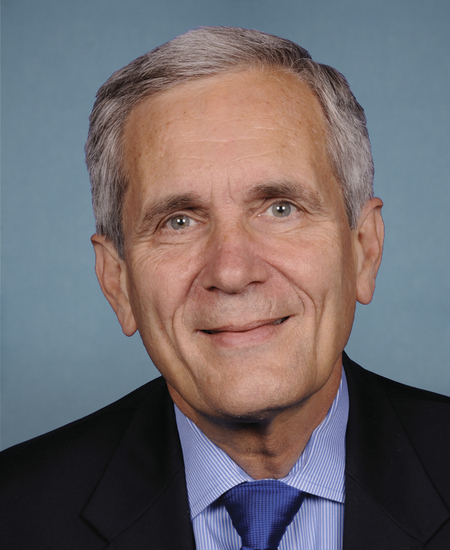
Rep. Lloyd Doggett
Sponsored bills
United States Innovation and Competition Act of 2021 This bill addresses U.S. technology and communications, foreign relations and national security, domestic manufacturing, education, trade, and other matters. Among other provisions, the bill provides funding for FY2022-FY2026 to support U.S. semiconductor manufacturing, research and development, and supply chain security; provides funding for wireless supply chain innovation; establishes a Directorate for Technology and Innovation in the National Science Foundation; extends through 2025 the authority of the National Aeronautics and Space Administration (NASA) to lease its non-excess real property and related personal property; authorizes various programs and policies related to space exploration; authorizes various international affairs programs and activities, including foreign assistance for the Indo-Pacific region; requires federal infrastructure programs to provide for the use of materials produced in the United States; imposes sanctions on China for cybersecurity and human rights abuses; requires the Department of Health and Human Services to consider national security risks associated with sensitive genetic information; includes initiatives related to elementary and secondary education, including those to increase computer science education; contains provisions related to higher education, including those reauthorizing through FY2027 international education programs and addressing China's influence on institutions of higher education; modifies and expands the schedule for graduated merger filing fees; prohibits federal funding for the Wuhan Institute of Virology; requires the U.S. Trade Representative to take certain actions related to digital trade and censorship practices; and extends through 2027 the Generalized System of Preferences.
This resolution urges the U.S. government, European Union, and other transatlantic partners to increase cooperation and support for Moldova's democratic development, economic and energy independence, and efforts to root out corruption. The resolution reaffirms that it is U.S. policy to support the sovereignty, independence, and territorial integrity of Moldova. The resolution affirms Moldova's right to determine its own partnerships and its right to associate with the European Union or any regional organization. The resolution commends Moldova's efforts to take in Ukrainian refugees and urges increased assistance by the United States and other allies and partners to Moldova to assist with those efforts. The resolution reaffirms the importance of free, fair, and transparent elections in Moldova. The resolution calls upon the government of Russia to fulfill its commitments made at the Istanbul summit of the Organization for Security and Cooperation in Europe in 1999, withdraw its military forces and munitions from Moldova, refrain from issuing military and economic threats or exerting pressure against Moldova, and cease any and all actions that support separatists in the region of Transnistria. The resolution supports efforts to resolve the Transnistria conflict through a comprehensive settlement that secures Moldova's sovereignty and territorial integrity. Finally, this resolution affirms that lasting stability and security in Moldova is in the strategic interest of the United States and can only be achieved if the territorial integrity and sovereignty of Moldova and all other European countries are respected.
This resolution recognizes that Black women are experiencing high, disproportionate rates of maternal mortality and morbidity in the United States and that Black Maternal Health Week is an opportunity to deepen the national conversation about Black maternal health.
This resolution condemns the rape and assault of women by Russian forces in the occupied area of Bucha, Ukraine. The resolution condemns the deliberate disruption of the free flow of humanitarian aid that is harming innocent civilians, particularly women. The resolution also highlights the critical importance of ensuring women meaningfully participate in the planning and execution of humanitarian actions and the negotiation of peace agreements to meet their unique needs and to protect their human rights. Finally, the resolution calls on Vladimir Putin to condemn sexual and gender-based violence against women and girls in this conflict; hold all perpetrators who commit acts of sexual and gender-based violence accountable; cease all hostilities, protect human rights, and allow unencumbered humanitarian access; and remove all Russian Armed Forces, and other armed groups, from Ukraine.
Maddy summaryHRES 1056 is a non-binding House resolution designating April 10 as "Dolores Huerta Day" to honor her legacy. It recognizes Dolores Huerta's work as a civil rights and labor rights activist, including co-founding the United Farm Workers, advocating for farm workers' collective bargaining rights, and promoting women's equality. The resolution does not create new laws or policies but formally supports the commemorative designation. It specifically highlights her role in the 1975 California Agricultural Labor Relations Act and her founding of the Dolores Huerta Foundation. The resolution was introduced by 15 House members in April 2022 and referred to the Oversight Committee.
Suspending Normal Trade Relations with Russia and Belarus Act This bill suspends normal trade relations with Russia and Belarus. It also permanently authorizes the President to impose visa- and property-blocking sanctions based on violations of human rights. Specifically, the bill authorizes the President to proclaim increases in the rates of duty applicable to products of Russia or Belarus. This authority terminates on January 1, 2024. The President may restore normal trade relations with Russia and Belarus, subject to congressional disapproval. The bill directs the U.S. Trade Representative to (1) condemn the recent aggression in Ukraine, (2) encourage other World Trade Organization (WTO) members to suspend trade concessions to Russia and Belarus, (3) consider steps to suspend Russia's participation in the WTO, and (4) seek to halt the accession process of Belarus.
Ending Importation of Russian Oil Act This bill prohibits the importation of energy products from Russia. Specifically, the bill prohibits the importation of Russian products that are classified under chapter 27 of the Harmonized Tariff Schedule (which includes mineral fuels, mineral oils and products of their distillation, bituminous substances, and mineral waxes). The President may terminate this prohibition, subject to congressional disapproval, if the President certifies that Russia (1) has reached an agreement to withdraw Russian forces and cease military hostilities in Ukraine, (2) poses no immediate military threat of aggression to any North Atlantic Treaty Organization member, and (3) recognizes the right of the Ukrainian people to independently and freely choose their own government.
Russian Digital Asset Sanctions Compliance Act of 2022 This bill allows additional sanctions against Russia and creates specified reporting requirements regarding digital assets. Specifically, the President must periodically identify foreign persons who facilitate evasion of Russian sanctions using digital assets. The bill authorizes sanctions against such persons. The bill requires a U.S. taxpayer engaged in offshore digital asset transactions greater than $10,000 to file an annual Report of Foreign Bank and Financial Accounts with the Financial Crimes Enforcement Network. The bill allows the Department of the Treasury to prohibit U.S. digital asset trading platforms and transaction facilitators from transacting with Russian digital asset addresses. Additionally, Treasury must report on its progress in implementing the bill and must annually identify foreign digital asset trading platforms that are a high risk for sanctions evasion, money laundering, and other illicit activities.
Marijuana Opportunity Reinvestment and Expungement Act or the MORE Act This bill decriminalizes marijuana. Specifically, it removes marijuana from the list of scheduled substances under the Controlled Substances Act and eliminates criminal penalties for an individual who manufactures, distributes, or possesses marijuana. The bill also makes other changes, including the following: replaces statutory references to marijuana and marihuana with cannabis , requires the Bureau of Labor Statistics to regularly publish demographic data on cannabis business owners and employees, establishes a trust fund to support various programs and services for individuals and businesses in communities impacted by the war on drugs, imposes an excise tax on cannabis products produced in or imported into the United States and an occupational tax on cannabis production facilities and export warehouses, makes Small Business Administration loans and services available to entities that are cannabis-related legitimate businesses or service providers, prohibits the denial of federal public benefits to a person on the basis of certain cannabis-related conduct or convictions, prohibits the denial of benefits and protections under immigration laws on the basis of a cannabis-related event (e.g., conduct or a conviction), establishes a process to expunge convictions and conduct sentencing review hearings related to federal cannabis offenses, directs the Government Accountability Office to study the societal impact of state legalization of recreational cannabis, directs the National Highway Traffic Safety Administration to study methods for determining whether a driver is impaired by marijuana, directs the National Institute for Occupational Safety and Health to study the impact of state legalization of recreational cannabis on the workplace, and directs the Department of Education to study the impact of state legalization of recreational cannabis on schools and school-aged children.