

Maddy summaryH.J. Res. 46 is a joint resolution seeking to terminate the national emergency declared by President Trump on March 13, 2020, under the National Emergencies Act. If enacted, it would end the legal authority allowing federal agencies to bypass standard procedures during the pandemic response. This action would directly affect government operations relying on emergency powers, requiring agencies to revert to regular processes for ongoing programs. The resolution does not alter existing laws or create new policies - it solely ends the emergency designation.
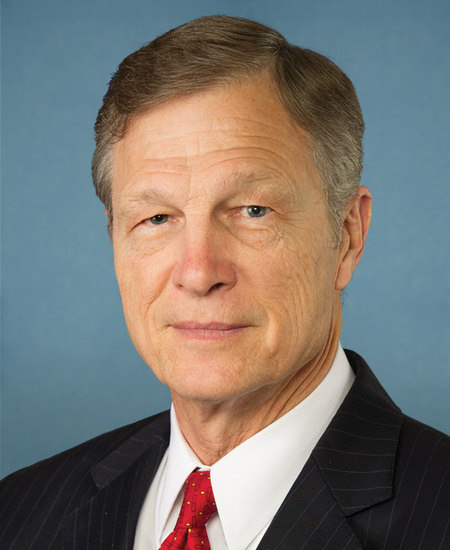
Rep. Brian Babin
Sponsored bills
Make Russia Pay Act This bill requires the Department of the Treasury to liquidate all Russian assets seized by the United States and deposit the resulting funds into a Ukrainian Humanitarian Aid Fund established by the bill. Treasury may use the funds to provide assistance to Ukraine, including by providing funding to Ukraine's government for humanitarian and security assistance.
American Energy Security and Transparency Act This bill requires the Department of the Interior to immediately resume sales of oil and gas leases in accordance with applicable onshore mineral leasing laws. The bill further specifies that Interior must conduct a minimum number of sales and offer all parcels eligible for oil and gas development in each state where there is land available for oil and gas leasing. Additionally, Interior must report to Congress, and publish certain information on its website, concerning sales of oil and gas leases and related drilling permits.
This resolution condemns the terrorist attack on Congregation Beth Israel in Colleyville, Texas, on January 15, 2022. It also expresses support for the affected community, commends the actions of law enforcement and emergency responders, and reaffirms a commitment to combat hate, bigotry, anti-Semitism, and violence against Jewish Americans.
Firearm Industry Non-Discrimination Act or the FIND Act This bill prohibits the federal government from entering into contracts with an entity that discriminates against firearm trade associations or businesses that deal in firearms, ammunition, or related products. Specifically, the bill requires a federal agency to include in each contract for the procurement of goods or services awarded by the agency a clause requiring the prime contractor to certify that it (1) has no policy, practice, guidance, or directive that discriminates against a firearm entity or firearm trade association; and (2) will not adopt a policy, practice, guidance, or directive that discriminates against a firearm entity or firearm trade association during the term of the contract. The bill establishes (1) a similar requirement with respect to subcontracts, and (2) penalties for violations. The bill makes such prohibition inapplicable to a contract for the procurement of goods or services that is a sole-source contract.
American Ammo in Defense of Ukraine Act This bill authorizes the President to waive certain payments and requirements for deliveries of ammunition to Ukraine until the armed conflict in Ukraine ends. Specifically, for certain types of ammunition or ordnance to be delivered to a qualified entity providing such items to Ukraine, the President may transport the items without charging the transportation costs to Ukraine. The President may also, to expedite delivery of such items, waive any applicable Department of State or Department of Commerce export criteria.
Powering America through Domestic Energy Act or the PADE Act This bill requires the President to prohibit the importation of crude oil and petroleum products from Russia. In addition, the bill requires the President to obtain congressional approval before (1) declaring a moratorium on the use of hydraulic fracturing, or (2) withdrawing federal land from oil and gas leasing under mineral leasing laws.
No Taxpayer Dollars for Communist China COVID Tests Act This bill prohibits the use of federal funds to procure at-home COVID-19 tests that are imported from or manufactured (in whole or in part) in China.
Israel Anti-Boycott Act This bill prohibits participation by certain entities and individuals in boycotts or requests for boycotts imposed by international governmental organizations (i.e., the United Nations and the European Union). Specifically, the bill applies to covered persons the prohibition of specified actions in compliance with or in support of a boycott against a country that is friendly to the United States and that is not itself the object of a U.S. boycott. The bill defines a covered person as a domestic concern, the U.S. government or a state government, or a representative or official of such domestic concern or government. The bill also adds to the list of specified prohibited actions the act of furnishing information to any foreign country or international governmental organization that furthers an imposed boycott. Under current law, a person who violates the prohibitions against such boycotts may be subject to a monetary fine or imprisonment; however, the bill removes imprisonment as a potential penalty for certain violations.
This concurrent resolution expresses the sense of Congress that the International Criminal Court should immediately proceed with prosecuting Russian President Vladimir Putin with war crimes should any harm befall Ukrainian President Volodymyr Zelenskyy as a result of actions taken or directed by any Russian entity or authority.