

Promoting Cross-b order Energy Infrastructure Act This bill establishes a new process for approving the construction and operation of energy infrastructure across an international border of the United States and replaces the existing process established under specified executive orders. Specifically, this bill requires a person to obtain a certificate of crossing before constructing, connecting, operating, or maintaining a border-crossing facility for the import or export of oil, natural gas, or electricity across an international border. A certificate must be obtained from the Federal Energy Regulatory Commission (FERC) for a facility consisting of oil or natural gas pipelines or the Department of Energy (DOE) for an electric transmission facility. As a condition of issuing a certificate, DOE must require that an electric transmission facility be constructed, connected, operated, or maintained consistent with specified policies and standards. FERC and DOE must meet a deadline for issuing a certificate as set forth by this bill. The bill also requires FERC to meet a deadline for approving applications to import or export natural gas to or from Canada or Mexico.
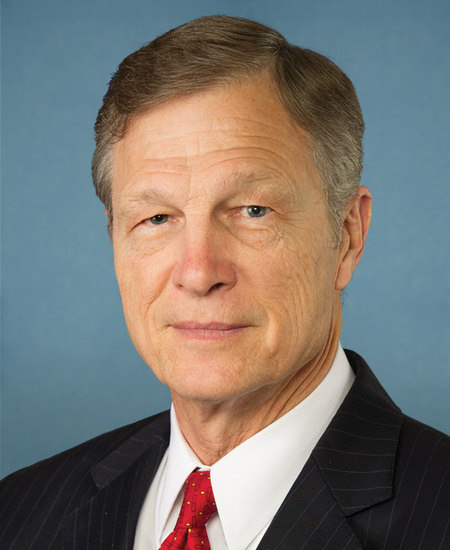
Rep. Brian Babin
Sponsored bills
Family Integrity to Reform Elections Act or the FIRE Act This bill prohibits the use of campaign funds to compensate the immediate family member of a candidate or an individual holding federal office. It also requires disclosure of payments made to immediate family members. Specifically, the bill prohibits an authorized committee of a candidate or any other political committee that is established, maintained, or controlled by a candidate or an individual holding federal office from directly or indirectly compensating the immediate family member of the candidate or individual for services provided to or on behalf of the committee. The prohibition does not apply to a political committee of a political party. Next, the bill requires a political committee to report on disbursements to an immediate family member of the candidate or the individual holding federal office. Finally, the bill requires any penalty for a violation of the bill to be imposed on the candidate or the individual holding federal office if the candidate or individual involved knew of the violation. Further, it prohibits the committee involved from reimbursing the candidate or individual for the penalty.
Stop Communist Construction of Public Infrastructure Act of 2022 or the Stop CCP Infrastructure Act of 2022 This bill prohibits certain entities related to China or the Chinese government from receiving federal funds for public works projects in the United States. Specifically, this prohibition applies to entities that are (1) headquartered in China; or (2) owned, financed, influenced by, or affiliated with the Chinese government, the Chinese Communist Party (CCP), or the Chinese military. Further, state and local governments must verify that a recipient for federal funds for a public works project is free from any obligations, influences, or connections to any of these entities.
Maddy summaryHRES 1166 is a symbolic House resolution condemning the May 24, 2022, mass shooting at Robb Elementary School in Uvalde, Texas, which killed 19 students and 2 teachers. It honors the victims, expresses support for the injured and affected families, and thanks first responders, without enacting new policies or requiring government action. The resolution was introduced by Texas representatives and passed unanimously by the House on June 9, 2022, as a formal expression of solidarity with the Uvalde community. As a procedural resolution, it has no legal effect but serves to publicly acknowledge the tragedy.
Getting Over Lengthy Delays in Care As Required by Doctors Act of 2022 or the GOLD CARD Act of 2022 This bill exempts physicians from prior authorization requirements under Medicare Advantage plans with respect to specific items and services if at least 90% of the physician's requests for such items and services were approved during the previous plan year.
Stop Iranian Drones Act This bill expands existing provisions requiring sanctions against individuals or entities that provide certain types of weapons to Iran. Specifically, the bill modifies the provisions by adding unmanned combat aerial vehicles to the list of weapons covered by the sanctions. The bill also requires the Department of State to periodically report to Congress on the identities of any Iranian entity that has attacked a U.S. citizen using an unmanned combat aerial vehicle. The President must designate any such entity as a foreign terrorist organization.
Keeping Russia's Energy and Military Liable for Invading its Neighbors Act or the KREMLIN Act This bill temporarily prohibits federal agencies from contracting with persons that have business operations with the government of Russia or with fossil fuel companies that operate there, with exceptions where necessary to provide humanitarian assistance or disaster relief or where vital to U.S. national security interests. The bill terminates the prohibition when the President submits to specified congressional committees a written certification determining that Russia has reached an agreement relating to the withdrawal of Russian forces and cessation of military hostilities that is accepted by the Ukrainian government, poses no immediate military threat of aggression to any North Atlantic Treaty Organization member, and recognizes the right of the people of Ukraine to independently and freely choose their own government.
WHO Withdrawal Act This bill requires the President to immediately withdraw the United States from the World Health Organization (WHO) and prohibits using any federal funds to provide for U.S. participation in the WHO. The bill also repeals the 1948 act authorizing the United States to join the WHO.
This resolution recognizes the commitment of Port Houston, U.S. Army Corps of Engineers, and project partners to Project 11 (i.e., the Houston Ship Channel expansion).
Freight Rail Assistance and Investment to Launch Coronavirus-Era Activity and Recovery Act of 2022 or the Freight RAILCAR Act of 2022 This bill provides a new tax credit through 2024 for 10% of freight railcar fleet modernization expenses (i.e., railcar replacement and modernization expenses for meeting fuel efficiency and performance standards). The bill provides that no more than 2,000 freight railcars per taxpayer may be taken into account for purposes of determining the credit in a taxable year. The Department of the Treasury must report to Congress on the credit to provide information on the number of times the credit was claimed and the number of railcars scrapped or built as a result of the credit.