

TCJA Permanency Act This bill makes permanent provisions affecting individual and business taxpayers that were enacted in 2017 by the Tax Cuts and Jobs Act and are scheduled to expire at the end of 2025. The bill makes permanent reductions in individual and capital gain tax rates. The bill increases the standard tax deduction for individual taxpayers. It also increases and modifies the child tax credit and raises the contribution base for the tax deduction for charitable contributions. The bill allows additional contributions to ABLE accounts (tax-exempt accounts designed to enable individuals with disabilities to save and pay for disability-related expenses). It exempts from taxation combat zone benefits of members of the Armed Forces serving in the Sinai Peninsula of Egypt and limits the deduction for moving expenses to active duty members of the Armed Forces. Additionally, the bill expands the types of elementary and secondary school expenses eligible for payment from qualified tuition programs (529 programs); lowers to $750,000 the amount of mortgage debt eligible for an interest expense tax deduction; reinstates after 2023 the exclusion of income from the gross income of student loan borrowers for loan debt discharged due to death or total and permanent disability; makes permanent the limitation on the tax deduction for state and local taxes and denies a deduction for foreign real property taxes; makes permanent the tax deduction of the income of certain pass-through business entities; repeals the tax deduction for personal tax exemptions and the exclusion of employer-provided bicycle commuter fringe benefits; terminates certain miscellaneous itemized tax deductions; doubles the estate and gift tax exemption amount; and makes permanent the increase of the alternative minimum tax exemption amount for individual taxpayers.
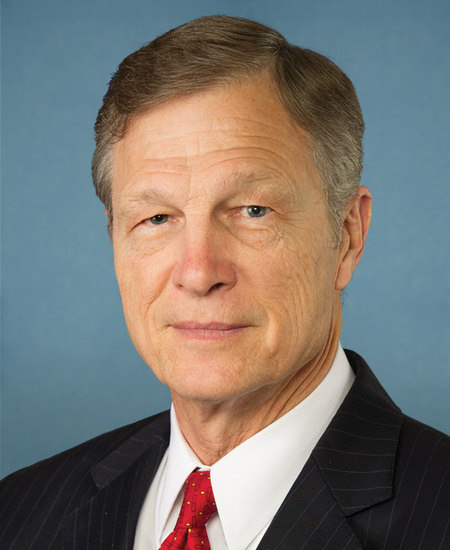
Rep. Brian Babin
Sponsored bills
Protect the UNBORN (Undo the Negligent Biden Orders Right Now) Act or the Protect the UNBORN Act This bill prohibits federal implementation of and funding for specified executive orders that address access to reproductive health care services, including services related to pregnancy or the termination of a pregnancy.
Patient Advocate Tracker Act This act requires the Office of Patient Advocacy within the Veterans Health Administration to establish an information technology system that allows veterans or their representatives to electronically file a complaint with a patient advocate and review the status of a filed complaint.
Pharmacist Conscience Protection Act This bill prohibits the federal government and federally funded entities from discriminating or otherwise taking adverse action against a pharmacist, pharmacy owner, or pharmacy technician who declines to store, fill prescriptions for, or make referrals for drugs that cause abortions (or that the individual provider believes in good faith cause abortions). Individuals or the Department of Justice may bring civil actions for violations of this bill.
No Federal Funds for Abortion Travel Expenses Act of 2022 This bill prohibits the use of federal funds to support interstate travel to obtain an abortion.
IRS Reduction Act This bill rescinds all unobligated amounts appropriated by the Inflation Reduction Act of 2022 for the improvement of the Internal Revenue Service (IRS). The Department of the Treasury must report on how the IRS plans to improve the efficiency of its services, including the processing of tax returns.
This resolution expresses the sense of the House of Representatives that the President should classify synthetic fentanyl-related substances as weapons of mass destruction.
Protecting the Permian Basin Act of 2022 This bill eliminates a program administered by the Environmental Protection Agency (EPA) that provides incentives for petroleum and natural gas systems to reduce their emissions of methane and other greenhouse gases. It also repeals a charge on methane emissions from specific types of facilities that are required to report their greenhouse gas emissions to the EPA's Greenhouse Gas Emissions Reporting Program.
Debt Cancellation Accountability Act of 2022 This bill prohibits the Department of Education from providing class-based loan forgiveness unless funds have been specifically requested and appropriated for this purpose. Class-based loan forgiveness refers to the cancellation, waiver, assumption, discharge, reduction, or other forgiveness of any obligation due on Federal Family Education Loans, Federal Direct Loans, or Federal Perkins Loans (1) on a class-wide basis and for a class of two or more loan borrowers, and (2) that totals more than $1 million. The prohibition does not apply to targeted loan forgiveness programs established under the Higher Education Act of 1965 and in effect before the enactment of this bill if the loan forgiveness is granted for a single borrower on a case-by-case basis.
DHS Restrictions on Confucius Institutes and Chinese Entities of Concern Act This bill restricts funding to an institution of higher education (IHE) that has a relationship with a Confucius Institute (a cultural institute directly or indirectly funded by the Chinese government). It also requires certain disclosures related to Chinese entities of concern (generally, universities or colleges involved in China's military, police, or intelligence activities). Specifically, the Department of Homeland Security (DHS) must ensure that an IHE that has awarded a contract to, entered into an agreement with, or received an in-kind donation or gift from a Confucius Institute is ineligible to receive specified funds from DHS, unless the IHE terminates the relationship. The IHE may regain eligibility for these funds upon termination of the relationship. DHS may waive this funding restriction, on a case-by-case basis and for a period of not more than one year, if it is in the national security interests of the United States. Additionally, an IHE that has a relationship with a Chinese entity of concern and is seeking to receive or receives specified DHS funds must notify DHS about the relationship. DHS must provide outreach and, upon request, technical assistance to IHEs related to compliance with this bill.