

Safeguarding United States Research Act This bill imposes certain reporting requirements on the sponsor of an F, M, or J (student or exchange visitor) visa and authorizes the Department of Homeland Security (DHS) to revoke such a visa in certain instances. It also expands disclosure requirements for applicants of federal research and development awards. The Department of State must require a sponsor of a J visa to report any change to the visa holder's primary field of study. The State Department and DHS shall require a sponsor of an F, M, or J visa to report when the visa holder is participating in a federally funded research program. DHS may review and revoke an F, M, or J visa in certain instances, such as finding that (1) the visa holder misrepresented an intention to pursue a field of study, or (2) the visa holder's participation in a federally funded research program poses a national security risk. The bill also imposes certain limits on the ability to appeal such a revocation decision. The bill also requires applications for federal research and development awards to disclose any in-kind contributions received by the applicant. Furthermore, if an applicant works for an institution that is required to file disclosures relating to the receipt of foreign gifts, the application for the federal award must include a certification that the applicant has provided the employing institution all the information necessary to comply with that disclosure requirement.
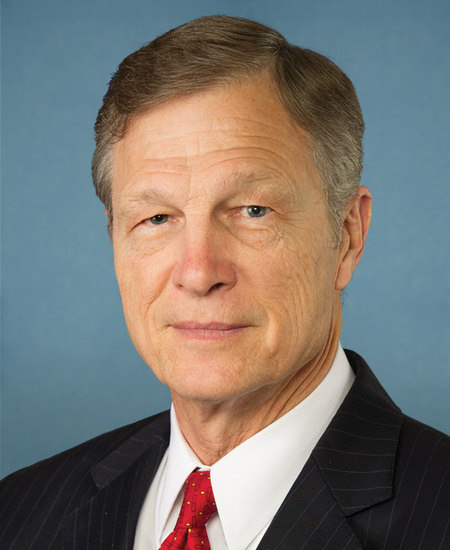
Rep. Brian Babin
Sponsored bills
States Have A Say Act This bill prohibits the Office of Refugee Resettlement from resettling a refugee in a state if that state's governor does not consent to the resettlement.
Protect Americans from Foreign Criminals Act of 2021 This bill requires the Department of Homeland Security (DHS) to conduct background checks before releasing from custody an alien who is unlawfully present in the United States. Specifically, before releasing such an individual from detention while removal proceedings are pending, DHS must conduct a background check using criminal history databases covering the United States, the individual's country of origin, and any country that the individual transited through. DHS may not release the individual if the individual is (1) facing charges for (or convicted of) an aggravated felony, (2) a member of a criminal street gang, or (3) subject to mandatory detention on various crime- or security-related grounds. Furthermore, DHS must review and determine whether the criminal history databases of countries around the world meet standards for accessibility, accuracy, and other factors. DHS may not release a detained individual if a background check for that individual is required from a country with databases that fail to meet the relevant standards.
Human-Animal Chimera Prohibition Act of 2021 This bill establishes new federal crimes related to conduct involving certain types of human-animal chimeras. The term human-animal chimera means an organism that, from an early stage of development, contains human and nonhuman parts. This bill makes is unlawful to create or attempt to create a prohibited human-animal chimera, transfer or attempt to transfer a human embryo into a nonhuman womb, transfer or attempt to transfer a nonhuman embryo into a human womb, or transport or receive for any purpose a prohibited human-animal chimera. A violator is subject to civil and criminal penalties.
Second Chance Opportunity for Re-Entry Education Act of 2021 or the SCORE Act of 2021 This bill directs the Bureau of Justice Assistance within the Department of Justice to establish a grant program—the Second Chance Opportunity for Re-Entry Education Grant Program—to promote reentry training programs and reduce recidivism to county jails for qualified nonviolent inmates.
Separation of Powers Restoration Act of 202 1 This bill modifies the scope of judicial review of agency actions to authorize courts reviewing agency actions to decide de novo (i.e., without giving deference to the agency's interpretation) all relevant questions of law, including the interpretation of (1) constitutional and statutory provisions, and (2) rules made by agencies. No law may exempt a civil action from the standard of review required by this bill except by specific reference to such provision.
Conrad State 30 and Physician Access Reauthorization Act This bill modifies the Conrad 30 Waiver program, which incentivizes qualified foreign physicians to serve in underserved communities. It also extends statutory authority for the program for three years from this bill's enactment. Aliens coming to the United States under a J-1 nonimmigrant visa to receive medical training typically must leave the country and reside for two years abroad before being eligible to apply for an immigrant visa or permanent residence. The Conrad program waives this requirement for individuals who meet certain qualifications, including serving for a number of years at a health care facility in an underserved area. The bill increases the number of waivers that a state may obtain each fiscal year from 30 to 35 if a certain number of waivers were used the previous year, and provides for further adjustments depending on demand. An alien physician may be employed at an academic medical center to meet the Conrad program's employment requirements if the alien's work is in the public interest, even if the medical center is not in an underserved area. Employment contracts for alien physicians under the Conrad program shall contain certain information, such as the maximum number of on-call hours per week the physician shall have to work. Certain alien physicians (along with the physician's spouse and children) shall be exempt from the direct annual numerical limits on immigration, including those physicians that have met certain requirements related to visas for physicians to serve in underserved areas.
Astronaut Safe Temporary Ride Options Act or the ASTRO Act This bill authorizes the expenditure of federal funds for transportation of government astronauts returning from space for the performance of medical research, monitoring, diagnosis, or treatment or other official duties prior to receiving post-flight medical clearance to operate a motor vehicle.
This resolution calls on President Biden to stop the sale of petroleum products from the Strategic Petroleum Reserves and instead prioritize the replenishment of the Strategic Petroleum Reserves.
Stop the Sexualization of Children Act This bill prohibits the presentation of sexually oriented materials to children under the age of 10. The bill defines sexually oriented material as any (1) depiction or description of sexual activity; (2) lewd or lascivious depiction or description of human genitals; or (3) topic involving gender identity, gender dysphoria, transgenderism, sexual orientation, or related subjects. Specifically, the bill prohibits (1) the use of federal funds to develop, implement, facilitate, or fund any sexually oriented program, event, or literature for children under the age of 10; and (2) the use of federal facilities or properties to host or promote such programs, events, or literature. The bill grants a parent or guardian a private right of action against a government official, government agency, or private entity that violates this bill. Additionally, the bill prohibits federal agencies from disbursing federal funds to a government agency or private entity for three fiscal years if the agency or entity has received two or more injunctions for violations of the bill in a five-year period.