

American Choice and Innovation Online Act This bill prohibits certain large online platforms from engaging in specified acts, including giving preference to their own products on the platform, excluding or disadvantaging competing products from another business on the platform, or discriminating among similarly situated users. Further, a platform may not materially restrict or impede the capacity of a competing business user to access or interoperate with the same platform, operating system, or hardware or software features. The bill also restricts the platform's use of nonpublic data obtained from or generated on the platform and prohibits the platform from restricting access to platform data generated by the activity of a competing business user. The bill also provides additional restrictions related to installing or uninstalling software, search or ranking functionality, and retaliation for contact with law enforcement regarding actual or potential violations of law. The bill establishes affirmative defenses for the prohibited conduct. The Federal Trade Commission or the Department of Justice must designate whether an entity is a platform covered by the bill, and both must carry out enforcement activities. The bill also provides for civil penalties, injunctions, conflicts of interest, a private right of action, and the forfeit of profits for repeat offenders.
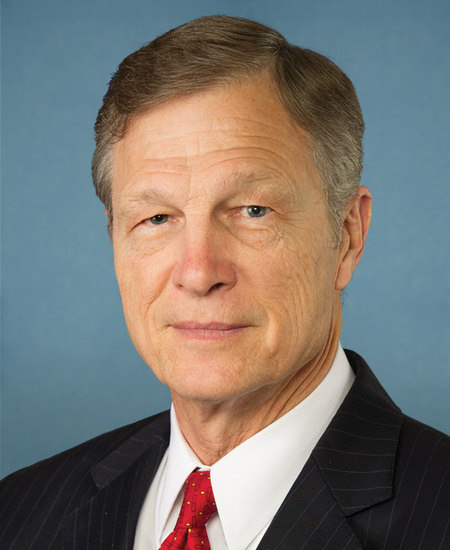
Rep. Brian Babin
Sponsored bills
Cardiovascular Advances in Research and Opportunities Legacy Act This act addresses research, education, and awareness concerning valvular heart disease and its treatment. This disease is caused by damage to or disease affecting any valve that controls blood flow in the heart. The National Institutes of Health may conduct or support research on the disease in consultation with the National Heart, Lung, and Blood Institute (NHLBI). The NHLBI must also conduct a workshop on mitral valve prolapse, which occurs when the valve between the chambers of the left side of the heart seals improperly. The Department of Health and Human Services (HHS) must develop best practices to treat valvular heart disease. HHS may also carry out other projects to increase education and awareness of the disease.
This bill prohibits the use of federal funds to allow an individual who is not a U.S. citizen to vote in any election in the District of Columbia (DC). Further, DC must certify that it does not allow noncitizens to vote in elections as a condition of receiving any federal funds. Federal law bars noncitizens from voting in federal elections; however, the DC Council passed a bill on October 18, 2022, that allows noncitizens who meet residency and other requirements to vote in local elections.
This joint resolution nullifies the interim final rule issued by the Department of Veterans Affairs (VA) titled Reproductive Health Services and published on September 9, 2022. The rule authorizes the VA to provide certain abortion-related care to veterans. The rule also applies to such care provided to beneficiaries covered under the Civilian Health and Medical Program of the Department of Veterans Affairs (CHAMPVA).
Truck Parking Safety Improvement Act This bill authorizes appropriations through FY2026 to the Department of Transportation (DOT) to provide parking for commercial motor vehicles on the federal-aid highway system. DOT must provide competitive grants to states, metropolitan planning organizations, local governments, and tribal governments for projects that improve the safety of commercial motor vehicle operators and provide parking for commercial motor vehicles on federal-aid highways or on a facility with reasonable access to such a highway or a freight facility. The federal share for a project carried out in accordance with the bill shall be up to 100%.
Free Speech Defense Act This bill addresses issues relating to the federal government and social media. For example, the bill (1) terminates the Disinformation Governance Board; and (2) prohibits the federal government from encouraging a social media company to remove a user or label content as misinformation, with certain exceptions.
National Drone and Advanced Air Mobility Initiative Act This bill establishes the National Drone and Advanced Air Mobility Initiative within the White House Office of Science and Technology Policy to advance relevant technologies and capabilities related to unmanned aircraft systems (or drones). It also requires the National Aeronautics and Space Administration (NASA), the National Institutes of Standards and Technology, the Department of Energy, and various other federal agencies to support research, development, and related activities concerning drones. Additionally, the bill (1) limits the Federal Aviation Administration's authority to regulate drones that are flown for research purposes and meet conditions to limit risks to other aircraft; and (2) prohibits the purchase or operation of a drone from China, Iran, North Korea, or Russia, except for research to improve U.S. capabilities to counter drones.
This resolution directs the Department of the Treasury to transmit to the House of Representatives any documents that refer or relate to the projected inflationary impact of the implementation of the Infrastructure Investment and Jobs Act and the Build Back Better Act.
This bill prohibits the Department of Defense from paying for or reimbursing (1) any fees or expenses relating to a health care professional gaining a license in a state if the purpose of gaining such license is to provide abortion services, or (2) travel expenses related to abortion services.
LNG For Allies Act This bill revises the approval process for applications to export natural gas. Specifically, the bill expedites the approval process for certain U.S. allies, such as Taiwan and Ukraine. However, the Federal Energy Regulatory Commission may not grant expedited approval for applications to export natural gas to any nation that is (1) designated as a state sponsor of terrorism, or (2) designated by acts of Congress from such expedited approval for reasons of national security.