

Maddy summaryHR 1229, the "Stop CRT Act," codifies Executive Order 13950 into law and restricts federal funding for entities teaching specific concepts about race. It prohibits federal grants to organizations that teach any of six specified ideas, including that race determines moral worth, the U.S. is fundamentally racist, or individuals bear responsibility for historical actions based on race. The bill directly affects schools, nonprofits, and other recipients of federal funds by banning support for educational content matching these prohibitions. Key provisions require federal agencies to deny funding to any entity advancing these concepts, making the executive order legally binding. This policy change alters how federal funds are distributed based on mandated educational content.
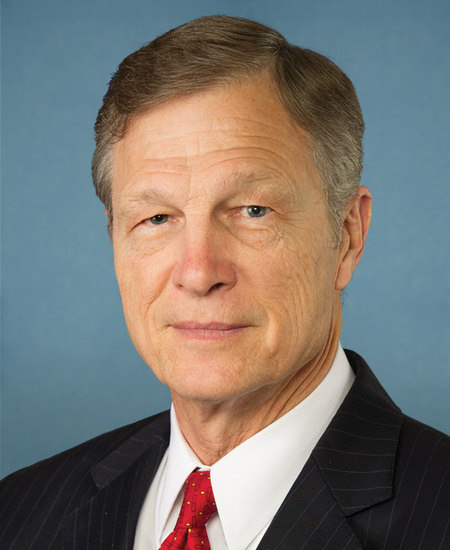
Rep. Brian Babin
Sponsored bills
Maddy summaryHR 1228 prohibits the U.S. military and Department of Defense-operated academic institutions from promoting specific anti-American or racist theories in training. It bans military programs that teach ideas such as "the U.S. is fundamentally racist," "the Constitution is fundamentally racist," or that "an individual’s worth is determined by race." The bill explicitly states it does not restrict protected speech, research access, or educational contexts that clearly disavow military endorsement of such theories. This directly affects military training curricula, workshops, and educational materials within the armed forces.
Criminal Alien Deportation Enforcement Act of 2023 This bill prohibits U.S. foreign assistance from being dispersed to a country that refuses or unreasonably delays the acceptance of a non-U.S. national ( alien under federal law) who (1) is a citizen or resident of that country, and (2) has received a final order of removal from the United States. Additionally, the bill prohibits visas from being issued to residents of such a country. The bill provides standing for a victim or immediate family member of a victim of a crime committed by a non-U.S. national who has received a final order of removal to enforce these sanctions in federal court.
Diverting IRS Resources to the Exigent Crisis Today Act or the DIRECT Act This bill rescinds amounts appropriated to the Internal Revenue Service for enforcement activities under the Inflation Reduction Act of 2022 and reallocates such amounts to the U.S. Customs and Border Protection for the salaries and expenses of new agents and officers hired for the security of the southern border.
Maddy summaryHR 1202, the REDI Act, amends the Higher Education Act to allow medical and dental residents to temporarily pause federal student loan payments without accruing interest during their internship or residency programs. This directly affects borrowers with federal student loans who are enrolled in qualifying medical or dental training programs. The key provision adds a new rule (paragraph 6) ensuring these borrowers qualify for a deferment period where they don't pay principal and interest accrues at 0%. The change modifies existing loan rules to explicitly include medical/dental residents under the "in-school" deferment category. This policy change provides immediate financial relief during a critical training phase for healthcare professionals.
Maddy summaryHR 1200, the National Right-to-Work Act, prohibits requiring workers to join a union or pay dues as a condition of employment in both private-sector workplaces (covered by the National Labor Relations Act) and railroad industries (covered by the Railway Labor Act). The bill amends key sections of these laws to eliminate provisions that allowed union security agreements, meaning workers in unionized settings would no longer be forced to pay dues to retain their jobs. This directly affects employees in unionized workplaces across the U.S., particularly those in industries with existing union contracts that included mandatory dues. The law changes the legal framework to ensure union membership and dues payment remain voluntary for all workers.
Maddy summaryThe Stop the Cartels Act (HR 597) aims to disrupt drug trafficking organizations and related criminal activities by requiring enhanced intelligence gathering on cartels in Mexico and Central American countries, mandating improved U.S.-Mexico law enforcement cooperation, and cutting federal funding from jurisdictions that restrict immigration enforcement. The bill creates a "Special Transnational Criminal Organization" designation for major cartels like the Sinaloa Cartel and Jalisco New Generation Cartel, requires monthly reports on migrant encounters at the border, and establishes refugee processing centers in Mexico and Central America. It also increases staffing for immigration courts by 500 judges, prohibits asylum applications from nationals of countries with refugee processing centers, and reauthorizes substance abuse prevention funding at higher levels while repealing several existing drug programs. These provisions directly affect U.S. intelligence and law enforcement agencies, Mexican and Central American governments, local jurisdictions receiving federal funds, and migrants seeking asylum or refugee status.
Women's Public Health and Safety Act This bill allows a state to exclude from participation in the state's Medicaid program a provider that performs an abortion, unless (1) the pregnancy is the result of rape or incest, or (2) the woman suffers from a physical issue that would place her in danger of death unless an abortion is performed. Under current law, a state plan for medical assistance must provide that any individual eligible for medical assistance may obtain required services from any provider qualified to perform them.
This bill redesignates as the Nancy Reagan Memorial Park the Gravelly Point Park located along the George Washington Memorial Parkway in Arlington County, Virginia.
Maddy summaryHR 150, the Protecting American Energy Production Act, gives states primary authority to regulate hydraulic fracturing (fracking) for oil and gas on state and private lands, directly affecting state governments and energy producers. The bill requires states to maintain this regulatory role and blocks the President from imposing a fracking moratorium without explicit congressional approval. Key provisions include a Congressional "sense" statement affirming state primacy and a direct prohibition on presidential moratoriums unless authorized by a new law. This bill focuses on shifting regulatory power to states and limiting federal executive action on fracking, without specifying financial impacts or environmental standards.