

Maddy summaryHR 2743 prohibits large financial institutions (over $100 billion in assets) from denying banking services to lawful businesses based on subjective political reasons, industry type, or reputational concerns. It requires these institutions to use objective, risk-based assessments for service decisions and provide written justifications for denials. The law applies to banks, credit unions, and payment networks, with civil penalties for violations including fines up to $10,000 per incident. It specifically ensures businesses operating legally under federal law receive fair access to financial services without discrimination. The bill mandates that denials be based on documented risk factors, not political bias or category-based exclusion.
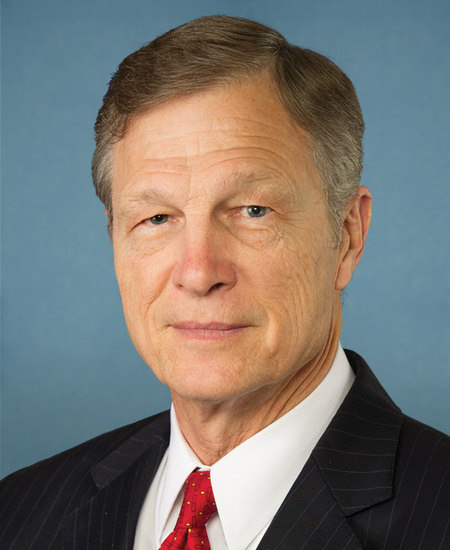
Rep. Brian Babin
Sponsored bills
Maddy summaryHR 2712, the Work Not Woke Act, prohibits federal agencies, contractors, and grant recipients from using workplace training that promotes specific "divisive concepts," such as claiming inherent superiority of a race or sex, blaming individuals for historical actions, or suggesting meritocracy is racist. It directly affects federal contractors (requiring contract clauses banning such training), federal agencies (mandating review of diversity training), and grant recipients (requiring certification against using federal funds for prohibited training). Key mechanisms include a Department of Labor hotline for complaints, mandatory contract provisions for contractors, and a ban on using federal funds for three executive orders focused on racial equity. The law permits diversity efforts that do not promote the banned concepts and requires agencies to certify compliance with its provisions.
Maddy summaryHJRES 27 is a congressional resolution seeking to block a federal rule that redefined which waterways fall under the Clean Water Act's protections. It targets a rule submitted by the Army Corps of Engineers, Department of Defense, and Environmental Protection Agency (EPA) on January 18, 2023, which aimed to revise the "Waters of the United States" definition. The resolution would formally disapprove this rule under a specific federal procedure (Chapter 8 of Title 5), preventing it from taking effect. This would directly affect how federal agencies regulate pollution and development near water bodies, including wetlands and smaller streams.
Maddy summaryHR 2647, the Restore Public Health Institution Trust Act of 2023, requires the U.S. Comptroller General to produce a report within 120 days of enactment examining the Centers for Disease Control and Prevention's (CDC) public health messaging and guidance during the pandemic. The report must analyze the data used by the CDC, assess how inconsistent messaging affected public trust and vaccine uptake (including for school-age children), and evaluate potential influence from outside groups like teachers unions. It will also provide recommendations to improve the CDC's future communication and decision-making processes. This bill does not change CDC policies but mandates an independent review to address concerns about public health communication. The report will be submitted to specific congressional committees focused on health, education, and oversight.
Maddy summaryThis bill establishes a four-year pilot program providing free dental care to 1,500 veterans with type 2 diabetes who are enrolled in VA care but lack access to VA dental coverage, are aged 40-70, and have gum disease (periodontitis). It requires enrollment at five VA facilities, with one-third of participants having mild gum disease and two-thirds having moderate to severe cases, and mandates annual dental evaluations and health outcome tracking. The program aims to determine if timely dental treatment correlates with reduced complications from chronic conditions, collecting data for a congressional report. It does not change existing VA dental benefits but tests whether improved periodontal care lowers long-term healthcare costs for this specific veteran group.
Ensuring United Families at the Border Act This bill addresses the treatment of children who are non-U.S. nationals ( aliens under federal law), including by statutorily establishing that there is no presumption that such a child (other than an unaccompanied child) should not be detained for immigration purposes. Specifically, the bill states that the detention of such minors shall be governed by specified sections of the Immigration and Nationality Act and not any other provision of law, judicial ruling, or settlement agreement. (A 1997 settlement agreement, commonly known as the Flores agreement, imposes requirements relating to the treatment of detained alien minors, including requiring such minors to be released or placed in a nonsecure facility after a certain amount of time in detention.) If an adult enters the United States unlawfully with their child, DHS must detain the adult and child together if the only criminal charge against the adult is a misdemeanor for unlawful entry. This bill also prohibits states from imposing licensing requirements on immigration detention facilities used to detain minors or families with minors.
Maddy summaryHR 2620, the Federal Firearms Licensee Protection Act of 2023, increases penalties for crimes targeting firearms licensees. It amends Section 924 of Title 18 to impose mandatory minimum sentences of 3 years for burglaries or 5 years for robberies committed at the business premises of licensed firearms dealers, manufacturers, or importers. The bill specifically targets violations of Section 922(u), which prohibits unauthorized access to these premises, and adds "attempts to do so" to the penalties. This directly affects licensed firearms businesses by strengthening legal protections against theft or violence at their locations. The law creates clearer, harsher consequences for crimes committed during burglaries or robberies at these specific business sites.
Maddy summaryThis bill terminates the national emergency declared by the President on March 13, 2020, under the National Emergencies Act. It ends the executive branch's authority to use emergency powers related to that specific declaration. The resolution passed both chambers in early 2023 and took effect April 10, 2023, without creating new policies or affecting specific groups.
Maddy summaryHR 1826 (PSA Screening for HIM Act) requires health insurance plans and issuers to cover prostate cancer screenings without out-of-pocket costs for men aged 40 and over who are at high risk of prostate cancer. This directly affects African-American men and men with a family history of prostate cancer (defined as having a first-degree relative diagnosed with or who died from prostate cancer). The bill mandates coverage for evidence-based screenings under the same requirements as other preventive services, effective for plan years starting January 1, 2024. It aims to address disparities in prostate cancer outcomes by removing financial barriers to early detection for high-risk groups.
Maddy summaryThe Campus Free Speech Restoration Act amends the Higher Education Act to strengthen student speech protections at colleges and universities receiving federal funding. It requires public institutions to follow strict guidelines for speech restrictions (ensuring they're content-neutral, viewpoint-neutral, and the least restrictive means to achieve a compelling interest), and mandates private institutions to disclose all speech-related policies on their websites in an easily accessible location. The bill defines "expressive activity" broadly to include peaceful assembly, distributing literature, carrying signs, and other First Amendment-protected activities, while prohibiting "free speech zones" and restrictive speech codes. Students can file complaints about speech policy violations, with potential consequences for non-compliant institutions including loss of federal funding after a formal review process. The law aims to ensure campus speech policies align with First Amendment protections without unduly restricting student expression.