

Maddy summaryHR 4860, the PROTECT the Second Amendment Act, prevents landlords in specific federally assisted housing from banning or restricting residents' lawful possession of firearms in their private units or during travel between units and common areas. It directly affects tenants in housing funded by HUD or USDA programs, including public housing, Section 8 vouchers, and housing for veterans or people with disabilities. The bill prohibits landlords from imposing firearm bans or additional conditions on residents who lawfully carry firearms within their dwelling units or while moving through common areas to reach their units. This changes current policies in these housing programs by explicitly allowing firearm possession where state law permits.
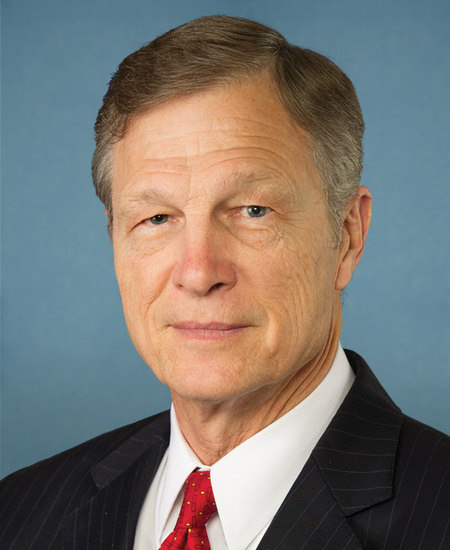
Rep. Brian Babin
Sponsored bills
Migrant Child Safety Act This bill requires actions relating to placing unaccompanied alien children with a sponsor, such as requiring the Department of Health and Human Services (HHS) to collect and share specified information about prospective sponsors. Before placing such a child with a prospective sponsor, HHS must gather and provide to the Department of Homeland Security (DHS) specified information about the prospective sponsor, including (1) proof of address for the residence where the child will be placed; (2) results of background checks for the sponsor and any adult household members, (3) the sponsor's immigration status, if known; and (4) any evidence to prove any claimed relationship between the child and the sponsor. HHS may not waive any part of this requirement. After receiving this information, if DHS determines that the sponsor is unlawfully present in the United States, the sponsor must be placed in removal proceedings. No later than 30 days after placing the child, HHS must also provide this information and any other relevant information to the appropriate state or local health or welfare agency. If HHS cannot contact the sponsor for a follow-up or well-being check during the 120 days after the child's placement, HHS must report the child as missing to the National Center for Missing and Exploited Children. HHS must attempt to contact the child's parents, to the extent practicable.
Maddy summaryHR 4663, the Federal Mechanical Insulation Act, defines "mechanical insulation" (insulation around pipes and equipment in federal buildings) as an eligible energy efficiency measure. It requires federal agencies to include mechanical insulation in their required energy and water evaluations, specifically mandating that evaluations identify this insulation as a potential efficiency measure. The bill specifies that such insulation must meet minimum standards under Reference Standard 90.1 to qualify. This change directly affects federal building managers and contractors by formally recognizing mechanical insulation as a standard efficiency option in compliance with existing energy conservation laws.
Stop China’s Continuous Purchase of Land Act or the Stop CCP Land Act This bill requires states that receive certain federal program funds to restrict the purchase of agricultural land by a covered foreign country. Covered foreign country means a country included in Department of State regulations as subject to certain prohibitions (i.e., Belarus, Burma, China, Cuba, Iran, North Korea, Syria, and Venezuela), as well as Russia. Specifically, a state may not receive funds for certain programs funded by the Inflation Reduction Act of 2022 (e.g., certain energy efficiency and conservation programs) unless that state has a law prohibiting a covered foreign country (or persons acting on behalf of the country) from purchasing agricultural land in the state. Further, a state must require that a person from a covered foreign country that holds agricultural land in the state prior to the state law's enactment submit an annual report to the state on the agricultural holdings. The Department of Agriculture must submit a report to Congress on how the Agricultural Foreign Investment Disclosure Act of 1978 should be updated to ensure accurate documentation and monitoring of foreign investment in agricultural land. The Government Accountability Office must submit a report to Congress that includes (1) an assessment of this bill's impact on national security, and (2) any measures that can be taken to better secure U.S. real estate from foreign manipulation.
Maddy summaryHR 4776, the Protecting Free Speech Act, ends a specific Department of Homeland Security (DHS) program called the Disinformation Governance Board and prevents federal funding for any similar entity. The bill directly affects DHS by terminating the board's operations and prohibiting the use of federal funds to create or support any replacement program with comparable functions. It does not create new free speech protections but formally removes this particular DHS initiative and blocks future funding for equivalent efforts. The bill focuses on eliminating an existing program rather than changing broader speech policies.
No Taxpayer Funding For Climate Zealots Advancing Radical Schemes Act or the No Taxpayer Funding For CZARS Act This bill prohibits the use of federal funds for any activity of the Special Presidential Envoy for Climate.
Stopping Teachers Unions from Damaging Education Needs Today Act or the STUDENT Act This bill revises the federal charter for the National Education Association. The bill specifies that the corporation and its state and local affiliates may only accept payment of membership dues or fees from a state or local government employee if the employee (1) has been notified of the employee's right under the First Amendment to refrain from membership and payment of associated dues or fees, (2) has clearly and affirmatively consented to membership and payment of associated dues or fees, and (3) has authorized the transmittal of membership dues or fees without the use of payroll deduction. Further, the corporation and its state or local affiliates must process and honor cancellation requests for membership or payment of dues as soon as practicable following receipt of the request. The bill also outlines requirements for the corporation, such as prohibiting the corporation or its directors or officers from contributing to, supporting, or participating in political activities; requiring each officer of the corporation to be a U.S. citizen; requiring the corporation to submit annual reports to Congress; prohibiting the corporation and its affiliates from requiring staff, officers, affiliates, or members to affirm, adopt, or adhere to certain principles related to race or sex; and prohibiting the corporation and its affiliates from calling or participating in a strike, work stoppage, or slowdown affecting a state or local government. The bill repeals the corporation's exemption from District of Columbia property taxes.
Maddy summaryHR 4721, the Main Street Tax Certainty Act, makes a permanent the 20% tax deduction for eligible small business owners under Section 199A of the tax code. This provision directly affects pass-through business owners (like S-corps, partnerships, and sole proprietorships) who qualify for the deduction. The bill achieves this by removing the temporary expiration language (subsection (i)) from the existing tax code provision. The key change is ending the need for annual congressional extensions of this deduction, providing long-term tax certainty for small businesses.
Maddy summaryThis bill prohibits the General Services Administration (GSA) from considering the legality or availability of abortion when acquiring, constructing, leasing, or entering into agreements for federal buildings or properties. It directly affects GSA's decisions regarding federal real estate, ensuring that such actions are not influenced by state abortion laws. The law amends specific sections of Title 40 (including building acquisition, construction, and leasing rules) to explicitly ban this consideration. It does not change abortion laws or apply to non-federal properties.
Maddy summaryThis bill prohibits entities controlled by Iran, North Korea, China, or Russia from purchasing or leasing agricultural land in the United States, including both public land managed by federal agencies and private land. It also bars such entities from participating in most U.S. Department of Agriculture programs (with exceptions for food safety, health, and labor safety initiatives). The bill expands reporting requirements to include leases and security interests in foreign land ownership, mandates public online disclosure of foreign ownership data with specific details, and imposes penalties like liens on land for violations. Additionally, it requires annual reports to Congress on risks of foreign ownership, enforcement effectiveness, and foreign investment motives.