

Maddy summaryThis bill updates legal definitions in customs law to replace the outdated "four leagues" standard with current international law boundaries. It clarifies that U.S. customs enforcement applies to waters within the U.S. territorial sea (up to 12 nautical miles, as defined in Presidential Proclamation 5928) and contiguous zone (up to 24 nautical miles, as defined in Proclamation 7219). The change directly affects U.S. Customs and Border Protection's maritime enforcement operations but does not alter the actual geographic scope of enforcement areas. The bill amends the Tariff Act of 1930 and the Anti-Smuggling Act to align their language with existing international law standards.
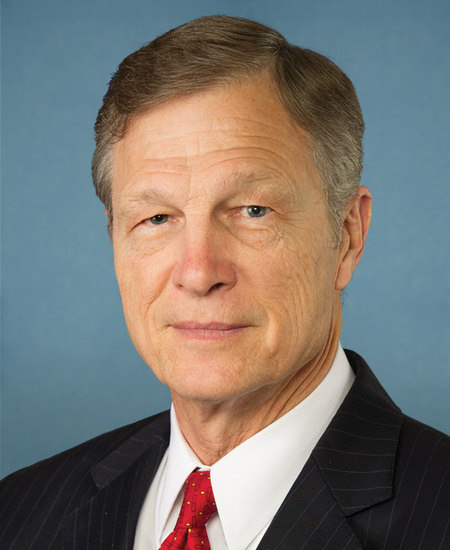
Rep. Brian Babin
Sponsored bills
Maddy summaryHRES 1170 prohibits U.S. House Members, Delegates, and Resident Commissioners from bringing or displaying any foreign nation's flag on the House floor during sessions, except for lapel pins or flags shown during speeches under House rules. The resolution applies to all flag sizes and is enforced by the House Sergeant-at-Arms. It directly affects House members' conduct during floor proceedings but allows limited exceptions for personal accessories and official speeches. This is a procedural rule change, not a substantive policy.
Maddy summaryThis resolution (HRES 1157) is a symbolic gesture recognizing the work of linemen. It does not create new laws or policies; instead, it formally expresses the House's support for designating April 18, 2024, as "National Lineman Appreciation Day." The resolution highlights linemen's critical role in maintaining power infrastructure, their work as first responders during emergencies, and their safety risks. It directly affects no individuals or entities through policy changes - it solely offers ceremonial recognition of linemen's contributions to public safety.
Maddy summaryThe Defund NPR Act would prohibit all federal funding for National Public Radio (NPR) and any successor organization. This means public broadcast stations receiving federal funds could no longer use those funds to pay for NPR programming or dues. The bill would take effect upon enactment, eliminating federal financial support for NPR through any channel. It directly affects NPR and public broadcasters that rely on federal funds for programming partnerships.
Maddy summaryHR 8091 would prohibit federal funding for National Public Radio (NPR) and related activities, directly affecting NPR and public radio stations that rely on federal support for their operations. The bill bans federal funds for NPR's core activities, including producing, distributing, and acquiring radio programs for noncommercial educational stations, as defined in the bill. It explicitly excludes funding restrictions for the U.S. Agency for Global Media and the Defense Media Activity. This policy change would redirect existing federal funding streams away from NPR's program development and content acquisition, altering how public broadcasting receives federal support.
Maddy summaryHR 8066, the Ammunition Supply Chain Act, requires the Secretary of the Army to submit a report to Congress within 180 days of enactment. The report must assess the U.S. supply chain for ammunition components like nitrocellulose and smokeless gunpowder, focusing on improving sourcing, avoiding single points of failure, managing global demand risks, and leveraging private sector capacity. This bill directly affects the Department of Defense and ammunition manufacturers by mandating a review of supply chain vulnerabilities. It is procedural in nature, establishing a reporting requirement without creating new regulations or funding.
Maddy summaryHRES 1148 is a resolution passed by the U.S. House of Representatives that condemns the Iranian government for supporting terrorism, regional proxy conflicts, and internal suppression of dissent - including its crackdown on protests following Mahsa Amini's death in 2022. It specifically calls for maintaining sanctions against Iran, supporting the Iranian Resistance's Ten-Point Plan (which advocates for a democratic, secular, nonnuclear Iran), and protecting Iranian political refugees in Albania. The resolution also affirms the Iranian people's right to self-determination under international law and urges the U.S. to recognize their struggle for freedom. As a non-binding resolution, it does not create new laws but formally expresses congressional stance.
Maddy summaryHR 8011, the Iranian Terror Prevention Act, requires the U.S. Secretary of State to designate 12 Iranian-affiliated military groups and any entity controlled by Iran's Revolutionary Guard Corps as Foreign Terrorist Organizations within 90 days. It mandates the President to decide within 60 days whether to impose sanctions under existing law (Executive Order 13224) on these groups, which would block their U.S. assets and restrict transactions. The bill also requires the Secretary of State to submit regular reports to Congress on new entities meeting designation criteria and the President to explain any decisions not to impose sanctions. This law directly affects the listed Iranian military groups and any new entities linked to Iran's Revolutionary Guard Corps.
Maddy summaryHJRES 123 is a resolution seeking congressional disapproval of an Environmental Protection Agency (EPA) rule published on March 11, 2024, which would have required chemical facilities to implement new safety measures under the Clean Air Act to prevent accidental releases. The rule, titled "Accidental Release Prevention Requirements: Risk Management Programs Under the Clean Air Act; Safer Communities by Chemical Accident Prevention," aimed to strengthen existing risk management programs at chemical plants. If passed, this resolution would block the rule from taking effect by invoking a federal process for disapproving agency regulations. It directly affects the EPA's regulatory authority and the chemical industry's compliance obligations under the Clean Air Act.
Maddy summaryThis bill would terminate 39 federal diversity, equity, and inclusion offices across multiple departments, including the State Department, Treasury, Health and Human Services, and Agriculture. It specifically prohibits cabinet-level agencies from developing or maintaining any diversity-related initiatives or plans. The law would take effect immediately upon enactment, eliminating these offices without requiring new funding or implementation steps. This is a structural change to federal agency operations, directly affecting how government departments manage workforce diversity programs.