

Maddy summaryHJRES 84 is a congressional resolution that would block a specific proposed military sale to Israel. It targets defense articles including D9R and D9T Caterpillar bulldozers, spare parts, technical support services, and related logistics support described in a March 3, 2025, congressional notice. If passed, the resolution would prohibit the sale of these items by preventing the foreign military sale from moving forward under the Arms Export Control Act.
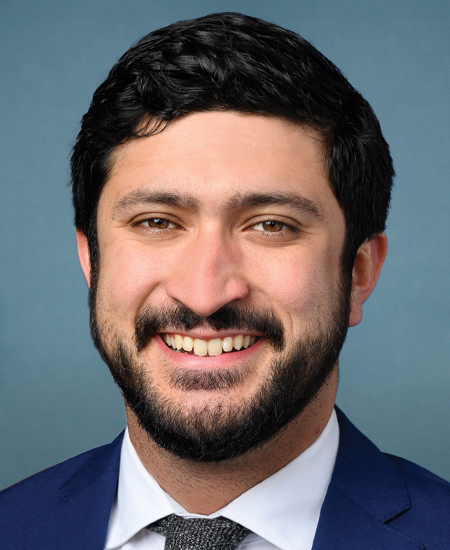
Rep. Greg Casar
Sponsored bills
Maddy summaryHJRES 85 is a resolution that would block a specific proposed U.S. military sale to Israel. It targets the sale of 201 MK 83 bombs, 4,799 BLU-110 bombs, and 5,000 guidance kits for these weapons, as detailed in a government transmittal. If approved, the resolution would prevent the U.S. government from moving forward with this transaction. The measure directly affects the transfer of these defense articles to Israel. It is a disapproval resolution for one specific sale, not a new law.
Maddy summaryHJRES 83 is a joint resolution seeking congressional disapproval of a specific proposed U.S. military sale to Israel. It directly targets the sale of 35,529 MK 84 or BLU-117 general-purpose bomb bodies and 4,000 I-2000 Penetrator warheads, as detailed in a March 2025 government transmittal. If passed, the resolution would prohibit the U.S. government from proceeding with this particular foreign military sale under the Arms Export Control Act. The bill affects the executive branch's ability to authorize the sale and Israel as the intended recipient of these defense articles.
Maddy summaryThe Heating and Cooling Relief Act (HR 2486) expands the Low-Income Home Energy Assistance Program (LIHEAP) to help low-income households struggling with energy costs. It increases funding to cover all eligible households (those with incomes up to 250% of poverty level or 80% of State median income), sets a goal that no household should spend more than 3% of income on energy, and requires states to operate assistance programs year-round. The bill includes new protections against utility shutoffs for 2 years after assistance is received, prohibits late fees during the 6 months following assistance, and mandates weatherization and energy efficiency improvements in low-income housing. It also requires states to develop extreme heat response plans and addresses the $21 billion in residential utility arrears as of September 2024.
Maddy summaryHR 1756, the "Stop Politicians Profiting from War Act of 2025," prohibits Members of Congress, their spouses, and dependent children from owning or trading stocks, bonds, or other investments tied to defense contractors with U.S. Department of Defense contracts. It requires all such holdings to be divested within 120 days (or 180 days for complex funds) of enacting the law or when taking office, banning "blind trusts" as a compliance method. Exceptions include diversified investment funds meeting specific criteria, Alaska Native Claims Settlement stock, U.S. Treasury securities, and government retirement plans. Violations could result in civil penalties up to $50,000 per offense.
Save America's Forgotten Equines Act of 2025 or the SAFE Act of 2025 This bill permanently prohibits the slaughter of equines (e.g., horses and mules) for human consumption. (Current law prohibits the slaughter of dogs and cats for human consumption. This bill extends the prohibition to equines.) Specifically, this bill prohibits a person from knowingly (1) slaughtering an equine for human consumption; or (2) shipping, transporting, possessing, purchasing, selling, or donating an equine to be slaughtered for human consumption or equine parts for human consumption. The bill subjects a violator to a fine. The bill applies to conduct in or affecting interstate or foreign commerce or within the special maritime and territorial jurisdiction of the United States. However, it does not apply to an activity carried out by an Indian for a religious ceremony. As background, in recent years, the appropriations acts have prohibited the Department of Agriculture (USDA) from using federal funds to inspect horses before they are slaughtered for human consumption. Therefore, there are currently no USDA-inspected horse slaughter facilities in the United States.
Maddy summaryThis bill, HR 2411, directs the U.S. government to immediately resume funding for the United Nations Relief and Works Agency for Palestine Refugees (UNRWA) by repealing two prior funding restrictions. It requires the State Department to restart payments to UNRWA under existing authorities and mandates the President to rescind a 2025 executive order ending UNRWA support. The bill affects Palestinian refugees in Gaza, Jordan, Lebanon, Syria, and the West Bank who rely on UNRWA for humanitarian aid, as well as U.S. funding mechanisms. It also requires quarterly reports through 2028 on UNRWA’s progress implementing accountability reforms from an independent review led by Catherine Colonna.
Maddy summaryThis bill, titled "Abolish Super PACs Act" but actually regulating them, would impose contribution limits on super PACs by redefining them as "independent expenditure committees" under federal election law. It sets a $5,000 annual threshold for activities qualifying a committee as a super PAC, capping individual contributions to these entities to reduce corruption risks from unlimited donations. The legislation targets the top contributors who gave over 96% of super PAC funds in 2024, aiming to limit the appearance of quid pro quo arrangements. It would apply to all qualifying committees starting in the first full calendar year after enactment.
Maddy summaryThis bill would require federal firearms licensees to prohibit sales of specific high-capacity rifles and shotguns to people under 21. It targets semiautomatic centerfire rifles and shotguns capable of holding more than 5 rounds in their magazines, raising the age limit from 18 to 21 for these weapons. Exceptions apply for active military members and certain government employees authorized to carry firearms. The law directly affects gun retailers and individuals under 21 seeking to purchase these specific firearms. It modifies existing federal gun sale rules without changing age requirements for other firearms.
Maddy summaryHR 2366, the American Families United Act, amends immigration law to expand discretion for the Attorney General and Secretary of Homeland Security regarding family-related cases. It allows them to halt removal proceedings or grant relief for spouses and children of U.S. citizens if removal would cause "hardship" (with family separation presumed to constitute hardship), including special provisions for widows/orphans of deceased citizens. The bill also permits waiving certain inadmissibility grounds and excludes cases involving serious violations like terrorism or criminal offenses. This policy change directly affects noncitizens facing removal proceedings who have U.S. citizen family members, without creating new benefits but modifying existing discretionary authority.