

Vanessa Guillén Military Justice Improvement and Increasing Prevention Act This bill modifies the process and policy related to the disposition of charges and convening of courts-martial for certain sexual assault cases and other specified offenses under the Uniform Code of Military Justice (UCMJ). Among other elements, the bill provides that the determinations on the preferral, disposition, and referral of charges for specified offenses under the UCMJ must be made by a commissioned officer of the Armed Forces who is designated as a court-martial convening authority (in grade O-6 or higher) and who is available for detail as trial counsel, has significant trial experience, and is outside the chain of command of the member subject to the charges.
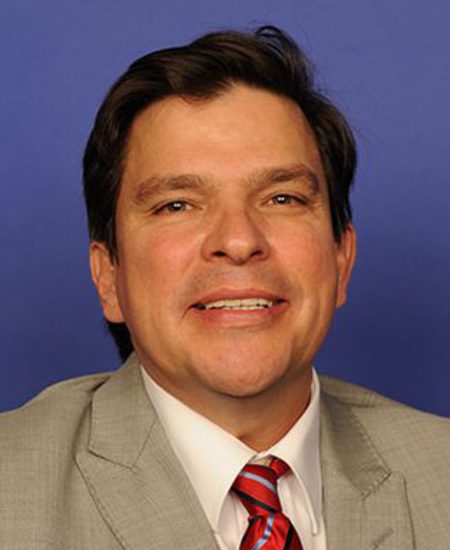
Rep. Vicente Gonzalez
Sponsored bills
Puppy Protection Act of 2021 This bill requires the Department of Agriculture to expand standards that govern the humane handling, care, treatment, and transportation of animals to include new requirements for commercial dog dealers. Specifically, the standards must require dog dealers to provide to dogs adequate housing, exercise, and veterinary care; appropriate and nutritious food; continuous access to potable water; and meaningful socialization with humans and compatible dogs for at least 30 minutes each day. The standards must also include requirements for breeders to use safe breeding practices and make all reasonable efforts to find humane placement for retired breeding dogs.
Cover Outstanding Vulnerable Expansion-eligible Residents Now Act or the COVER Now Act This bill establishes a demonstration program to allow local governments to provide health benefits to the Medicaid expansion population in states that have not expanded Medicaid. Under the program, local governments may provide coverage for individuals who are newly eligible for Medicaid under the Patient Protection and Affordable Care Act (i.e., the Medicaid expansion population) for a maximum of 10 years, or until their respective states expand Medicaid. The bill provides a 100% federal matching rate for the first three years of program participation. The bill prohibits states from taking certain actions against participating localities, such as withholding funding, increasing taxes, or restricting provider participation. States that violate these requirements are subject to certain funding penalties.
Promoting Agricultural Commerce Act This bill exempts from federal-aid highway vehicle weight limitations a vehicle operating on U.S. Route 83 or Interstate Route 2 in the state of Texas.
Local Journalism Sustainability Act This bill allows individual and business taxpayers tax credits for the support of local newspapers and media. Specifically, individual taxpayers may claim an income tax credit up to $250 for a local newspaper subscription. The bill also allows local newspaper employers a payroll tax credit for wages paid to an employee for service as a local news journalist and certain small businesses a tax credit for local newspaper and media advertising expenses.
Shark Fin Sales Elimination Act of 20 21 This bill addresses the sale of shark fins and the inclusion of rays and skates in the Seafood Traceability Program. The Seafood Traceability Program has data reporting and recordkeeping requirements at the time of entry for imported fish or fish products entered into U.S. commerce. The bill makes it illegal to possess, buy, or sell shark fins or any product containing shark fins, except for certain dogfish fins. A person may possess a shark fin that was lawfully taken consistent with a license or permit under certain circumstances. Penalties are imposed for violations under the Magnuson-Stevens Fishery Conservation and Management Act. The Department of Commerce must revise its regulations to include rays and skates as species that are subject to the Seafood Traceability Program.
Puerto Rico Statehood Admission Act This bill establishes a process for the admission of Puerto Rico into the union as a state, on an equal footing with all other states, based on a majority vote of the people of Puerto Rico.
This bill directs the Department of the Interior to conduct a study to assess the suitability and feasibility of designating the study area in a border region of Texas as the Los Caminos del Rio National Heritage Corridor. The study area includes (1) the portion of the Rio Grande River and surrounding areas as generally depicted on the map titled Los Caminos del Rio National Heritage Corridor and dated April 2020; and (2) any other areas in Texas that have a shared heritage with the areas depicted on the map and are adjacent to, or in the vicinity of, those areas.
Flexible Financing for Rural America Act This bill allows rural utility service providers to submit to the Department of Agriculture (USDA) a request to adjust the interest rate or modify the terms of certain loans. The request shall include a report summarizing how the adjustment or modification will assist the borrower in providing critical utility services to a rural community. Specifically, on receipt of a request, USDA or the Department of the Treasury (in the case of a loan owned by the Federal Financing Bank) must adjust the interest rate on the loan to match certain interest rates for obligations of comparable maturity to the term remaining on the loan (or a higher rate requested by the borrower), and make modifications to the loan terms as necessary to address changes in the financial position of the borrower due to the COVID-19 public health emergency and to promote the financial sustainability of the borrower. In carrying out the adjustments or modifications, USDA or Treasury shall not impose or collect any fee from, or impose any penalty on, a borrower. The bill also provides funding to implement the adjustments and modifications and for the liquidation of residual intragovernmental amounts owed by the Federal Financing Bank in connection with certain loans.
This bill allows permanent expensing of property used in the mining, reclaiming, or recycling of certain critical minerals and metals within the United States and of nonresidential real property used in mining such minerals and metals. Expensing is the treatment of expenditures as operating costs deductible in full in the current taxable year. The bill allows a new tax deduction for 200% of the cost of purchasing or acquiring such critical minerals and metals extracted from deposits in the United States and a 22% rate of percentage depletion for such critical minerals and metals. The bill requires the Department of the Interior to establish a pilot project grant program for the development of critical minerals and metals in the United States. A grant awarded under such program may not exceed $10 million. In awarding grants, Interior must give priority to projects determined to be economically viable over the long term and must allot not less than 30% of grants funds to the secondary recovery of critical minerals and metals.