Scope 3 Act This bill prohibits any securities law requirement that an issuer of securities must disclose the greenhouse gas emissions of its value chain (i.e., scope 3 emissions).
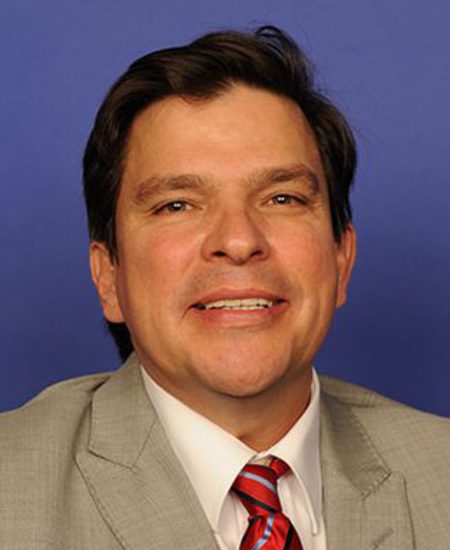
Rep. Vicente Gonzalez
Sponsored bills
Safe Zones Act of 2023 This bill makes changes to procedures relating to seeking asylum, including by establishing facilities outside of the United States to accept and process refugee applications to the United States. Specifically, the Department of State must establish safe zones that accept applications for asylum from individuals who are nationals of (1) the country where that safe zone is located, or (2) a country next to the country where the safe zone is located. The State Department must establish at least three safe zones along the U.S.-Mexico border and one safe zone in Guatemala. For each safe zone, the State Department must (1) ensure that it is fortified from danger; (2) provide temporary housing for individuals with pending applications; (3) provide adequate meals; and (4) provide access to various services, including medical services. The bill also imposes various requirements related to safe zones, including deadlines for processing applications. The bill expands the definition of asylum officer (i.e., officers who conduct initial credible fear reviews to determine whether an asylum seeker's application may proceed) to include trained and qualified staff as determined by the Department of Homeland Security (DHS). (In 2020, a federal court ruled that DHS may not use U.S. Customs and Border Protection agents to conduct such interviews.) The bill also requires the hiring of additional border patrol agents and immigration judges.
Maddy summaryHRES 90 is a resolution demanding the Chinese government immediately release Mark Swidan, a U.S. citizen from Texas who has been detained since 2012 on drug trafficking charges. The resolution cites the UN Human Rights Council Working Group finding his detention arbitrary, with no evidence of drug offenses, passport records showing he wasn’t in China during the alleged crimes, and China denying his family contact and medical care. It specifically condemns China for blocking U.S. diplomatic access and calls on the U.S. government to prioritize Swidan’s release through diplomatic channels. The resolution focuses on the case’s documented legal and humanitarian issues, not broader policy implications.
Maddy summaryHR 2849 creates a tax credit for U.S. manufacturers producing rare earth magnets. The credit offers $20 per kilogram for magnets made with domestically sourced materials, or $30 per kilogram if at least 90% of the rare earth components are produced in the U.S. The credit phases out over time, reducing to 70% in 2033, 35% in 2034-2035, and ending after 2035. To qualify, manufacturers must not use materials from non-allied foreign nations and must produce magnets as part of their regular business operations.
Farm Credit Administration Independent Authority Act This bill specifies that the Farm Credit Administration (FCA) is the sole regulator of the Farm Credit System (FCS) and establishes reporting requirements for FCS institutions. Specifically, the bill states that the FCA is the sole and independent regulator of the FCS and exempts entities that are supervised by the FCA from the Equal Credit Opportunity Act (ECOA). (The bill addresses a proposed rule by the Consumer Financial Protection Bureau [CFPB] that would implement provisions of the ECOA by requiring covered financial institutions, including FCS lenders, to collect and report to the CFPB data on credit applications for small businesses, including the principal owner's race, sex, and ethnicity.) The bill also requires FCS institutions to (1) request that loan applicants and borrowers that are small farmers disclose information identifying their race, sex, and ethnicity; and (2) annually report the collected information to the FCA. If an FCS institution customer does not voluntarily report the requested information, the FCA may not require the institution to use other means to deduce the information.
Prevent Family Fire Act of 2023 This bill allows through 2030 a new tax credit equal to 10% of amounts received from the first retail sale of a safe firearm storage device, not to exceed $400 per device. The bill defines safe firearm storage device as a device that is designed and marketed to deny unauthorized access to, or render inoperable, a firearm or ammunition, and is secured by a combination lock, key lock, or lock based on biometric information.
Homeland and Cyber Threat Act or the HACT Act This bill allows claims in federal or state court against foreign states that conduct or participate in cyberattacks against U.S. nationals.
Maddy summaryThe Latonya Reeves Freedom Act of 2023 strengthens the Americans with Disabilities Act's requirement that individuals with disabilities receive long-term services and supports in community settings rather than institutions. It defines "community-based" services to include specific housing options where individuals with disabilities can live independently with maximum control over their lives, including access to integrated housing, employment, and community participation. The bill requires states to develop transition plans to move people from institutional settings to community-based services within 12 years, with measurable annual targets for reducing institutionalization. It establishes enforcement mechanisms through the Department of Justice and Department of Health and Human Services to ensure compliance with these requirements.
Maddy summaryThe Puppy Protection Act of 2023 sets new standards for businesses that sell dogs (dealers), directly affecting pet stores and breeders operating under the Animal Welfare Act. It requires specific housing with space allowances based on dog size (e.g., 12-30 square feet per dog), temperature control (45-85°F), clean food twice daily, and daily exercise or socialization with humans/dogs for at least 30 minutes. The bill also mandates annual veterinary exams including dental care, strict breeding limits (e.g., age restrictions, maximum 2 litters in 18 months), and efforts to place retired breeding dogs in homes instead of selling them to other breeders. Regulations must be finalized within 18 months of enactment.

Maddy summaryHR 2665 delays Medicaid payment reductions for safety net hospitals by two years, changing the effective date from 2024 to 2026 under Section 1923(f)(7)(A) of the Social Security Act. This bill directly affects hospitals that serve high numbers of low-income and uninsured patients, providing them with additional time before facing reduced federal Medicaid payments. The key mechanism is a technical amendment to existing law, postponing an already scheduled payment adjustment without altering funding levels or eligibility. As a procedural bill, it does not create new programs or change hospital requirements.