

Maddy summaryThe DRIVE Act of 2025 requires the Department of Veterans Affairs (VA) to set mileage reimbursement rates for veterans at the federal government's current standard rate for employees using personal vehicles on official business, replacing the previous fixed rate of 41.5 cents per mile. It also mandates that the VA process and pay these reimbursements within 90 days of a veteran's valid request. This directly affects veterans who travel for VA medical appointments or services using their personal vehicles. The bill aligns veteran travel reimbursements with federal employee standards and ensures timely payments.
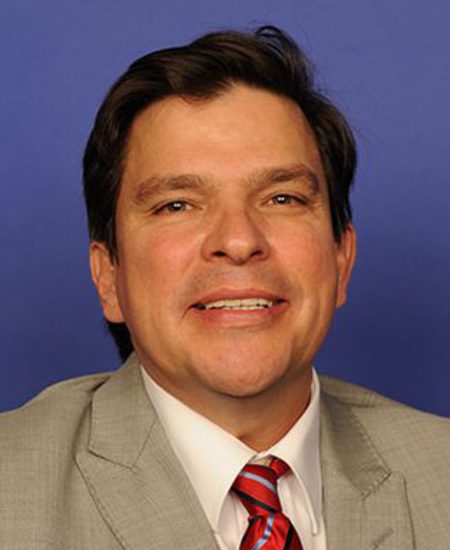
Rep. Vicente Gonzalez
Sponsored bills
Maddy summaryHRES 326 is a non-binding resolution designating April 10 as "Dolores Huerta Day" to honor the late labor and civil rights leader Dolores Huerta. It recognizes her foundational work co-founding the United Farm Workers, leading grape boycotts that secured union contracts, advocating for farm workers' safety, and championing women's rights and Latino political representation. The resolution has no policy impact or direct effect on any group, as it solely serves to commemorate Huerta's legacy. It was introduced by multiple House members in recognition of her contributions to civil rights and equality.
Maddy summaryThe American Family Act (HR 2763) establishes a new refundable child tax credit that provides monthly payments to eligible families with children. It would pay $300 per month for each child under age 6 and $360 per month (120% of $300) for each child age 6 or older, with income limits of $150,000 for joint filers and $112,500 for other filers. The bill creates a "period of presumptive eligibility" to determine eligibility for monthly payments, allowing families to receive advance payments based on information from previous tax returns. This would directly affect millions of families with children who meet the income requirements, providing more consistent financial support throughout the year rather than an annual tax credit.
Maddy summaryThis bill, HR 2253 (Puppy Protection Act of 2025), sets new federal standards for commercial dog dealers who sell puppies to the public. It requires specific housing sizes based on dog size (e.g., 12-30 square feet per dog), daily exercise in safe outdoor areas, clean water and nutritious food twice daily, and annual veterinary exams including dental checks. The bill also limits breeding frequency (max 2 litters in 25 months), sets age minimums for breeding (18 months for small dogs, 2 years for large dogs), and mandates health screenings to prevent genetic diseases. These requirements apply directly to commercial dealers, with final regulations to be issued within 18 months of enactment.
Maddy summaryThis bill, HR 2102 (Major Richard Star Act), allows veterans with combat-related disabilities to receive both full military retired pay and veterans' disability compensation simultaneously, without the previous offset that reduced retired pay. It directly affects veterans already eligible for both benefits due to combat-related injuries, removing the requirement that their retired pay be reduced by the disability compensation amount. The key provision amends Title 10 and Title 38 to eliminate the offset rule (sections 5304 and 5305 of Title 38) for these veterans. The change applies to payments starting after the bill’s enactment date, effective for all qualifying veterans. This is a policy change to increase financial support for affected veterans, not a new benefit.
Maddy summaryHRES 259 is a House resolution requesting the President to provide documents about access to the Bureau of Consumer Financial Protection (CFPB) systems. It specifically asks for details on individuals from the "Department of Government Efficiency" (DOGE), including named staff like Elon Musk, who were granted access to CFPB systems, accounts, or information. The resolution demands records on the type of access granted, clearance levels, any sensitive data viewed, and documentation like access requests and training records. It also seeks employee headcount data for the CFPB as of specific dates. This is a procedural request for transparency, not a law changing policy.
Maddy summaryHCONRES 25 is a symbolic congressional resolution stating that the Trump administration's planned 25% tariffs on imports from Canada and Mexico violate the USMCA trade agreement. It directly addresses the administration's tariff announcement (set for April 2, 2025), which Congress claims undermines the USMCA's terms. The resolution emphasizes that these tariffs threaten established trade relationships, harm the $1.6 trillion annual trade between the U.S. and these nations, and contradict the agreement's goal of maintaining a level playing field. As a non-binding expression of congressional opinion, it does not alter tariffs but highlights concerns about USMCA compliance.
Workplace Violence Prevention for Health Care and Social Service Workers Act This bill requires the Department of Labor to address workplace violence in health care, social service, and similar sectors. Specifically, Labor must issue an occupational safety and health standard that requires certain employers to take actions to protect workers and other personnel from workplace violence. The standard applies to employers in the health care sector, in the social service sector, and in sectors that conduct activities similar to those in the health care and social service sectors. Among other elements, the standard must require each employer to (1) develop a workplace violence prevention plan, (2) promptly investigate incidents of workplace violence, and (3) provide relevant training and education to employees. The bill requires certain hospitals and skilled nursing facilities to comply with this standard as a condition of Medicare participation.
Save America's Forgotten Equines Act of 2025 or the SAFE Act of 2025 This bill permanently prohibits the slaughter of equines (e.g., horses and mules) for human consumption. (Current law prohibits the slaughter of dogs and cats for human consumption. This bill extends the prohibition to equines.) Specifically, this bill prohibits a person from knowingly (1) slaughtering an equine for human consumption; or (2) shipping, transporting, possessing, purchasing, selling, or donating an equine to be slaughtered for human consumption or equine parts for human consumption. The bill subjects a violator to a fine. The bill applies to conduct in or affecting interstate or foreign commerce or within the special maritime and territorial jurisdiction of the United States. However, it does not apply to an activity carried out by an Indian for a religious ceremony. As background, in recent years, the appropriations acts have prohibited the Department of Agriculture (USDA) from using federal funds to inspect horses before they are slaughtered for human consumption. Therefore, there are currently no USDA-inspected horse slaughter facilities in the United States.
Maddy summaryHRES 262 establishes a House Select Committee focused solely on investigating Mexican drug cartels and their international networks, including U.S. and Mexican government efforts to address them. The committee has no legislative authority but may hold public hearings, conduct investigations, and issue policy recommendations by December 2025, with final reports due by December 2026. This procedural resolution affects only House committee structure and processes, not direct policy changes for the public or government agencies.