

Rights for the Transportation Security Administration Workforce Act of 2022 or the Rights for the TSA Workforce Act of 2022 This bill modifies the workplace rights, protections, and benefits applicable to Transportation Security Administration (TSA) personnel. Specifically, the bill by December 31, 2022, eliminates personnel authorities of the Department of Homeland Security (DHS) and the Department of Transportation governing the conditions of employment for TSA employees, thus making TSA employees subject to the personnel management system applicable to other federal employees; sets forth transition rules that protect the pay rates, leave rights, and other rights of TSA employees; and requires DHS to consult with the exclusive representative of TSA screening employees to carry out the conversion of those positions. The bill also permits the TSA to consult with organizations representing federal air marshals to address concerns, including mental health and suicide rates; directs the TSA to ensure its employees are provided proper guidance regarding prevention and protections against COVID-19; requires the TSA to provide a one-time bonus payment of $3,000 to each TSA employee carrying out duties that require substantial contact with the public during the COVID-19 national emergency; and requires the Government Accountability Office to report on implementation of the bill, TSA recruitment efforts, and specified TSA personnel policies.
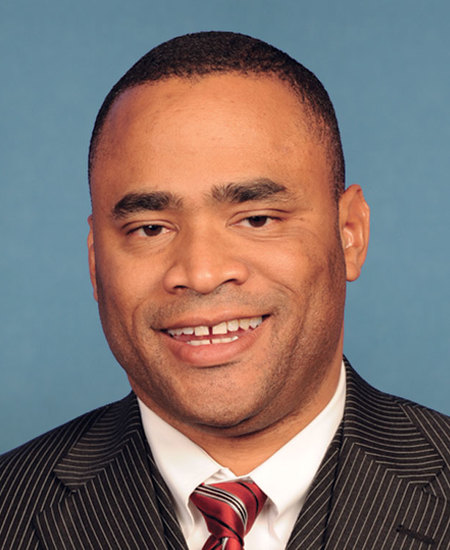
Rep. Marc A. Veasey
Sponsored bills
Affordable Housing and Area Median Income Fairness Act of 2022 This bill reauthorizes through FY2032 the Community Development Block Grant and other specified programs that support affordable housing. The bill also requires the Department of Housing and Urban Development (HUD) to assess alternative methods of calculating area median income (i.e., any metric used to refer to the median income level for a given area or jurisdiction for purposes of any program administered by HUD) and the use of alternative metrics in order to make housing more affordable for low-income families in urban areas.
Federal Firefighters Fairness Act of 2022 This bill makes it easier for federally employed firefighters who contract certain illnesses to qualify for federal workers' compensation. Specifically, the bill provides that chronic obstructive pulmonary disease, mesothelioma, and specified other cancers of those employed in fire protection activities for at least five years are presumed to be proximately caused by such employment for purposes of a disability or death claim under the federal workers' compensation program. This presumption also applies to federal employees employed in fire protection activities for at least five years who experience a sudden cardiac event or stroke within 24 hours of performing a fire protection activity. The bill also requires the Department of Labor to conduct a review to determine whether breast cancer, gynecological cancer, and rhabdomyolysis should be included under the presumption and to conduct periodic reviews to determine whether other diseases should be included. In addition, a person may petition Labor to include another disease under the presumption. An employee in fire protection activities is a firefighter, paramedic, emergency medical technician, rescue worker, ambulance personnel, or hazardous material worker who (1) is trained in fire suppression; (2) has the legal authority and responsibility to engage in fire suppression; (3) is engaged in the prevention, control, and extinguishing of fires or response to emergency situations where life, property, or the environment is at risk, including the prevention, control, suppression, or management of wildland fires; and (4) performs such activities as a primary responsibility.
Designates the facility of the United States Postal Service located at 5302 Galveston Road in Houston, Texas, as the "Vanessa Guillen Post Office Building."
Benjamin Berell Ferencz Congressional Gold Medal Act This bill provides for the award of a Congressional Gold Medal to Benjamin Berell Ferencz in recognition of his service to the United States and the international community during the post-World War II Nuremberg trials and his lifelong advocacy for international criminal justice and the rule of law.
Ukraine Religious Freedom Support Act This bill directs the President, when determining whether Russia is a country of particular concern for religious freedom under certain federal laws, to consider incidents occurring in the parts of Ukraine that Russia (or any Russia-affiliated non-state group) occupies, controls, or recognizes as independent. (The United States may take certain actions, such as withdrawing development assistance, against a country of particular concern for religious freedom.)
Displaced Afghan Women and Girls Education Act of 2022 This bill provides certain educational resources to certain displaced Afghan women and girls domiciled in the United States. For example, the bill (1) requires such displaced Afghan women and girls to receive in-state tuition rates at public institutions of higher education, and (2) provides funding for and establishes the Displaced Afghan Women and Girls Scholarship Grant.
Advancing Equity Through the Arts and Humanities Act of 2022 This bill establishes an Advancing Equity Through the Arts and Humanities Program to increase engagement with public and nonprofit entities (including faith-based and community-based organizations that serve and are led by people of color) in supporting arts and humanities projects that directly combat systemic racism through the arts and humanities. The National Endowment for the Arts and the National Endowment for the Humanities shall carry out this program. The bill also provides for a competitive grant program for the creation and expansion of programs to support public and nonprofit arts and humanities organizations that directly combat systemic racism through the arts and humanities.
Help for Healing Communities Act This bill establishes a program through which the Substance Abuse and Mental Health Services Administration may award grants to support mental and behavioral health services for survivors of active shooter events and incidents of targeted violence. Eligible grant recipients include state, tribal, territorial, and local governments and nonprofits located in or serving a community that experienced an active shooter event or incident of targeted violence in the preceding fiscal year.
This resolution recognizes that Black women are experiencing high, disproportionate rates of maternal mortality and morbidity in the United States and that Black Maternal Health Week is an opportunity to deepen the national conversation about Black maternal health.