

Maddy summaryThis bill, HR 35 (Close the Medigap Act of 2023), prohibits Medicare supplemental insurance (Medigap) insurers from denying coverage or charging higher premiums based on health status, pre-existing conditions, genetic information, or age. It directly affects Medicare beneficiaries (particularly those with pre-existing conditions) and requires insurers to offer guaranteed issue coverage starting January 1, 2024, with full implementation by 2029. Key mechanisms include banning health-based pricing discrimination, requiring insurers to spend at least 65% of individual policy premiums on healthcare (increasing to align with NAIC recommendations), and improving transparency on the Medicare Plan Finder website. The bill does not change Medicare Part A/B benefits but ensures broader access to supplemental coverage without health-related barriers.
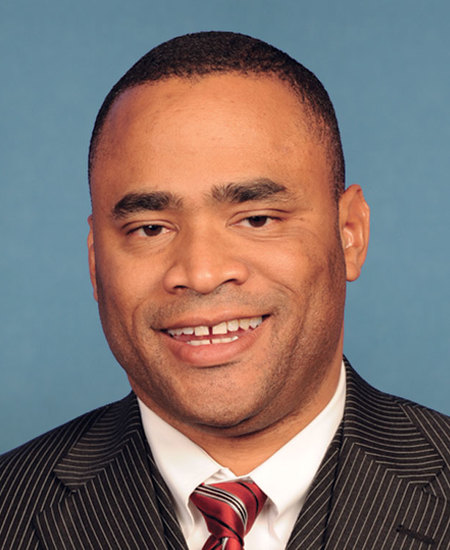
Rep. Marc A. Veasey
Sponsored bills
Maddy summaryThe Assuring Medicare’s Promise Act of 2023 directs that taxes collected under the net investment income tax (a tax on investment income for high earners) be added to the Medicare Hospital Insurance Trust Fund, which helps finance Medicare Part A benefits. It modifies the tax code to include certain business income of high-income individuals (with modified adjusted gross income over $400,000 for single filers or $500,000 for joint filers) in the tax base, but includes a phase-in mechanism to limit immediate tax increases. This bill primarily affects high-income taxpayers and aims to strengthen Medicare’s financial stability by increasing trust fund revenue.
Maddy summaryHR 33 would expand Medicare to cover dental, vision, and hearing services for beneficiaries, which are currently not covered under Medicare. The bill provides 100% coverage for preventive dental services in 2024, with basic dental services gradually increasing to 80% coverage by 2027. Vision coverage would include routine eye exams and corrective lenses at 80% coverage, while hearing services would cover hearing exams and hearing aids at 80% coverage. The bill includes specific limitations, such as two dental cleanings per year and one pair of glasses every 24 months, with the Secretary of Health and Human Services having authority to apply additional limitations or modify coverage based on medical recommendations. The changes would take effect on January 1, 2024.
Maddy summaryHRES 1615 is a ceremonial resolution recognizing "Interscholastic Athletic Administrators' Day" on December 14, 2024. It formally supports annual recognition of secondary school athletic administrators who oversee student-athlete programs affecting over 8 million students nationwide. The resolution commends these administrators for their role in student development and acknowledges the National Interscholastic Athletic Administrators Association's support for the profession. It contains no new laws, funding, or policy changes - only symbolic acknowledgment of their contributions.
Maddy summaryThis bill establishes a commission to study whether the Weitzman National Museum of American Jewish History in Philadelphia should be transferred to the Smithsonian Institution. The commission, composed of 8 members appointed by congressional leaders with expertise in Jewish American history and museum administration, will examine the museum's collections, financial status, governance, and feasibility of transfer within two years. The commission must submit a report detailing findings, a fundraising plan, and legislative recommendations for any potential transfer. The bill does not transfer the museum but creates a process to evaluate the possibility.
Maddy summaryHR 7438 directs the U.S. Treasury to mint commemorative coins for the 2026 FIFA World Cup, including 100,000 $5 gold coins, 500,000 $1 silver coins, and 750,000 half-dollar coins. The coins will be sold to the public at face value plus surcharges ($35, $10, and $5 per coin, respectively), with all surcharge revenue paid to FWC2026 US, Inc. for U.S. soccer programs. These funds must support soccer initiatives, particularly in underserved communities and youth development, as specified in the bill. The coins are legal tender but will only be issued during 2026, with no net cost to the U.S. government.
Maddy summaryHRES 1613 is a non-binding resolution recognizing the U.S. House of Representatives' support for continued U.S. leadership in ending pediatric HIV/AIDS globally. It highlights that 57% of children with HIV were on treatment in 2023 (compared to 77% of adults) and calls for scaling up prevention of mother-to-child transmission and expanding pediatric HIV treatment access. The resolution specifically encourages the PEPFAR program to develop a dedicated pediatric HIV strategy aligned with global goals. As a formal expression of congressional support, it does not create new law but reaffirms the U.S. commitment to reducing new pediatric HIV infections.
Maddy summaryHR 6751 authorizes the U.S. Mint to produce commemorative coins honoring Roberto Clemente, a Hall of Fame baseball player and humanitarian, including 50,000 $5 gold coins, 400,000 $1 silver coins, and 750,000 half-dollar coins. The coins must feature Clemente's image and inscriptions like "Roberto Clemente" and "2027," with all sales including a surcharge ($5-$35 per coin) paid to the Roberto Clemente Foundation. The foundation, which supports youth sports, education, and disaster relief programs, will use these funds for its mission, while the U.S. Treasury must recover all production costs. The coins will be sold exclusively in 2027, with no net cost to the government.
Maddy summaryThe Working Dog Commemorative Coin Act (HR 807) directs the U.S. Treasury to mint three types of commemorative coins honoring working dogs' service: $5 gold coins, $1 silver coins, and half-dollar coins with specific weight and composition requirements. Each coin will carry a surcharge ($35 for $5 coins, $10 for $1 coins, $5 for half-dollars) that will be paid directly to America's VetDogs to support their programs providing service dogs for veterans, the disabled, and others. The coins will be issued in 2027 with designs reflecting working dogs' roles in military, detection, therapy, and assistance work. The legislation specifies that all surcharge revenue must fund America's VetDogs' operations without creating new government programs. This is a commemorative measure focused on honoring working dogs' contributions through coin sales, with all surcharge funds going to a specific nonprofit organization.
Maddy summaryThis bill amends the Public Works and Economic Development Act of 1965 to expand eligibility for federal grants to include youth sports facilities. It requires grant award decisions to prioritize projects that address sedentary lifestyles, support underserved rural communities lacking recreational infrastructure, and spur economic development through youth sports access. The bill directly affects local communities and municipalities seeking federal funding to build or improve youth sports facilities, particularly in areas with limited tax revenue or existing facility gaps. Key provisions mandate that the Secretary consider factors like reducing obesity impacts, promoting job creation linked to sports infrastructure, and enhancing community health through improved recreational access. The policy change modifies existing grant criteria rather than creating new funding streams.