

Supporting the Health of Aquatic systems through Research Knowledge and Enhanced Dialogue Act of 2025 or the SHARKED Act of 2025 This bill requires the Department of Commerce to establish a task force to address and report to Congress about critical needs with respect to shark depredation. (Shark depredation is the partial or complete removal of a hooked fish by a shark directly from a fishing line before the line is retrieved.) The duties of the task force are, among other responsibilities, to (1) develop ways to improve coordination and communication across the fisheries management and shark research communities; (2) identify research priorities and funding opportunities; (3) develop recommended management strategies to address shark depredation; and (4) coordinate the development and distribution of educational materials. The bill specifies that the task force must include representatives of each Regional Fishery Management Council, each Marine Fisheries Commission, the fish and wildlife agencies of coastal states, and the National Marine Fisheries Service. The task force must also include researchers and others with relevant expertise. The task force must report its findings to Congress within two years after the bill's enactment and every two years thereafter until the task force is terminated. The task force sunsets within seven years after the date of its establishment.
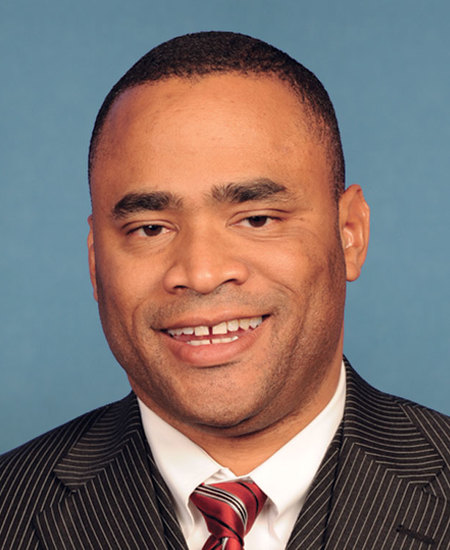
Rep. Marc A. Veasey
Sponsored bills
Maddy summaryHRES 48 is a ceremonial resolution honoring Dr. Martin Luther King, Jr., by commemorating his 96th birthday on January 20, 2025. The resolution affirms his teachings on diversity, equality, and nonviolence, and specifically condemns hate, discrimination, and harassment targeting Black Americans, Indigenous peoples, Jewish communities, Asian-American/Pacific Islander groups, Muslim communities, Hispanic/Latino communities, LGBTQ+ individuals, and others. It calls on all people to uphold Dr. King’s values of justice, tolerance, and peace. As a symbolic gesture, this resolution has no legal effect but expresses the House’s commitment to these principles.
Chiropractic Medicare Coverage Modernization Act of 2025 This bill expands Medicare coverage of chiropractic services to include all services provided by chiropractors, rather than only subluxation corrections through manual manipulation of the spine.
This bill increases the annual limit on the tax credit for qualified railroad track maintenance expenses (also referred to as the short line railroad tax credit) and expands eligibility for claiming the credit. Under current law, the tax credit is limited each tax year to $3,500 multiplied by the sum of the number of miles of railroad track owned or leased by the taxpayer (miles owned or leased) and the number of railroad track miles assigned to the taxpayer by a Class II or III railroad (miles assigned). This bill increases the annual limit to $6,100 multiplied by the sum of miles owned or leased and miles assigned. The $6,100 amount used in the calculation of the tax credit limit is adjusted for inflation for tax years beginning after 2025. The bill also expands eligibility for the tax credit to include gross expenses for maintaining railroad tracks owned or leased as of January 1, 2024. Under current law, the tax credit is limited to gross expenses for maintaining railroad tracks owned or leased as of January 1, 2015.
Maddy summaryHR 475 would impose U.S. sanctions on Russian individuals or entities that have endangered the safety or operational control of Ukraine’s Zaporizhzhia Nuclear Power Plant since Russia’s 2022 invasion. Key provisions include freezing assets of targeted persons and banning their entry into the U.S. via visa restrictions. The bill includes critical exceptions for humanitarian aid (food, medicine, medical supplies) and efforts to restore Ukrainian control of the plant. These sanctions aim to address nuclear safety risks highlighted by the IAEA, without affecting legitimate humanitarian operations.
Maddy summaryHR 485, the Muhammad Ali Congressional Gold Medal Act, authorizes Congress to award a gold medal in recognition of Muhammad Ali's lifetime contributions to sports, civil rights, and humanitarian causes. The bill directs the Treasury Secretary to strike the medal and present it to Ali's widow, Lonnie Ali, following his death in 2016. It also permits the sale of bronze duplicates to cover costs, with proceeds going to the U.S. Mint. This is a commemorative measure with no policy impact, solely honoring Ali's legacy through a symbolic medal.
Maddy summaryHR 486, the Young Americans Financial Literacy Act, authorizes $27.5 million to $55 million annually through 2029 to fund competitive grants for centers of excellence focused on financial literacy education for individuals aged 8-24. These centers, established by eligible institutions like schools, nonprofits, or financial organizations, must develop research-based programs covering budgeting, debt management, student loan guidance, and avoiding pitfalls like predatory lending. The bill specifically requires programs to address at-risk populations, include evidence-based teaching methods, and serve groups such as high school graduates, college students, young families, and military personnel. It mandates annual reporting to Congress on grant recipients and the populations they serve, with funding ending in 2029.
Maddy summaryHR 429, the Rosie the Riveter Commemorative Coin Act, authorizes the U.S. Treasury to mint and sell three types of commemorative coins ($5 gold, $1 silver, and half-dollar) to honor women who worked on the U.S. home front during World War II. The coins will be sold at face value plus surcharges ($35 for gold, $10 for silver, $5 for half-dollar), with all surcharge revenue directed to the Rosie the Riveter Trust to support the Rosie the Riveter WWII Home Front National Historical Park and related educational programs. The coins must be issued between January 1, 2028, and December 31, 2028, in specified quantities (50,000 gold, 400,000 silver, 750,000 half-dollar), with all costs covered by the sales revenue to avoid net government expense.
Maddy summaryHR 307, the ARC Act of 2025, aims to reduce avoidable amputations by expanding access to peripheral artery disease (PAD) screening and prevention. It requires Medicare and Medicaid to cover PAD screening tests (like ankle-brachial index tests) without cost-sharing for at-risk beneficiaries, including seniors, diabetics, and those with other vascular risk factors. The bill also establishes a federal education program to raise awareness about PAD and creates quality measures to incentivize hospitals to prioritize non-amputation treatments through early detection. These provisions directly affect millions of Americans, particularly minorities disproportionately impacted by PAD-related amputations, by making preventive care more accessible and integrated into routine care.
Maddy summaryThe Proxy Voting for New Parents Resolution (HRES 23) would allow U.S. House Members who have given birth or whose spouse has given birth to appoint another Member as a proxy to cast their vote or record their presence in the House and committees for up to 12 weeks after childbirth. To use this, the new parent must submit a signed letter to the Clerk detailing the birth or medical condition and naming the proxy; the proxy must vote exactly as instructed and announce the vote as "by proxy." The proxy vote does not count toward quorum, and the new parent can revoke the proxy at any time by submitting a new letter or casting their own vote. This resolution applies to all House Members, including Delegates and the Resident Commissioner, though they cannot cast votes for the House itself.