

Maddy summaryHR 3246, "Violet’s Law," amends the Animal Welfare Act to require federal research facilities to create plans for placing eligible animals (dogs, cats, nonhuman primates, guinea pigs, hamsters, or rabbits) no longer needed for research. It directs federal departments and agencies operating such facilities to develop standards within one year of enactment to facilitate adoption or placement with qualified organizations like animal rescue groups, sanctuaries, or shelters. Animals must be certified by a licensed veterinarian as free of infectious disease or physical issues endangering health before release. This applies directly to all U.S. federal agencies conducting animal research, mandating concrete steps to transition animals out of research settings into permanent care.
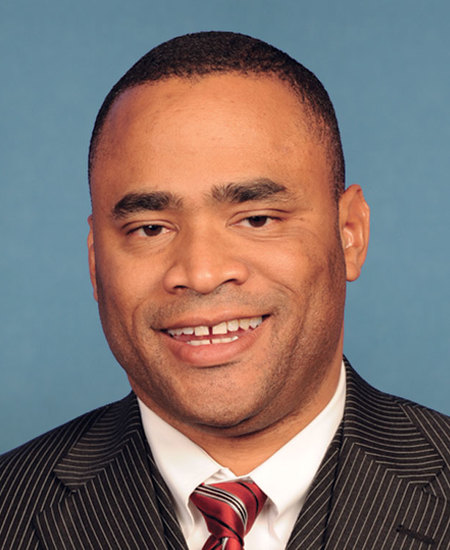
Rep. Marc A. Veasey
Sponsored bills
Maddy summaryThe MEGOBARI Act (HR 36) is a U.S. legislative proposal that aims to strengthen Georgia's democratic development and Euro-Atlantic integration. It directs the U.S. Secretary of State to suspend the U.S.-Georgia Strategic Partnership Commission until Georgia meets specific democratic standards, including respecting citizens' democratic wishes and advancing EU/NATO membership. The bill establishes potential sanctions against Georgian officials who block Euro-Atlantic integration or undermine Georgia's sovereignty, requiring the President to determine if officials have engaged in significant corruption or actions against Georgia's territorial integrity. Additionally, it mandates reports on Russian intelligence assets in Georgia and a 5-year U.S. strategy for bilateral relations, with the Act set to sunset after 5 years from enactment.
Maddy summaryThis bill expands access to employee ownership by modifying the Small Business Act to allow S corporations owned by employee stock ownership plans (ESOPs) to retain small business status, even when an ESOP owns over 49% of the company. It creates a new Treasury Department office to provide education and technical assistance for S corporations establishing ESOPs, and establishes a Labor Department Advocate for Employee Ownership to coordinate outreach and resolve disputes. These changes directly affect S corporations transitioning to ESOP ownership and their employees, who gain retirement benefits through ESOP accounts. The bill aims to increase employee ownership by removing eligibility barriers and improving support for businesses adopting this model.
Maddy summaryThe Equality Act (HR 15) amends federal civil rights laws to explicitly prohibit discrimination based on sexual orientation and gender identity in employment, housing, public accommodations, credit, and jury service. It expands existing protections under the Civil Rights Act of 1964 by adding sexual orientation and gender identity as protected characteristics under sex discrimination prohibitions. The bill clarifies that discrimination against LGBTQ people is a form of sex discrimination, consistent with the Supreme Court's Bostock decision, and adds specific definitions for gender identity and sexual orientation. This legislation directly affects businesses, employers, housing providers, financial institutions, and government entities that serve the public. The bill creates a more comprehensive legal framework to address discrimination that LGBTQ people face in multiple aspects of daily life.
Maddy summaryThis bill extends renewal periods for state Medicaid waivers providing home and community-based services from five to ten years. It directly affects states administering these waivers, allowing them longer planning horizons without frequent reauthorization. Key provisions amend specific sections of the Social Security Act to replace "five-year periods" with "10-year periods" for waiver extensions and renewals starting after the bill's enactment. The change aims to provide greater stability for states managing Medicaid programs serving people with disabilities and elderly individuals in community settings.
Maddy summaryHR 3028, the Duty Drawback Clarification Act, clarifies tariff classifications for whisky imports by updating the Harmonized Tariff Schedule. It replaces a general whisky tariff code with specific subheadings based on whisky type (Irish/Scotch, Bourbon, Rye, or "other") and container size (under or over 4 liters), adding 8 new statistical suffixes. This change directly affects whisky importers and U.S. Customs officials by standardizing how these products are classified for duty-free entry (as indicated by "Free" in the tariff). The new classifications take effect 15 days after the bill's enactment.
Maddy summaryHR 3006 would limit Medicare coinsurance for certain surgical procedures performed in ambulatory surgical centers (ASCs). Specifically, it prevents patients from paying coinsurance exceeding the annual inpatient hospital deductible for those procedures. If the coinsurance amount would surpass the deductible, the Medicare program must reduce the patient's share to match the deductible and reimburse the ASC for the difference. This change applies to services provided on or after January 1, 2026, directly affecting Medicare beneficiaries using ASCs for qualifying surgeries.
Maddy summaryHR 2357, the Food Secure Strikers Act of 2025, removes a restriction that previously barred workers on strike from receiving Supplemental Nutrition Assistance Program (SNAP) benefits. The bill amends the Food and Nutrition Act of 2008 to eliminate language making workers ineligible for SNAP "as a result of being on strike," ensuring striking workers are not automatically denied food assistance during labor disputes. This change directly affects workers participating in strikes who would otherwise lose access to SNAP benefits. The key mechanism updates the eligibility rules to prevent SNAP ineligibility solely due to strike participation.
Maddy summaryHRES 337 is a symbolic House resolution honoring linemen for their critical role in maintaining power infrastructure and responding to emergencies. It recognizes them as first responders who work in dangerous conditions 24/7 to keep electricity flowing, supporting schools and businesses during storms. The resolution formally supports designating April 18, 2025, as "National Lineman Appreciation Day" to publicly acknowledge their contributions. As a non-binding resolution, it has no direct policy impact or effect on affected individuals.
Maddy summaryHR 2937, the PROTECT 911 Act, creates federal resources and grants to support the mental health of 911 operators (public safety telecommunicators). It requires the Secretary to develop evidence-based best practices for preventing and treating PTSD and related disorders among these workers, and to create educational materials for mental health professionals about their unique workplace stressors. The bill also authorizes grants for states and local emergency communications centers to establish or enhance evidence-based wellness programs, including peer-support initiatives, to address job-related mental health challenges. These programs aim to improve support for 911 operators who handle emergency calls in 911 centers.