

Maddy summaryThis bill removes barriers for people with past drug-related convictions to access federal assistance programs. It amends welfare law to allow states to provide Temporary Assistance for Needy Families (TANF) benefits to individuals with such convictions and prohibits states from denying Supplemental Nutrition Assistance Program (SNAP) benefits based on drug convictions. The bill also adds "incarcerated individuals scheduled for release within 30 days" to SNAP household eligibility criteria. These changes directly affect individuals with past drug convictions seeking welfare or food assistance, removing state-level restrictions that previously barred them.
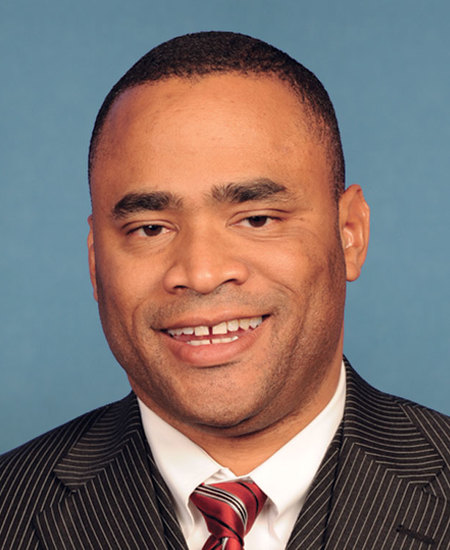
Rep. Marc A. Veasey
Sponsored bills
Maddy summaryThe Dignity for Detained Immigrants Act establishes minimum standards for detention facilities operated by the Department of Homeland Security, requiring them to follow the American Bar Association's Civil Immigration Detention Standards. It mandates annual unannounced inspections by the DHS Inspector General, with penalties including fines for noncompliant private facilities and transfers of detainees from noncompliant facilities. The bill requires DHS to publicly report on facility compliance, phase out private detention facilities over three years, and prohibit solitary confinement. It also ensures detainees have access to legal orientation, counsel, and more frequent custody review hearings. The bill directly affects all individuals detained in DHS custody, including immigrants, asylum seekers, and refugees held in facilities operated by or contracted to DHS.
Maddy summaryThis bill creates several tax credits to increase housing affordability for individuals and families. It establishes a first-time homebuyer credit of up to $25,000 (or $50,000 for first-generation homebuyers) for purchasing a principal residence, with income limits based on household size. It also creates a starter home construction credit for building homes under 1,200 square feet priced below 80% of local median home prices, and a renter tax credit for tenants paying more than 30% of their income in rent. Additionally, it provides a credit for converting non-residential buildings to affordable housing that meets specific income and rent restrictions. The bill includes provisions for inflation adjustments and reporting requirements for these tax credits.
Give Kids a Chance Act of 2025 This bill expands the Food and Drug Administration’s (FDA’s) authority with respect to research on rare pediatric diseases, including by permitting the FDA to take enforcement action against drug sponsors that fail to satisfy pediatric study requirements and by reauthorizing programs that support pediatric research. Specifically, the bill modifies requirements relating to molecularly targeted pediatric cancer investigations to permit research on new drugs in combination with active ingredients that have already been approved, provided certain conditions are met; permits the FDA to take enforcement action against drug sponsors that fail to comply with pediatric study requirements, if such sponsors demonstrated a lack of due diligence in satisfying the requirement; renews the FDA’s authority to award priority review vouchers to sponsors of new products intended to treat rare pediatric diseases through September 30, 2029; and reauthorizes through FY2027 certain funding for the National Institutes of Health to support priority pediatric research. The bill also provides statutory authority for the FDA’s interpretation of the orphan drug exclusivity period. The bill specifies, consistent with FDA regulations, that the seven-year market exclusivity period for drugs for rare diseases or conditions (i.e., orphan drugs) prohibits the approval of the same drug for the same approved use or indication with respect to the disease or condition. (In Catalyst Pharmaceuticals, Inc. v. Becerra , a court rejected the FDA’s interpretation and held that orphan drug exclusivity extends to all uses or indications for the disease or condition.)
Maddy summaryThis bill would expand Medicare Part B coverage to include medical nutrition therapy for beneficiaries with a wider range of chronic conditions beyond current limits (diabetes and kidney disease). It specifically adds conditions like obesity, hypertension, eating disorders, cancer, gastrointestinal diseases, and HIV to the list of covered illnesses, allowing coverage for prevention, management, or treatment. The bill also allows more healthcare providers - including dietitians, nurse practitioners, and clinical psychologists - to deliver these services. This change would directly affect millions of Medicare beneficiaries managing these conditions who previously lacked coverage for medically necessary nutrition therapy.
Maddy summaryHR 6181, the John Lewis Every Child Deserves a Family Act, prohibits child welfare agencies receiving federal funds from discriminating against children, youth, or prospective foster/adoptive parents based on religion, sex (including sexual orientation and gender identity), or marital status. It directly affects LGBTQ youth in foster care - overrepresented at 30% of the system - who face higher risks of trauma, group home placements, and suicide attempts compared to non-LGBTQ peers. Key provisions require agencies to collect data on sexual orientation and gender identity, establish a National Resource Center for LGBTQ youth support, provide cultural competency training, and eliminate discriminatory practices. The law aims to improve safety, permanency, and placement stability by expanding access to family-based care and ensuring equitable services for all children in the system.
Maddy summaryHR 6126 authorizes the minting of commemorative coins to mark the 100th anniversary of the U.S. Foreign Service (established in 1924). It specifies three coin types: up to 50,000 $5 gold coins (90% gold), 400,000 $1 silver coins (90% silver), and 750,000 half-dollar coins, all to be sold during 2029. A surcharge of $35 per gold coin, $10 per silver coin, and $5 per half-dollar is added to the sale price, with all surcharge funds directed to the Association for Diplomatic Studies and Training to support its diplomatic history preservation work. The coins must include standard inscriptions (e.g., "Liberty," "United States of America") and will be legal tender, but the bill does not create new policy or affect government operations.
Maddy summaryHR 6148, the Patients Over Paperwork Act of 2025, repeals Section 71107 of Public Law 119-21, which had changed how states review Medicaid eligibility. It restores the previous rules for Medicaid eligibility redeterminations as if that section had never been enacted. This directly affects Medicaid beneficiaries and state Medicaid programs by reverting to the pre-2024 process for verifying ongoing eligibility.
Maddy summaryThe Global Respect Act (HR 6151) requires the U.S. President to publicly list foreign officials responsible for severe human rights violations against LGBTQI individuals, including torture, prolonged detention, or violence based on sexual orientation or gender identity. It mandates denying visas and entry to listed individuals and requires annual reports on the list's updates and impacts. The bill also directs the State Department to track global violence against LGBTQI people and update annual human rights reports to include discrimination based on sexual orientation or gender identity. These provisions directly affect foreign government officials and entities implicated in such abuses, aiming to increase accountability through U.S. visa restrictions.
Maddy summaryHRES 880 is a symbolic House resolution recognizing the strategic U.S.-India partnership, not a bill with new policy or funding. It reaffirms longstanding cooperation on defense, counterterrorism, technology, and people-to-people ties, citing historical milestones like the 2008 nuclear agreement and recent Quad collaboration. The resolution has no binding effect but formally supports continued partnership through existing mechanisms like the U.S.-India Transforming Relationship Utilizing Strategic Technology initiative. It highlights shared priorities including Indo-Pacific stability and counterterrorism efforts, with no new legislative requirements or changes to law.