

This resolution expresses the sense of the House of Representatives that policies concerning medication abortions should be grounded in science, be based on a review of medical evidence, and ensure equitable access for patients.
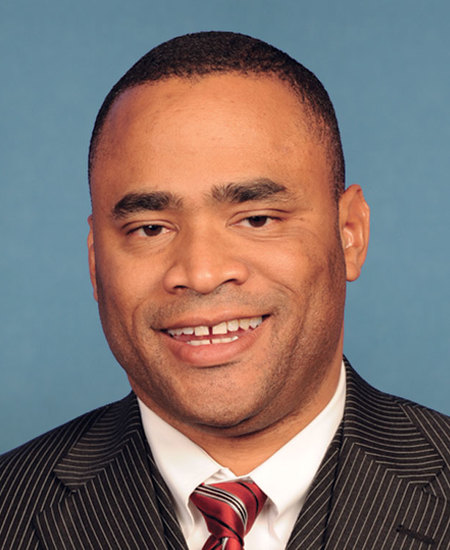
Rep. Marc A. Veasey
Sponsored bills
This resolution supports the designation of National Health Care Awareness Month.
Fair Sugar Policy Act of 20 21 This bill makes several modifications to the Department of Agriculture's sugar program. Among other modifications, the bill decreases the rate for price support loans, repeals the marketing allotments, revises the administration of import quotas, and repeals the Feedstock Flexibility Program.
Bringing Enhanced Treatments and Therapies to ESRD Recipients Kidney Care Act or the BETTER Kidney Care Act This bill requires the Centers for Medicare & Medicaid Services (CMS) to establish a demonstration program for Medicare beneficiaries with end-stage renal disease (ESRD). Under the program, renal dialysis facilities, kidney disease specialists, physician practices, and other health care practitioners may form an organization that partners with certain health care entities to provide integrated care to beneficiaries with ESRD. Such care must include all covered Medicare benefits as well as transition services for transplantations, palliative care, and hospice. Each organization must have a minimum number or percentage of participating beneficiaries (350 or 60% of beneficiaries served at the organization's facilities) and must also comply with certain fiscal, governance, and quality of care requirements. Additionally, the Government Accountability Office must study certain data that is reported to the CMS regarding pediatric dialysis care, as well as the effects of race-based corrections to a specified kidney function test on referrals of ESRD patients for transplant evaluations.
Main Street Efficiency Act of 2021 This bill requires the Department of Energy to establish a grant program that provides incentives for small businesses to make energy efficiency upgrades.
Expanding Broadcast Ownership Opportunities Act of 2021 This bill requires the Federal Communications Commission (FCC) to take certain actions to increase diversity of ownership in the broadcasting industry and establishes a related tax incentive. Specifically, the bill requires the FCC to report to Congress regarding (1) recommendations for increasing the total number of broadcast stations that are owned or controlled by members of minority groups or women, (2) the total number of broadcast stations that are owned or controlled by members of minority groups or women, and (3) whether there is a nexus between diversity of ownership or control of broadcast stations and the diversity of the viewpoints expressed on the stations. In addition, the bill allows companies engaged in the qualifying sale of a broadcast station to receive favorable tax treatment by electing nonrecognition of the gain or loss resulting from the sale. To qualify for this treatment, the sale must result in or preserve ownership and control of a broadcast station by socially disadvantaged individuals.
Battery Material Processing and Component Manufacturing Act of 2021 This bill requires the Department of Energy to establish grant programs to support, enhance, and sustain a domestic supply chain for batteries, including grants to facilities for processing, manufacturing, and recycling batteries.
Lonnie Kilpatrick Central Pacific Relief Act This bill provides a presumption of service-connection for diseases associated with exposure to certain herbicide agents to veterans who served on (1) Guam or American Samoa, or in the territorial waters thereof, between January 9, 1962, and July 31, 1980; or (2) Johnston Atoll or a ship that went to Johnston Atoll between January 1, 1972, and September 30, 1977. Under a presumption of service-connection, specific diseases diagnosed in certain veterans are presumed to have been caused by the circumstances of their military service. Health care benefits and disability compensation may then be awarded. Additionally, the bill expands eligibility for hospital care, medical services, and nursing home care to veterans with a disability associated with exposure to certain herbicides during specified times of military service on Guam, American Samoa, or Johnston Atoll.
Medical Device Nonvisual Accessibility Act of 2021 This bill requires certain medical devices with a digital interface to meet nonvisual accessibility standards established by the Food and Drug Administration (FDA). Specifically, the FDA must establish regulations to require a Class II or Class III medical device with a digital interface to provide a blind or low-vision user access to the same services and information, and generally the same ease of use, as provided to a user who is not low-vision or blind. (The FDA classifies medical devices in three classes. Class I devices are low-risk, Class II devices are moderate-risk, and Class III devices are high-risk.) A Class II or Class III medical device that does not meet the nonvisual accessibility standards established under this bill may not be sold.
Protecting Renters from Evictions Act of 2021 This bill extends through December 31, 2021, the order issued by the Centers for Disease Control and Prevention titled Temporary Halt in Residential Evictions To Prevent the Further Spread of COVID–19 and published on September 4, 2020.