

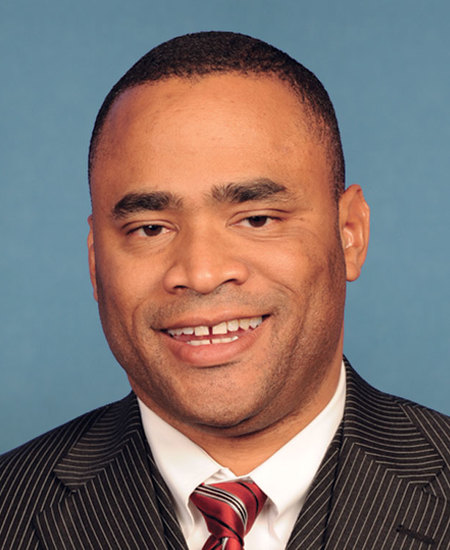
Photo of Marc A. Veasey
D United States House · District 33 · Texas

Rep. Marc A. Veasey

Compare
Total votes
2,837
all sessions
Attendance
99%
35 missed
Near the chamber average
With party
96%
of cast votes
Lower than 81% of chamber peers
Bipartisan score
2%
crosses aisle rarely
Higher than 80% of chamber peers
Sponsored
1,176
bills & resolutions
Near the chamber average
Committees
4
assignments
1,176 bills and resolutions

Sponsored bills

Total
1,176
Primary
39
Co-sponsor
1,137
This page
1,176
matching current filters
Co-sponsor HR 7403
In committee · Indiana House · Co-sponsor
No Foreign NIL Funds Act

Maddy summaryThis bill prohibits foreign governments and entities from providing any financial or in-kind benefits related to student athletes' name, image, and likeness (NIL) agreements. It directly affects colleges, athletic conferences, media distributors, and student athletes by banning foreign investment in college sports revenue streams - including media rights, sponsorships, and facility naming. Institutions must report foreign solicitations to federal agencies and face penalties under the International Emergency Economic Powers Act for violations. The law also requires schools to bar athletes who violate these rules from competing for one year and to annually inform athletes about the restrictions.

In committee Feb 5, 2026 1 co-sponsor
Co-sponsor HR 7335
In committee · Indiana House · Co-sponsor
Humanitarian Standards for Individuals in ICE and CBP Custody Act

Maddy summaryHR 7335 establishes comprehensive humanitarian standards for individuals held in U.S. Immigration and Customs Enforcement (ICE) and U.S. Customs and Border Protection (CBP) custody. The bill requires facilities to provide immediate health screenings within 12 hours (6 hours for high-risk individuals like children, pregnant people, or those with medical conditions), ensure access to adequate water, sanitation, food (with 2,000+ calories daily for adults), and age-appropriate shelter. It mandates specific facility standards including separate housing for males and females, accessible accommodations for people with disabilities, daily outdoor access for those detained over 48 hours, and proper medical equipment and personnel on-site. The bill also requires regular inspections, staff training on humanitarian protocols, and public reporting of sexual abuse complaints. These standards directly affect all individuals detained by ICE or CBP, with special protections for vulnerable groups like children, pregnant people, and those with medical needs.

In committee Feb 4, 2026 1 co-sponsor
Co-sponsor HR 7307
In committee · Indiana House · Co-sponsor
SUPPLIES Act

Maddy summaryHR 7307, the SUPPLIES Act, requires the State Department and USAID to create procedures within 60 days for handling unused supplies (like medicine, vaccines, or food) after foreign aid projects end. These procedures must prioritize preventing waste by ensuring supplies aren't destroyed, diverted, or expired without use. The bill mandates that these procedures be published online by both agencies. It directly affects U.S. government agencies and foreign aid partners managing aid supplies. The law defines "commodity" broadly to include perishable items held in warehouses or storage facilities for foreign assistance programs.

In committee Feb 2, 2026 1 co-sponsor
Co-sponsor HR 4242
In committee · Indiana House · Co-sponsor
Innovate Less Lethal to De-Escalate Tax Modernization Act

Maddy summaryThis bill exempts certain less-than-lethal projectile devices from federal sales taxes and National Firearms Act restrictions. It directly affects manufacturers, importers, and producers of these devices, which are defined as non-lethal tools (like rubber bullets or beanbag rounds) designed not to cause serious injury and unable to be easily converted to use standard firearm ammunition. Key mechanisms include a 90-day classification process for manufacturers seeking exemption, an annual public list of approved devices, and annual congressional reports on devices excluded from the exemption. The policy change applies to devices meeting specific safety criteria, such as projectile velocity limits and design features preventing misuse as conventional weapons.

In committee Feb 2, 2026 1 co-sponsor
Co-sponsor HRES 1018
In committee · Indiana House · Co-sponsor
Expressing the sense of the House of Representatives that protecting and advancing the rights of women and girls in the Republic of Haiti is critical to the success of Haiti's transition from crisis and its future stability, condemning the failure to center women's leadership and distinct needs to date, and calling for urgent measures to secure all human rights of women and girls in Haiti.

Maddy summaryHRES 1018 is a resolution calling for the U.S. government and international partners to prioritize women's rights in Haiti's crisis response. It specifically demands ensuring at least 30% of Haiti's leadership positions (including security, humanitarian, and election roles) are held by women, funding services for gender-based violence survivors, and requiring gender-disaggregated data collection in all aid programs. The resolution also urges rebuilding U.S. Women, Peace, and Security programs and mandates that all policies address women's distinct needs in Haiti's transition. This resolution directly affects U.S. foreign policy implementation and Haiti's transitional government, emphasizing that women's inclusion is critical for stability.

In committee Jan 22, 2026 1 co-sponsor
Co-sponsor HR 7212
In committee · Indiana House · Co-sponsor
Hemp Enforcement, Modernization, and Protection Act

Maddy summaryHR 7212 establishes a federal regulatory framework under the Food, Drug, and Cosmetic Act for "cannabinoid hemp products," directly affecting their manufacturers, distributors, retailers, and consumers. It mandates FDA registration for facilities and product listing, along with adherence to new manufacturing, testing, and labeling requirements for oral, inhalable, and topical cannabinoid hemp products. Key provisions include setting cannabinoid content limits, prohibiting certain ingredients and marketing practices (like appealing to children), requiring child-resistant packaging, and establishing a minimum purchase age of 21. The bill grants the FDA authority to enforce these rules through mandatory recalls, refusal of non-compliant imports, and penalties for violations, including selling "prohibited cannabinoid products" or to underage individuals. Additionally, it creates an advisory committee to provide recommendations on cannabinoid content limits and other regulatory matters.

In committee Jan 22, 2026 1 co-sponsor
Co-sponsor HR 4105
In committee · Indiana House · Co-sponsor
VET Act of 2025

Maddy summaryHR 4105, the VET Act of 2025, establishes a federal grant program to help veterans, active-duty service members transitioning out of the military, and their spouses secure jobs in the energy industry. The program provides grants to energy companies (including manufacturers of solar, wind, or nuclear equipment) to cover costs like job training, recruitment, and relocation for eligible individuals - prioritizing those with military energy experience, in opportunity zones, or facing barriers like homelessness. Grants are capped at $10,000 per hire, with a maximum $500,000 annual limit per company, funded at $60 million yearly from 2026-2031. Companies must report on job retention, employee satisfaction, and program outcomes to the Department of Labor, with a final evaluation due to Congress by 2030.

In committee Jan 21, 2026 1 co-sponsor
Co-sponsor HR 7145
In committee · Indiana House · Co-sponsor
To amend title XIX of the Social Security Act to establish a definition of essential health system in statute and for other related purposes.

Maddy summaryHR 7145 defines "essential health systems" as hospitals serving large numbers of Medicaid and low-income patients, specifically targeting non-Federal, nonprofit, or government-run hospitals that meet one of three criteria for at least two of the past three years (e.g., high Medicaid patient percentage, high uncompensated care, or top 16th percentile in state rankings for low-income care). The bill requires MACPAC to annually publish an "essential health system index" ranking qualifying hospitals nationally, by state, and within local areas, using data from Medicare reporting. Hospitals designated as essential health systems receive a five-year designation, renewable if they maintain eligibility. This framework aims to identify facilities providing critical community care for vulnerable populations through standardized metrics.

In committee Jan 16, 2026 1 co-sponsor
Co-sponsor HRES 1004
In committee · Indiana House · Co-sponsor
Honoring Reverend Dr. Martin Luther King, Jr., by celebrating diversity, promoting tolerance, and condemning hate.

Maddy summaryHRES 1004 is a symbolic House resolution honoring Dr. Martin Luther King, Jr.'s legacy by celebrating diversity and condemning hate. It specifically calls for the House to celebrate his 97th birthday on January 19, 2026, and to condemn harassment, discrimination, or prejudice targeting Black Americans, Indigenous people, Jewish, Asian-American/Pacific Islander, Muslim, Hispanic/Latino communities, and LGBTQ+ individuals. The resolution affirms Dr. King’s teachings on unity and equality but does not create new laws or impose obligations on any entity. As a ceremonial resolution, it has no legal effect and directly affects no individuals or groups.

In committee Jan 15, 2026 1 co-sponsor
Co-sponsor HR 7118
In committee · Indiana House · Co-sponsor
Genomic Answers for Children’s Health Act of 2026

Maddy summaryHR 7118, the Genomic Answers for Children’s Health Act of 2026, requires Medicaid to cover whole genome and whole exome sequencing for Medicaid-eligible children with specific medical needs, including genetic disorders, rare diseases, congenital anomalies, developmental delays, or intellectual disabilities. It mandates that this testing be ordered as a first-tier test by a physician and paid separately, not bundled with other services. The bill also requires the Department of Health and Human Services to convene stakeholders, conduct outreach to raise awareness, and publish a report within two years detailing state payment rates and usage data. Additionally, it directs a Comptroller General report assessing implementation barriers, workforce challenges, and payment alignment with market costs. The changes take effect January 1, 2027.

In committee Jan 15, 2026 1 co-sponsor
Showing 91 to 100 of 1,176 bills
Previous 1 … 9 10 11 … 118 Next