

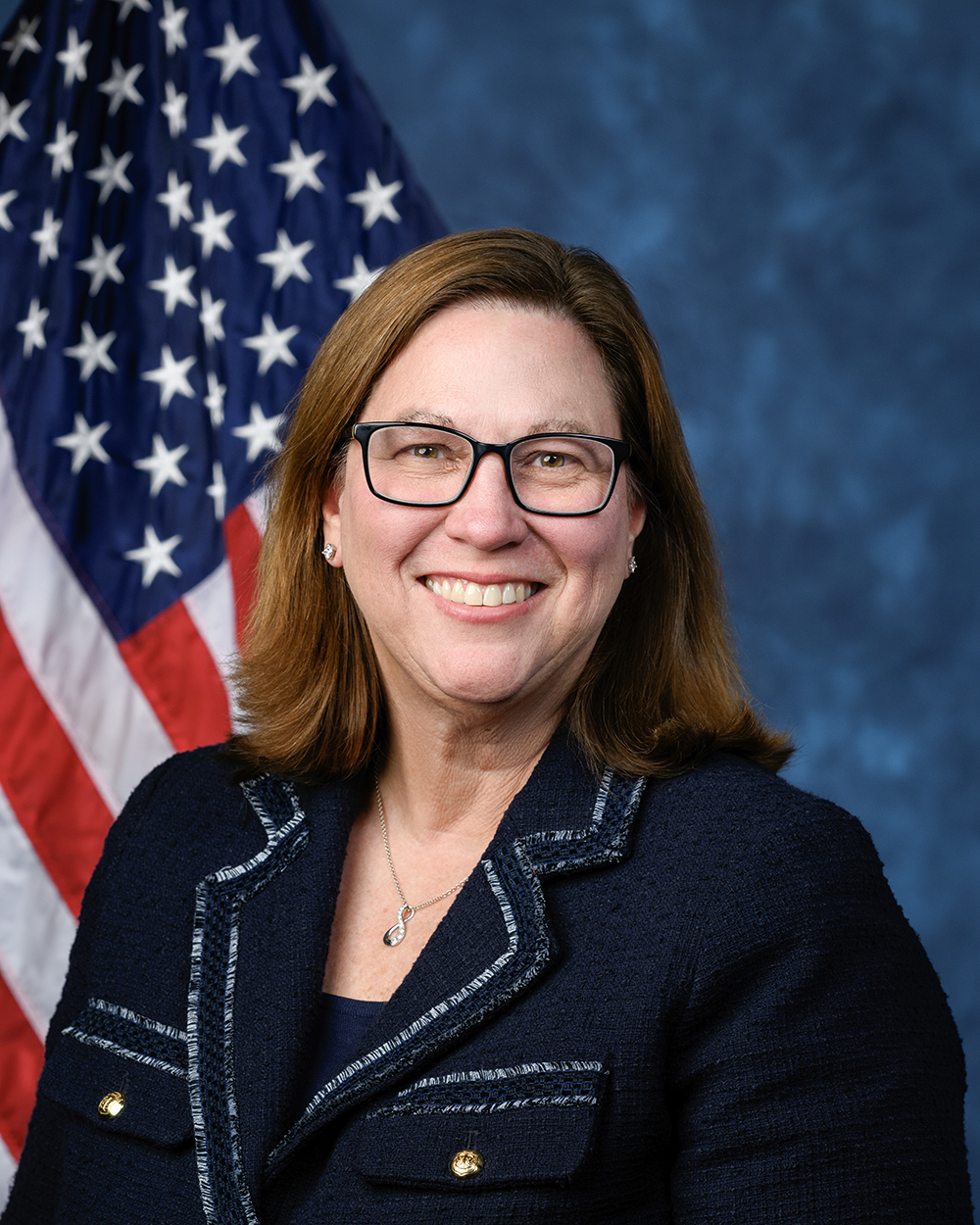
Photo of Julie Johnson
D United States House · District 32 · Texas

Rep. Julie Johnson

Compare
Total votes
669
all sessions
Attendance
96%
25 missed
Near the chamber average
With party
96%
of cast votes
Near the chamber average
Bipartisan score
2%
crosses aisle rarely
Near the chamber average
Sponsored
485
bills & resolutions
Higher than 81% of chamber peers
Committees
9
assignments
485 bills and resolutions

Sponsored bills

Total
485
Primary
27
Co-sponsor
458
This page
485
matching current filters
Co-sponsor HR 2736
In committee · Indiana House · Co-sponsor
Public Service Freedom to Negotiate Act of 2025

Maddy summaryThis bill establishes federal minimum standards for collective bargaining rights for public employees and supervisors. The Federal Labor Relations Authority would determine if state laws provide these rights, and if not, would establish them for affected employees. The bill guarantees public employees the right to form unions, bargain collectively, and engage in concerted activities, while requiring public employers to recognize unions and put agreements in writing. It also prohibits strikes or lockouts that would disrupt emergency services. This would apply to public employees in states that don't meet the federal standards for collective bargaining rights.

In committee Apr 8, 2025 1 co-sponsor
Co-sponsor HR 2698
In committee · Indiana House · Co-sponsor
Bolstering Security Against Ghost Guns Act

Maddy summaryHR 2698, the Bolstering Security Against Ghost Guns Act, mandates federal agencies to develop coordinated strategies addressing threats from "ghost guns" (privately made firearms). It requires the Department of Homeland Security to create a department-wide strategy within one year, including cross-agency collaboration and partner coordination. The bill also directs the Transportation Security Administration to report annually on ghost gun violations at checkpoints, U.S. Immigration and Customs Enforcement to analyze cross-border firearm smuggling patterns, and the Office of Intelligence and Analysis to produce threat assessments on terrorism-linked ghost gun use. These provisions apply directly to DHS components, the Secret Service, TSA, and ICE, focusing on data sharing, threat reporting, and prevention efforts without imposing new restrictions on firearm ownership.

In committee Apr 7, 2025 1 co-sponsor
Co-sponsor HR 2668
In committee · Indiana House · Co-sponsor
DART Act of 2025

Maddy summaryHR 2668, the DART Act of 2025, expands federal funding under the Edward Byrne Memorial Justice Assistance Grant (JAG) program to support state and local diversion and rehabilitation programs instead of incarceration. It allows JAG funds to cover pre-arrest diversion, specialty courts, and post-release rehabilitation services, directly affecting local justice systems and individuals facing the criminal justice system. The bill creates a National Diversion and Rehabilitation Clearinghouse to share evidence-based practices, provide technical assistance, and promote trauma-informed approaches. These changes aim to reduce recidivism by addressing root causes like addiction and mental health, shifting focus from incarceration to treatment and community-based solutions.

In committee Apr 7, 2025 1 co-sponsor
Co-sponsor HR 2253
In committee · Indiana House · Co-sponsor
Puppy Protection Act of 2025

Maddy summaryThis bill, HR 2253 (Puppy Protection Act of 2025), sets new federal standards for commercial dog dealers who sell puppies to the public. It requires specific housing sizes based on dog size (e.g., 12-30 square feet per dog), daily exercise in safe outdoor areas, clean water and nutritious food twice daily, and annual veterinary exams including dental checks. The bill also limits breeding frequency (max 2 litters in 25 months), sets age minimums for breeding (18 months for small dogs, 2 years for large dogs), and mandates health screenings to prevent genetic diseases. These requirements apply directly to commercial dealers, with final regulations to be issued within 18 months of enactment.

In committee Apr 4, 2025 1 co-sponsor
Co-sponsor HR 2195
In committee · Indiana House · Co-sponsor
Feed Hungry Veterans Act of 2025

Maddy summaryHR 2195, the Feed Hungry Veterans Act of 2025, would expand eligibility for food assistance under the Supplemental Nutrition Assistance Program (SNAP) to more veterans. It adds four new qualifying categories to the existing rules: veterans with a "catastrophically disabled" determination under military disability law, veterans under 65 receiving a pension, and veterans meeting specific combined disability rating thresholds. The bill amends the Food and Nutrition Act to include these new groups in SNAP eligibility, directly affecting veterans who currently may not qualify under existing disability rating criteria. The changes would take effect on October 1, 2030.

In committee Apr 4, 2025 1 co-sponsor
Co-sponsor HR 2102
In committee · Indiana House · Co-sponsor
Major Richard Star Act

Maddy summaryThis bill, HR 2102 (Major Richard Star Act), allows veterans with combat-related disabilities to receive both full military retired pay and veterans' disability compensation simultaneously, without the previous offset that reduced retired pay. It directly affects veterans already eligible for both benefits due to combat-related injuries, removing the requirement that their retired pay be reduced by the disability compensation amount. The key provision amends Title 10 and Title 38 to eliminate the offset rule (sections 5304 and 5305 of Title 38) for these veterans. The change applies to payments starting after the bill’s enactment date, effective for all qualifying veterans. This is a policy change to increase financial support for affected veterans, not a new benefit.

In committee Apr 4, 2025 1 co-sponsor
Co-sponsor HR 2636
In committee · Indiana House · Co-sponsor
Making Insulin Affordable for All Children Act

Maddy summaryThis bill requires private health insurance plans to cover insulin for people under age 26 without deductibles, capping out-of-pocket costs at $35 per 30-day supply or 25% of the negotiated price (whichever is lower). It mandates coverage of multiple insulin types and formulations (like rapid-acting, long-acting, and premixed) to ensure access to various treatment options. The rule applies to employer-sponsored plans, ACA marketplace plans, and similar coverage starting in 2026. It directly affects young adults (up to age 26) managing diabetes who rely on private insurance for insulin.

In committee Apr 3, 2025 1 co-sponsor
Co-sponsor HR 2618
In committee · Indiana House · Co-sponsor
Federal Firearm Licensee Act

Federal Firearm Licensee Act This bill establishes new security requirements and expands recordkeeping and reporting requirements for federally licensed dealers, importers, and manufacturers of firearms (i.e., federal firearms licensees, or FFLs). The bill also broadens the authority of the Bureau of Alcohol, Tobacco, Firearms and Explosives (ATF) to administer federal firearms laws and enforce violations. Specifically, bill requires FFLs to implement and comply with a plan to secure their business premises, conduct quarterly physical checks of their business inventories, maintain video surveillance of the area where firearms are sold or transferred, and initiate firearms-related background checks for employees. Additionally, the bill requires FFLs to report to the ATF any inventory firearm that is lost, stolen, or unaccounted for and to notify the ATF about default-proceed transactions (i.e., allowable firearm transfers to an unlicensed person prior to the completion of a background check when the submitted background check remains incomplete after three business days). Finally, the bill removes limits on the ATF's authority to conduct activities related to the administration of federal firearms laws. It enhances the ATF's inspection authority, including by removing the limit on the number of annual compliance inspections (currently, one), requiring inspections of high-risk FFLs, and authorizing an additional 650 investigators. Finally, the bill directs the ATF to deny an application for a federal firearms license if it would endanger public safety or if the applicant is unlikely to comply with the law.

In committee Apr 3, 2025 1 co-sponsor
Co-sponsor HR 2598
In committee · Indiana House · Co-sponsor
IDEA Full Funding Act

Maddy summaryThe IDEA Full Funding Act (HR 2598) mandates specific annual federal funding levels for the Individuals with Disabilities Education Act (IDEA), directly affecting schools and students with disabilities nationwide. It requires the federal government to appropriate either a fixed dollar amount or a specified percentage (increasing annually from 4.5% to 40%) of a calculated total - based on the number of eligible students and average per-pupil costs - starting in fiscal year 2026 through 2035. The bill sets clear, escalating funding targets, with the higher of two calculated amounts (dollar figure or percentage) becoming available for obligation each fiscal year. This establishes a binding financial commitment to address long-standing underfunding of special education services under IDEA.

In committee Apr 2, 2025 1 co-sponsor
Co-sponsor HR 2595
In committee · Indiana House · Co-sponsor
Building Child Care for a Better Future Act

Maddy summaryThe Building Child Care for a Better Future Act (HR 2595) increases federal child care funding to $20 billion for fiscal year 2026 with annual inflation-based increases, plus an additional $5 billion annually for targeted improvements in child care access and quality. It allocates specific portions of funds to Indian tribes (5%) and territories (4%), requiring states and tribes to identify areas with particular child care needs and develop plans to improve workforce, supply, quality, and access through activities like provider training, facility upgrades, and higher wages. The bill mandates regular reporting and evaluations to track how funds improve child care services for low-income families, children with disabilities, dual language learners, and those in rural or high-poverty areas. This legislation directly affects child care providers, low-income families seeking care, and tribal organizations by providing concrete funding mechanisms to address specific child care shortages.

In committee Apr 2, 2025 1 co-sponsor
Showing 351 to 360 of 485 bills
Previous 1 … 35 36 37 … 49 Next