

This bill authorizes the Department of Transportation (DOT) to award maritime career training grants to institutions of higher education and postsecondary vocational institutions for the purpose of developing, offering, or improving educational or career training programs for American workers related to the maritime workforce. Each awarded grant may not exceed $20 million. DOT must award grants based on a determination of the merits of the grant proposal submitted by the institution of higher education or postsecondary vocational institution to develop, offer, or improve maritime educational or career training programs to be made available to workers; an evaluation of the likely employment opportunities available to workers who complete a maritime educational or career training program that the institution proposes to develop, offer, or improve; an evaluation of prior demand for training programs by workers in the community served by the institution, as well as the availability and capacity of existing maritime training programs to meet future demand for training programs; and any prior designation of the institution as a Center of Excellence for Domestic Maritime Workforce Training and Education.
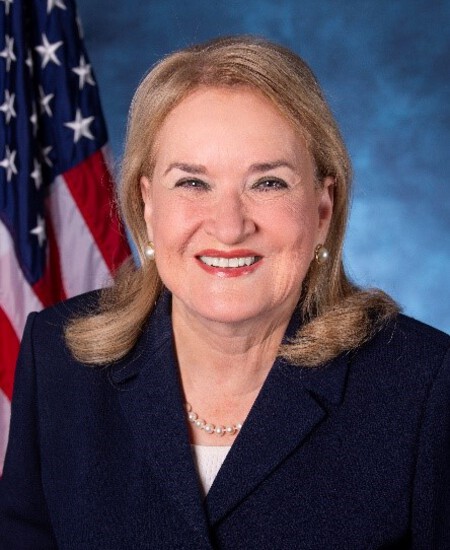
Rep. Sylvia R. Garcia
Sponsored bills
COVID-19 Language Access Act This bill requires each federal agency that receives federal assistance related to the COVID-19 (i.e., coronavirus disease 2019) pandemic to translate any English language written material prepared for the general public relating to the pandemic, including COVID-19 vaccine distribution and education, into specified languages not later than seven days after such material is made available in English. Such languages shall include, at a minimum, the following: Spanish, Arabic, Cambodian, Chinese, Haitian Creole, French, Hindi, Hmong, Italian, Japanese, Korean, Laotian, Russian, Tagalog, Urdu, Vietnamese, Greek, Polish, Thai, and Portuguese.
"Six Triple Eight" Congressional Gold Medal Act of 2021 This bill directs the Speaker of the House of Representatives and the President pro tempore of the Senate to arrange for the award of a Congressional Gold Medal in honor of the women of the 6888th Central Postal Directory Battalion (commonly known as the Six Triple Eight) in recognition of their pioneering military service, devotion to duty, and contributions to increase the morale of personnel stationed in the European theater of operations during World War II. The medal shall be given to the Smithsonian Institution and made available for display and research.
American Family Act of 2021 This bill modifies the child tax credit to (1) make the credit fully refundable, (2) increase the amount of the credit and allow an additional credit for children who are under six years of age, (3) require the amount of the credit to be adjusted annually for inflation, and (4) require the Department of the Treasury to establish a program for making advance payments of the credit on a monthly basis.
Expanding Medical Education Act This bill authorizes the Health Resources and Services Administration (HRSA) to award grants to institutions of higher education, or consortia of such institutions, to establish or expand medical schools. In awarding these grants, HRSA must prioritize minority-serving institutions or those that propose to establish or expand schools in medically underserved communities or areas with shortages of health professionals where no such schools exist.
Family and Medical Insurance Leave Act or the FAMILY Act This bill entitles every employee to a family and medical leave insurance (FMLI) monthly benefit payment of two-thirds of the employee's regular pay, limited to a maximum of $4,000, for not more than 60 days of qualified caregiving. The bill establishes the Office of Paid Family and Medical Leave within the Social Security Administration to administer the FMLI program. An FMLI benefit payment must be coordinated with any periodic benefits received under a state or local temporary disability insurance or family leave program. The bill imposes a tax on employers, employees, and self-employed individuals to fund FMLI benefits. It also establishes the Federal Family and Medical Leave Insurance Trust Fund to hold tax revenues.
Scientific Integrity Act This bill revises provisions regarding the release of scientific research results by federal agencies. Each agency that funds, conducts, or oversees scientific research must (1) adopt and enforce a scientific integrity policy that includes requirements such as that scientific conclusions are not based on political considerations, and (2) submit such policy to the Office of Science and Technology Policy (OSTP) for approval. Each agency must make such policy available to the public and submit such policy to Congress. Agencies and the OSTP must periodically review the policies. The Government Accountability Office shall review implementation of the policies. Each agency shall (1) appoint a Scientific Integrity Officer, (2) establish a process for dispute resolution consistent with the scientific integrity policy, and (3) establish a specified training program for current and new employees.
Wear Your Mask Act This bill requires each federal agency to take action to ensure that an individual is required to wear a face mask inside a federal facility under its jurisdiction if the individual is within six feet of another individual to minimize the transmission of COVID-19 (i.e., coronavirus disease 2019). Each agency shall make face masks available at each entrance to a federal facility at which such agency maintains a presence. The bill terminates such requirements when the National Institute of Allergy and Infectious Diseases determines, and publishes in the Federal Register a notification, that the requirement to wear a mask is no longer necessary to prevent such transmission.
Homeownership for DREAMers Act This bill prohibits federal mortgage providers from limiting insurance eligibility on the basis of the mortgagor's participation in the Deferred Action for Childhood Arrivals Program.
Dropbox Access Act This bill requires each state to provide in each county secured drop boxes at which individuals may drop off their completed absentee ballots for federal elections. Specifically, the bill requires these drop boxes to be (1) available beginning 45 days before the election; (2) accessible to individuals with disabilities and individuals with limited proficiency in the English language; (3) accessible by public transit; (4) available during all hours of the day; and (5) located in all communities within the county, including rural communities and on tribal lands. States must also post the requirements for absentee ballots to be counted and tabulated in the election. Further, the bill outlines additional requirements that a state must meet in determining the number and location of drop boxes.